


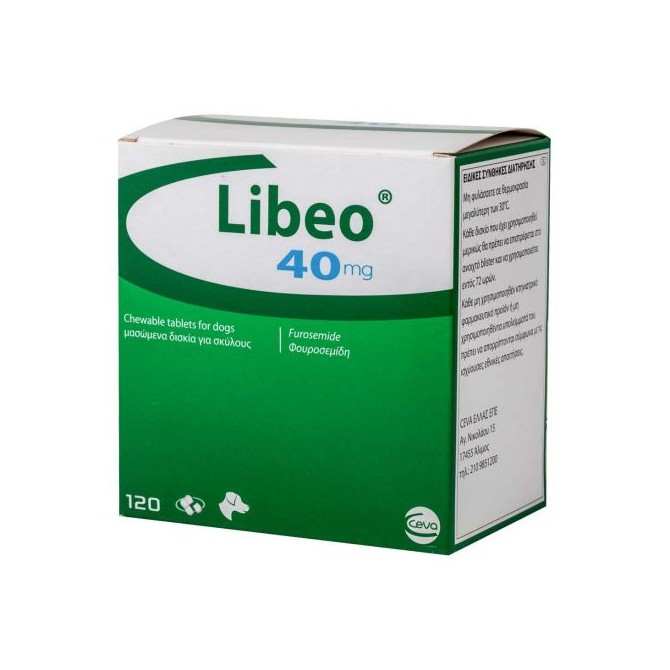
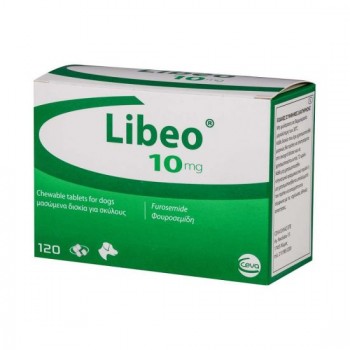
40mg Libeo Tablets For Dogs - per Tablet
40mg Libeo is a prescription-only chewable tablet for dogs. Each tablet contains 40mg of furosemide, a diuretic (water tablet) that helps the body remove excess fluid. Libeo is used to treat oedema (fluid in tissues) and ascites (fluid in the abdomen), particularly when these problems are linked to cardiac insufficiency or Congestive Heart Failure in dogs. Your veterinary surgeon will decide whether Libeo is suitable and will prescribe a dose for your dog’s weight and clinical needs.
Heart failure means your dog's heart is not pumping as effectively as it should. When circulation becomes less efficient, pressure can rise in blood vessels and the body can activate hormone systems that conserve salt and water. The aim is to support circulation, but the side effect can be fluid retention. Extra fluid can then leak from blood vessels and collect in places where it causes symptoms. Fluid may build up in the lungs (leading to coughing or fast, effortful breathing), in the abdomen (ascites), or in tissues (oedema). Reducing this excess fluid can ease breathing, improve comfort, and help dogs tolerate gentle activity.
How 40mg Libeo works
Furosemide is a loop diuretic. It acts in the kidneys, where it reduces the reabsorption of sodium and chloride. Water follows salt, so more water stays in the urine and is passed out of the body. As urine output increases, the volume of fluid in the bloodstream falls. This helps reduce congestion and encourages excess fluid in the lungs, abdomen, or tissues to move back into the circulation so it can be removed. Because furosemide affects salt and water balance, it can also alter electrolytes such as potassium and sodium, so dosing and monitoring matter.
When Libeo may be prescribed
Libeo is commonly used when a dog has signs of fluid retention linked to heart disease. Your vet may prescribe it if your dog has abdominal fluid, visible swelling, or congestion affecting breathing. Libeo is often used alongside other heart medicines, such as pimobendan and ACE inhibitors, depending on the type and stage of heart disease. In some dogs, Libeo is used short term to bring fluid under control. In other dogs, it forms part of longer-term management, with the dose reviewed over time.
VETERINARY PRESCRIPTION REQUIRED
Product Features
- Pack Size: - Sold Individually
- Target Animal: - Dog (Canine)
- Related Condition: - Ascites and Oedema in Dogs
- Pet Prescription Required?: - Yes
- Active Ingredient: - 40mg Furosemide
- Product Name: - 40mg Libeo
Additional Product Information
Description
40mg Libeo for Dogs
Libeo may only be supplied with a valid veterinary prescription issued by your vet. You should only purchase Libeo if you have or are in the process of arranging such a prescription. See information bar for further details.
How to give 40mg Libeo
Libeo is given by mouth. The tablets are chewable and may be administered directly into the mouth or mixed with a small amount of food offered before the main meal. The tablets can be divided into equal quarters, which helps with dose accuracy when smaller adjustments are needed. Always give the amount and frequency prescribed, and do not change the plan without veterinary advice.
Many dogs urinate more after a dose. If your dog is on a once-daily schedule, your vet may recommend giving it earlier in the day so your dog has more chances to toilet. If your dog needs twice-daily dosing, the timing will be set to balance symptom control with practicality.
Your vet will tailor the dose to your dog. Libeo doses are calculated in milligrams per kilogram of body weight and may be given once daily or split into two daily doses. Some dogs need a higher dose at the start of treatment, with the dose reduced once symptoms are stable. The general aim is to use the lowest effective dose that keeps fluid controlled while minimising dehydration and electrolyte imbalance. If signs of fluid retention return, your vet may adjust the dose or add other medicines.
Increased thirst and increased urination are expected and usually indicate that the medicine is having its intended effect. Some dogs need more frequent walks or garden breaks, especially in the first days of treatment or after a dose increase. As congestion improves, your dog may breathe more comfortably and abdominal swelling can reduce as ascites improves.
If your dog seems very weak, stops eating, vomits repeatedly, has diarrhoea, becomes unsteady, or you notice a sudden worsening of breathing, contact your vet promptly. These signs can indicate dehydration, electrolyte disturbance, progression of heart failure, or another problem that needs assessment.
Monitoring and follow-up
Dogs taking diuretics often need follow-up checks. Your vet may monitor hydration, body weight, kidney values and electrolytes, particularly when treatment is started or the dose is changed. At home, it can help to track resting breathing rate (when your dog is asleep or relaxed), appetite, water intake, and toileting patterns. Sudden changes can be a useful early warning that the treatment plan needs reviewing.
Possible side effects
The most common effects are increased urination and thirst. Some dogs may develop dehydration or electrolyte imbalances, particularly at higher doses or if they are unwell. Signs may include lethargy, weakness, reduced appetite, vomiting, diarrhoea, increased panting, or changes in coordination. If you notice these signs, contact your vet, as the dose may need adjustment and your dog may need blood tests. Accidental ingestion of extra tablets should be treated as urgent, because overdose can cause serious water and electrolyte disturbances.
When Libeo may not be suitable
Libeo should not be used in dogs with dehydration, low blood pressure, or low circulating blood volume. It should not be used in renal failure where the dog is not producing urine, or in dogs with significant electrolyte deficiency. It should also not be used in dogs with known hypersensitivity to furosemide, sulfonamides, or any tablet ingredient. Your vet may use caution in dogs with impaired liver function or diabetes mellitus, and will take into account the full medical history before prescribing.
Tell your vet about all medicines and supplements your dog receives, including anti-inflammatories and any over-the-counter products. Some combinations can increase the risk of kidney strain or electrolyte changes, while others may reduce the diuretic effect. Your vet will consider this when setting the overall heart failure treatment plan and may recommend closer monitoring after medication changes.
Store Libeo in its original packaging, in a cool, dry place, and out of reach of children and pets. Because the tablets are flavoured, dogs may try to eat them if they are left accessible. Only give Libeo to the dog it was prescribed for, and only as directed by your veterinary surgeon.
How does Libeo help with oedema and ascites in heart failure?
In heart failure, the body can retain salt and water, which then collects in the lungs, abdomen or tissues. Libeo contains furosemide, a diuretic that makes the kidneys pass more sodium and water into the urine. This reduces the volume of fluid in the circulation and helps fluid reabsorb from affected areas.
How quickly will Libeo start to work?
Many dogs pass more urine and drink more water within a few hours of a dose. Improvement in breathing comfort or abdominal swelling can be seen the same day, although response varies with the cause and severity of the heart disease. Your vet may adjust the dose over several days to find the lowest effective amount.
Can I give 40mg Libeo with food?
Yes. Libeo tablets are chewable and may be given directly by mouth or mixed with a small amount of food offered before the main meal. Giving it earlier in the day often helps reduce night-time urination. Always follow your vet’s dosing instructions and do not change the schedule without advice.
What if I miss a dose of Libeo?
Give the missed dose as soon as you remember, unless it is nearly time for the next dose. If you are close to the next scheduled dose, skip the missed one and continue as normal. Do not give two doses at once. If you miss more than one dose or symptoms worsen, contact your vet promptly.
Should I restrict my dog’s drinking water while on Libeo?
Do not restrict water unless your vet specifically instructs you to. Most dogs on furosemide will drink more because they are urinating more. In some situations, your vet may advise keeping water intake within normal limits, but this needs individual guidance to avoid dehydration, especially in older dogs or those with kidney disease.
You may also like
What our customers say about us.
We use vet dispense for all our prescriptions. Really good service and super fast delivery.
Wendy
Source: Trustpilot Review
Amazingly, very quick delivery. Thank you!
RH
Source: Trustpilot Review
Always quick to respond and send out my dogs medication and at competitive prices. Easy to navigate the website and upload prescriptions. All in all a great service and would recommend this company whole heartedly.
Janet
Source: Trustpilot Review
- Tracked 24 Delivery Follow your parcel online
- VMD & RCVS Registered VetDispense is a registered UK Dispensary
- Secure Payment Pay securely online by card or PayPal
- Independent Since 2008 A Trusted UK Dispensary