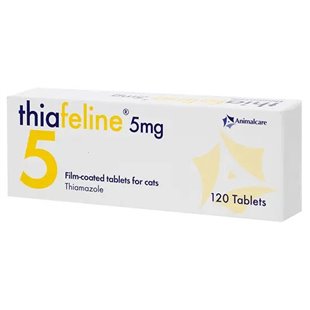
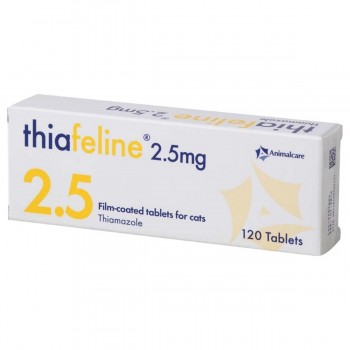
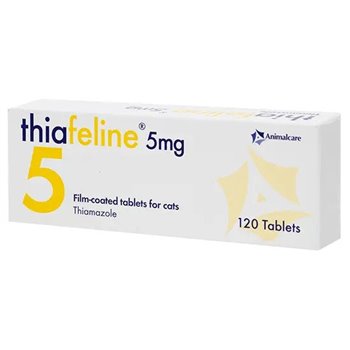
Thiafeline for Cats is a prescription-only veterinary medicine used to manage feline hyperthyroidism and to help stabilise cats before a surgical thyroidectomy. Thiafeline for Cats contains thiamazole (also known as methimazole), an antithyroid or “thyrostatic” medicine that reduces the production of thyroid hormones.
Thiafeline is supplied as film-coated tablets for oral use in cats, with strengths available in 2.5mg and 5mg so your veterinary surgeon can tailor the dose to your cat’s blood results and response.
Thiafeline for Cats is used to bring hormone levels closer to the normal reference range, which can help weight stabilise and reduce stress on the heart and circulation. It is a monitored treatment that is adjusted using both clinical signs and laboratory tests, and many cats remain on it long term.
Understanding why Thiafeline for Cats is prescribed begins with hyperthyroidism itself. The thyroid gland produces excessive thyroxine (T4) and triiodothyronine (T3), which speeds up metabolism and overstimulates multiple organ systems. In most cats, the cause is a benign change in thyroid tissue, such as adenomatous hyperplasia or a thyroid adenoma, and it often involves both thyroid lobes. Because the change is gradual, cats can seem bright while quietly losing condition. Common signs include:
- Your cat loses weight despite a strong or increased appetite.
- Your cat drinks more and passes larger amounts of urine than usual.
- Your cat vomits more often, or has diarrhoea or softer stools.
- Your cat becomes unusually vocal, restless, or unable to settle.
- Your cat develops a fast heart rate (tachycardia) or a new heart murmur.
- Your cat’s coat becomes unkempt, greasy, or matted, despite normal grooming.
Some cats also seem heat-intolerant or pant more. Excess thyroid hormones can contribute to high blood pressure (hypertension) and can strain the heart, sometimes leading to cardiomyopathy. Diagnosis is usually confirmed with a physical examination and a blood test measuring total T4, sometimes alongside additional thyroid testing. Once confirmed, Thiafeline for Cats may be prescribed while your vet also checks for other conditions, particularly chronic kidney disease.
Thiafeline for Cats works by lowering the synthesis of thyroid hormones within the thyroid gland. Thiamazole inhibits thyroid peroxidase, an enzyme needed for key steps in thyroid hormone production, including iodine incorporation and the formation of active T4 and T3 within thyroid tissue. In everyday terms, Thiafeline for Cats reduces the amount of thyroid hormone released into the bloodstream, easing the “revved up” state that drives weight loss, increased appetite and behavioural change. Because thyroid hormones already circulating in the blood take time to fall, improvements are usually seen over days to weeks rather than straight after the first dose. It does not remove the thyroid growth that is causing the problem, so it is best thought of as control rather than a cure, and that is why ongoing dosing and monitoring are important.
Many cats show improvement in thirst, bowel habits and activity level within the first few weeks as the hormone levels move towards the target range, although the exact timeline depends on how high the hormones were at diagnosis and whether any other conditions are present. Your vet will aim for a balance where the thyroid is no longer overactive, but the cat is not pushed into hypothyroidism, because both extremes can affect wellbeing.
Thiafeline for Cats is given by mouth, and your vet will prescribe the tablet strength and dosing schedule that best suits your cat’s blood results, age and overall health. A commonly recommended starting total daily dose is 5 mg per day, and wherever possible the daily dose is divided into two administrations (morning and evening) to support steadier control, although once-daily dosing may be acceptable in some cases for practicality. Tablets should be given whole and should not be split, broken or crushed. If giving tablets is difficult, ask your vet or pharmacist for practical tips, because consistent dosing makes monitoring more meaningful. Dose changes are normally made in small steps and higher doses need closer supervision, with total daily doses not usually exceeding 20 mg.
Cats treated with Thiafeline are usually monitored with blood tests that include total T4 as well as haematology and biochemistry, because dose changes are based on both clinical response and laboratory values. It is common to test before treatment starts, then at set points in the early weeks, and then every few months once stable. Your vet may also keep a close eye on renal values, because lowering thyroid hormones can reduce the glomerular filtration rate, which may reveal or worsen underlying kidney disease in some cats. Fresh water should always be available, and any cat that becomes suddenly unwell or feverish during treatment should be checked promptly, as blood cell changes can occasionally occur.
Like all medicines, Thiafeline for Cats can cause side effects, and understanding these in advance often makes the early weeks feel less worrying. Possible unwanted effects include vomiting, reduced appetite or inappetence, lethargy, and pruritus with skin excoriations around the head and neck. Less commonly, more serious reactions can occur, such as prolonged bleeding, hepatopathy with jaundice (icterus), or haematological changes including neutropenia, leucopenia, agranulocytosis, thrombocytopenia or haemolytic anaemia. These effects are often reversible once treatment is stopped, but they always need veterinary advice, especially if you notice bruising, weakness, a fever, yellowing of the gums or eyes, or persistent vomiting.
Thiafeline is not suitable for every cat, and it should not be used in cats with certain systemic diseases such as primary liver disease or diabetes mellitus, or in cats with autoimmune disease or existing white blood cell or platelet disorders, and it is not used in pregnant or lactating queens. Tell your vet about all other medicines, including phenobarbital and some benzimidazole wormers, as interactions may affect treatment.
For safety, tablets should not be crushed, and hands should be washed after handling tablets or used litter; because thiamazole is a suspected human teratogen, pregnant women or women of child-bearing age should take extra care and use gloves when handling litter from treated cats.
How quickly does Thiafeline for Cats start working?
Thiafeline for Cats starts reducing new thyroid hormone production soon after dosing, but visible improvements are usually gradual. Many cats begin to seem calmer, less thirsty, or less ravenous over the first couple of weeks. Blood tests are used to confirm hormone levels are moving into the target range.
What are the early signs of hyperthyroidism in cats?
Early signs can be easy to miss. You might notice weight loss despite a good appetite, increased drinking and urination, vomiting or diarrhoea, restlessness, louder meowing, or a scruffier coat. Some cats develop a rapid heart rate or seem heat-intolerant. A vet check is worthwhile if these changes persist.
How is feline hyperthyroidism diagnosed?
Diagnosis usually starts with your vet’s examination, including listening to the heart and checking for a thyroid enlargement in the neck. A blood test measuring total T4 is the common first step. If results are borderline, your vet may recommend repeat testing or additional thyroid tests to clarify the diagnosis.
How do I give Thiafeline for Cats tablets?
Give Thiafeline for Cats exactly as prescribed, at the same times each day. Tablets should be swallowed whole and should not be crushed or split. Many owners find it easier to use a pill giver or to hide the tablet in a small, tasty bite. Ask your vet for tips if dosing is stressful.
Is Thiafeline for Cats safe to handle during pregnancy?
Extra care is recommended. Thiamazole is a suspected human teratogen, so pregnant women should avoid handling the tablets where possible and should wear gloves when dealing with litter from treated cats. Wash hands after any contact. If you are pregnant or trying to conceive, tell your vet so a safe handling plan can be made.