


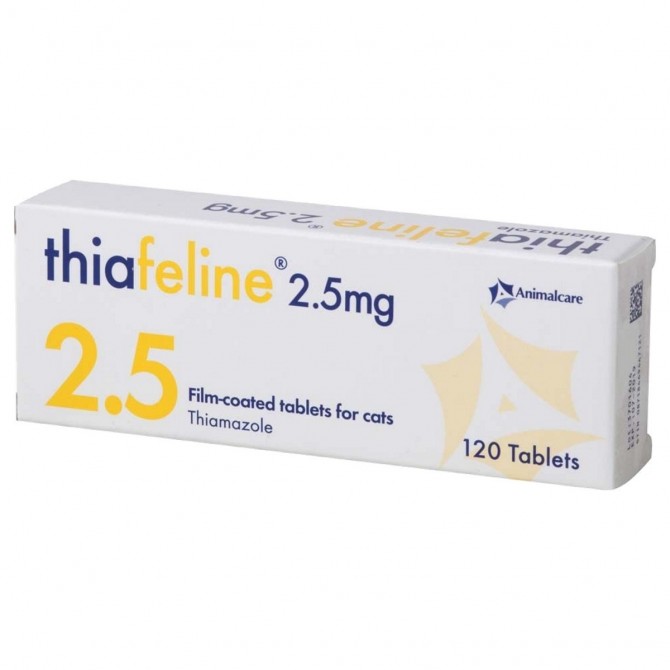
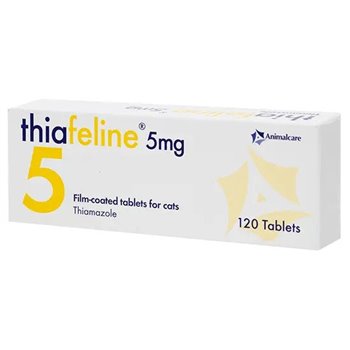
2.5mg Thiafeline Tablet for Cats - per Tablet
Thiafeline 2.5mg Tablets for Cats helps control an overactive thyroid by reducing excessive thyroid hormone production. Hyperthyroidism can cause weight loss despite a strong appetite, increased thirst, restlessness and changes to the coat.
Each small, film-coated tablet contains 2.5mg of thiamazole and provides a whole-tablet option for the prescribed dose. Thiafeline can be used for long-term medical treatment or to stabilise thyroid activity before surgery. As hormone levels become better controlled, your cat’s appetite, weight and behaviour may improve. Tablets are supplied individually, making it straightforward to order the quantity needed for your cat’s current veterinary prescription.
Product Features
- Pack Size: - Sold Individually
- Target Animal: - Cat (Feline)
- Related Condition: - Hyperthyroidism in Cats
- Pet Prescription Required?: - Yes
- Active Ingredient: - Thiamazole
- Product Name: - 2.5mg Thiafeline for Cats
Additional Product Information
Description
Thiafeline 2.5mg Film-coated Tablets for Cats treats hyperthyroidism, a condition in which the thyroid glands produce excessive amounts of thyroid hormone. Each tablet contains 2.5mg of thiamazole, which reduces new hormone production and helps bring an overactive thyroid under control. Treatment can be used over the long term or to stabilise a cat before surgical removal of thyroid tissue. Thiafeline 2.5mg comes as a small, pink, film-coated tablet measuring approximately 5.5mm in diameter. Tablets are supplied individually on this listing, allowing the ordered quantity to match the veterinary prescription. The 2.5mg strength provides a whole-tablet option for prescribed doses that would otherwise require a different presentation. As thyroid activity becomes better controlled, signs such as an excessive appetite, weight loss and restlessness may improve. The dose is adjusted to the cat’s response and blood results, rather than being determined by bodyweight alone.
Thyroid hormones influence metabolism, the rate at which the body uses energy. When hormone production becomes excessive, a cat may lose weight despite eating enthusiastically, become unusually active or vocal, or develop increased thirst and urination. Vomiting, loose stools and an untidy coat can also accompany the condition. Hyperthyroidism commonly affects older cats, but the signs can initially be mistaken for an unusually good appetite or a change in personality. Thiafeline 2.5mg addresses the excess hormone production responsible for these changes. A blood test measuring total thyroxine, often called total T4, helps the vet assess thyroid activity alongside the examination. Thiafeline 2.5mg can be used for continued medical control or before thyroidectomy, the surgical removal of thyroid tissue. These are different treatment plans, so the length of a prescription does not necessarily indicate how long the overall condition will need to be managed.
Thiamazole acts within the thyroid gland by inhibiting thyroid peroxidase, an enzyme needed to incorporate iodine into thyroid hormones. This reduces the synthesis of T4 and T3, the principal thyroid hormones. Thiafeline 2.5mg controls production rather than removing the abnormal thyroid tissue. If medical management is chosen for the long term, treatment is generally lifelong. Existing hormone already present in the body must decline before the full response to reduced production can be assessed, so improvement develops over time. Thiafeline 2.5mg is therefore monitored using both changes in the cat’s condition and laboratory measurements. A more settled appetite or improved weight can be encouraging, while blood testing shows whether hormone levels are within the desired range. Excessive suppression can produce hypothyroidism, where thyroid activity is too low. The aim is the lowest effective prescribed dose, allowing control of the condition without suppressing normal thyroid function unnecessarily. The blood T4 result provides one part of the assessment, rather than a complete account of how the cat is feeling. Bodyweight, appetite, hydration and other laboratory values help give that result context. A cat gaining weight after previous weight loss may be responding well, while marked sluggishness or a poor appetite needs investigation. The same outward change can have more than one explanation. This is why dose adjustments are based on the combined clinical picture, with repeat measurements used to assess the effect of a change instead of relying on appearance alone. Record any changes in feeding or missed tablets, because these can help explain an unexpected test result.
Give Thiafeline 2.5mg by mouth according to the dispensing label. The tablets must be swallowed whole and should not be split, crushed or broken. The licensed starting schedule commonly divides the daily amount between morning and evening, although the actual prescription may differ as treatment is adjusted. The 2.5mg tablet allows a prescribed 2.5mg amount to be administered without dividing a larger tablet. If giving tablets is difficult, discuss administration or a different formulation with the practice before changing the medicine. Thiafeline 2.5mg is one strength within the range, and another cat’s tablet or an older prescription may contain a different amount of thiamazole. Keep the strength visible on the packaging and check it when opening a new supply. If a tablet is spat out, a dose is missed or vomiting follows administration, ask for advice before replacing an uncertain dose. Your cat should always have access to drinking water during treatment.
Blood monitoring for Thiafeline 2.5mg includes haematology, biochemistry and total T4 before treatment, then at three, six, ten and twenty weeks, followed by checks every three months. Haematology measures blood cells, while biochemistry provides information about organ function. Kidney assessment is particularly relevant because lowering excessive thyroid activity can reduce the glomerular filtration rate and reveal or worsen an existing renal problem. Thiafeline 2.5mg also has recognised effects on blood cells and liver function, which these tests help detect. Report poor appetite, repeated vomiting, marked lethargy, severe scratching around the head or neck, bruising or yellowing of the gums or eyes. A cat that suddenly becomes unwell, especially with a fever, needs prompt assessment. The medicine is unsuitable in pregnancy or lactation and in cats with certain conditions, including primary liver disease, diabetes, autoimmune disease, or specified white-cell and clotting disorders. Phenobarbital and some wormers can interact with treatment, so include them in the medication history.
Keep Thiafeline 2.5mg in its blister packaging inside the outer carton to protect it from light. Remove tablets as needed, leaving the rest protected and away from children and animals. Wash your hands after administration and after handling used cat litter, and avoid eating, drinking or smoking while handling either. People allergic to thiamazole or other anti-thyroid products should avoid contact. Pregnant women should wear gloves when handling Thiafeline 2.5mg, and women of childbearing age, including those who are pregnant, should wear gloves when handling litter from treated cats. If a person accidentally swallows a tablet, seek medical advice immediately and show the packaging. At home, noting weight, appetite and activity between blood tests can help describe the response without relying on memory. When a dose changes, replace any old written instructions so everyone administering the medicine uses the current schedule. Order the number of individual tablets required by the prescription.
What does Thiafeline 2.5mg treat in cats?
Thiafeline contains thiamazole and treats feline hyperthyroidism by reducing thyroid hormone production. It is used for long-term medical control or stabilisation before thyroid surgery. Each tablet contains 2.5mg, with the prescribed amount adjusted according to blood thyroid measurements and the cat’s response rather than bodyweight alone.
Can Thiafeline 2.5mg tablets be crushed or split?
No. Thiafeline tablets must not be split, broken or crushed. Give the prescribed whole tablets by mouth. If your cat cannot take them, discuss administration or another formulation with the practice. The 2.5mg strength provides that amount in one intact tablet without dividing a larger strength.
How often is Thiafeline given to a cat?
The licensed starting daily amount is preferably divided into morning and evening doses, but your cat’s dispensing label gives the actual instructions. The schedule can change after monitoring.
How does Thiafeline lower thyroid hormone levels?
Thiamazole inhibits thyroid peroxidase, an enzyme involved in making thyroid hormones. This reduces new T3 and T4 production within the thyroid gland. It controls excessive output while the thyroid tissue remains present, so ongoing medical management generally requires continued treatment rather than a short course followed by a permanent cure.
When are blood tests needed for a cat taking Thiafeline?
Testing is recommended before treatment and at three, six, ten and twenty weeks, followed by checks every three months. The vet assesses total T4, blood cells and biochemical results. These help determine the dose and identify effects on kidney, liver or blood-cell health during treatment.
Which Thiafeline side effects should I report?
Report vomiting, poor appetite, lethargy or severe itching around the head and neck. Sudden illness, fever, unusual bleeding or yellowing of the gums or eyes needs prompt advice. Blood-cell and liver effects are recognised, which is why scheduled blood testing is part of the treatment plan.
What our customers say about us.
Excellent service prompt and hassle free
ITSFBIIEC
Source: Trustpilot Review
I bought some pills for my cat that the vet had recommended. I shopped around at various pet product sites and found Vetdispense far the cheapest even after including the postage charge. Delivery was within a few days of my order. By all means if you are buying something for your pet, check all the sites but make sure you check Vetdispense!
Martin
Source: Trustpilot Review
Always dispensed very quickly according to any instructions I may have sent .Very reliable company .
Joni
Source: Trustpilot Review
You may also like
- Tracked 24 Delivery Follow your parcel online
- VMD & RCVS Registered VetDispense is a registered UK Dispensary
- Secure Payment Pay securely online by card or PayPal
- Independent Since 2008 A Trusted UK Dispensary