


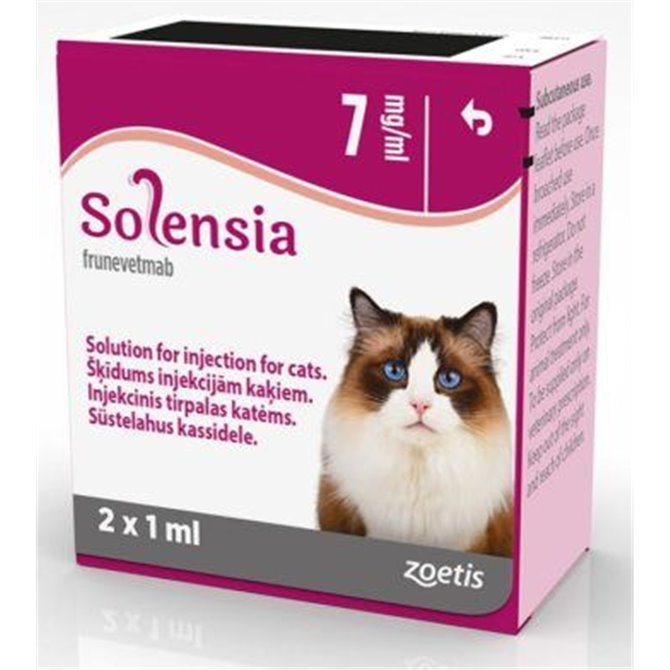
Solensia for Cats - 7mg/ml - Pack of 2
Solensia for Cats is a prescription veterinary medicine used to help control pain associated with osteoarthritis (arthritis) in cats. It is given as a monthly injection by a veterinary professional or at home after training. Solensia works differently from anti-inflammatory medicines such as non-steroidal anti-inflammatory drugs (NSAIDs). NSAIDs mainly act by reducing the production of inflammatory mediators. Solensia targets NGF within the pain signalling process. Because it is a monthly injection rather than a daily oral medicine, it can be helpful for cats that are difficult to medicate at home. Your vet will decide whether Solensia is suitable for your cat, and whether any other treatments are needed alongside it.
Solensia is a refrigerated medication - We will send it via Royal Mail Special Delivery using insulated packaging and ice packs. A signature is required on delivery and it must be put straight into a fridge. We cannot guarantee same day dispatch for orders placed after 12pm. VETERINARY PRESCRIPTION REQUIRED.
Product Features
- Pack Size: - Pack of 2
- Target Animal: - Cat (Feline)
- Related Condition: - The alleviation of pain associated with osteoarthritis in cats
- Pet Prescription Required?: - Yes
- Active Ingredient: - Frunevetmab
- Product Name: - Solensia solution for cats
Additional Product Information
Description
Osteoarthritis is a long-term condition in which joints become less comfortable and less flexible. Cartilage can wear, the joint capsule can thicken, and tissues around the joint can become sensitive. Cats are skilled at hiding discomfort and they often adapt quietly by moving less. They may choose lower resting places, stop using high shelves, hesitate before jumping onto sofas and windowsills, or take longer routes that avoid climbing. Because these changes can happen gradually, arthritis can be present for some time before it becomes obvious.
Solensia contains frunevetmab, which is a monoclonal antibody. A monoclonal antibody is a targeted protein designed to attach to one specific substance in the body. In this case, Solensia binds to nerve growth factor (NGF). NGF plays an important role in activating and maintaining pain signals. In osteoarthritis, NGF released in and around affected joints can contribute to ongoing pain signalling from the joint to the nervous system. By binding to NGF, Solensia reduces NGF’s ability to activate its receptors and drive pain pathways. This can help reduce pain associated with osteoarthritis and support more comfortable movement.
The active ingredient in Solensia for Cats, frunevetmab, targets nerve growth factor, usually abbreviated to NGF. NGF has several biological roles, but it is also involved in transmitting and amplifying pain signals from osteoarthritic joints. When joint tissues are inflamed or damaged, increased NGF signalling can sensitise pain-sensing nerves, contributing to ongoing discomfort and heightened responses to movement or pressure. Frunevetmab binds selectively to NGF and inhibits NGF-mediated cellular signalling, thereby reducing an important pathway involved in feline osteoarthritis pain. By interrupting this signalling, it aims to reduce nociceptive input without directly suppressing every inflammatory process within the affected joint. As a monoclonal antibody, Solensia for Cats is processed differently from many small-molecule medicines: it is broken down through normal protein catabolism into peptides and amino acids rather than relying primarily on cytochrome P450 liver enzymes. This targeted mode of action is one reason a vet may consider Solensia for Cats for a suitable patient, particularly when planning long-term pain management around the cat’s age, general health, temperament and existing medication.
Feline osteoarthritis is a chronic, degenerative joint disease involving deterioration of articular cartilage, changes to the underlying bone, inflammation within the joint and reduced freedom of movement. It is common in older cats, but age alone does not explain every case; previous injury, abnormal joint development, excess body weight and long-term mechanical stress may also contribute. Cats often conceal pain, so osteoarthritis may appear as a gradual change in behaviour rather than obvious limping. A cat that could benefit from assessment for Solensia for Cats may hesitate before jumping, choose lower resting places, climb stairs more slowly, become stiff after sleeping, play less, resist handling, miss parts of its coat while grooming or struggle with a high-sided litter tray. Some cats become quieter or irritable, while others simply sleep more. Owners may also notice overgrown claws, reluctance to scratch, altered toilet habits or reduced interaction with family members. These signs are not specific to arthritis, so a veterinary examination is needed before Solensia for Cats is prescribed and other causes of reduced mobility should be considered.
Diagnosis usually combines the owner’s observations with a clinical and orthopaedic examination. Your vet may assess gait, posture, joint range of motion, muscle condition, spinal comfort and the cat’s response to gentle palpation, with radiographs or other investigations used when appropriate. The amount of change visible on an X-ray does not always match the degree of pain, making everyday behaviour especially valuable. Before starting Solensia for Cats, it can help to record two or three activities that matter to your cat, such as reaching a favourite windowsill, using the stairs, grooming its lower back or stepping into the litter tray. Review the same activities after each monthly dose and report both improvements and concerns to the practice. Solensia for Cats may form one part of a wider osteoarthritis plan that includes weight optimisation, regular gentle activity, non-slip flooring, warm bedding, ramps or steps, raised food bowls where helpful and litter trays with an accessible entrance.
Solensia for Cats is administered subcutaneously once a month. The authorised dose is weight-based at 1–2.8 mg/kg: cats weighing 2.5–7.0 kg receive the contents of one 1 ml vial, while cats weighing 7.1–14.0 kg receive two vials as one dose. Your vet must decide the correct dose and whether continued treatment remains appropriate; do not alter the schedule, split a vial or compensate for a delayed appointment without advice. Experimental work demonstrated an analgesic effect within six days, but the response of an individual cat can vary, and meaningful changes may be easiest to recognise across normal home activities rather than during a brief clinic visit. Regular reassessment is important because mobility can also be influenced by dental pain, neurological disease, muscle loss, obesity, kidney disease or other medical problems. Solensia for Cats should therefore be used within an ongoing veterinary plan, with prompt contact if the cat deteriorates, develops a new symptom or appears painful before its next dose.
Solensia must not be used in cats under 12 months of age, cats weighing less than 2.5 kg, animals intended for breeding, or pregnant or lactating cats. It should not be used where there is known hypersensitivity to frunevetmab or another ingredient. In cats with advanced kidney disease classified as IRIS stage 3 or 4, use requires an individual veterinary benefit–risk assessment because safety and efficacy have not been investigated in that group. There are no safety data for concurrent use of frunevetmab and non-steroidal anti-inflammatory drugs in cats, so never add Metacam, Loxicom, Onsior or another pain medicine unless the prescribing vet has directed it. Commonly reported adverse events include alopecia, dermatitis and pruritus; mild injection-site pain or hair loss and other skin lesions occur less often, while anaphylaxis, ataxia, increased drinking and increased urination are very rare. Keep Solensia for Cats refrigerated at 2–8°C, protected from light, never frozen, and use an opened vial immediately.
How does Solensia for Cats work?
Solensia contains frunevetmab, a felinised monoclonal antibody that binds to nerve growth factor, or NGF. NGF contributes to pain signalling and sensitisation in osteoarthritic joints. By inhibiting NGF-mediated signalling, frunevetmab reduces an important pathway involved in the pain associated with feline osteoarthritis.
How quickly does Solensia start working in cats?
An analgesic effect was demonstrated within six days in an experimental inflammatory pain model, but each cat’s response can differ. Owners may notice gradual changes in jumping, stairs, grooming, play or litter-tray use. Your vet may recommend monitoring several monthly doses before judging the overall response.
How often is Solensia for Cats given?
Solensia for Cats is administered once a month by subcutaneous injection. The authorised dose depends on body weight: cats from 2.5 to 7.0 kg receive one vial, while cats from 7.1 to 14.0 kg receive two vials as one dose. Follow the prescribing vet’s exact instructions.
Does Solensia cure osteoarthritis in cats?
No. Solensia is used to alleviate pain associated with osteoarthritis; it does not cure the disease or restore damaged cartilage. Osteoarthritis usually requires long-term management. Your vet may also recommend weight control, suitable activity, accessible litter trays, non-slip surfaces, warm bedding and environmental changes that reduce difficult jumping.
What signs of arthritis should I look for in my cat?
Possible signs include hesitation before jumping, choosing lower resting places, stiffness after sleep, slower stair use, reduced play, difficulty grooming, overgrown claws, irritability when handled and problems entering a high-sided litter tray. Cats often hide pain, so subtle changes in routine or behaviour deserve veterinary attention.
Is Solensia suitable for cats with kidney disease?
Kidney disease does not automatically mean Solensia is unsuitable, but the prescribing vet must assess the individual cat. Safety and efficacy have not been investigated in cats with IRIS stage 3 or 4 kidney disease, so use in these patients requires a careful veterinary benefit–risk assessment and appropriate monitoring.
What side effects can Solensia for Cats cause?
Commonly reported adverse events include hair loss, dermatitis and itching. Mild injection-site pain or hair loss and other skin lesions occur less often. Anaphylaxis, uncoordinated movement, increased drinking and increased urination are very rare. Contact your veterinary practice promptly if your cat develops an unexpected or concerning symptom.
Can Solensia be used with Metacam, Loxicom or Onsior?
Do not combine Solensia with Metacam, Loxicom, Onsior or another pain medicine unless your veterinary surgeon has specifically directed it. There are no safety data for concurrent use of frunevetmab and non-steroidal anti-inflammatory drugs in cats. Your vet must decide whether any additional medicine is appropriate.
How should Solensia for Cats be stored?
Keep Solensia refrigerated at 2–8°C in its original packaging, protected from light, and do not freeze it. An opened vial should be used immediately.
You may also like
What our customers say about us.
Always quick to respond and send out my dogs medication and at competitive prices. Easy to navigate the website and upload prescriptions. All in all a great service and would recommend this company whole heartedly.
Janet
Source: Trustpilot Review
Simple to use and prompt delivery. Thank you.
Yvonne
Source: Trustpilot Review
Always quick delivery, thank you!
Rebecca
Source: Trustpilot Review
- Tracked 24 Delivery Follow your parcel online
- VMD & RCVS Registered VetDispense is a registered UK Dispensary
- Secure Payment Pay securely online by card or PayPal
- Independent Since 2008 A Trusted UK Dispensary