


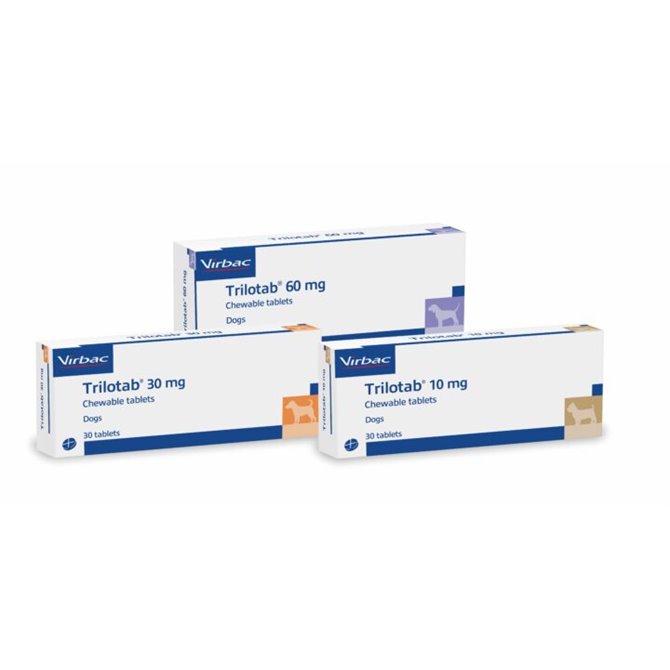
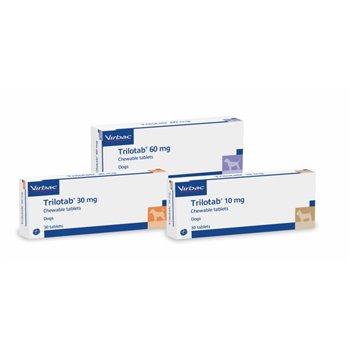
60mg Trilotab Chewable Tablets for Dogs - Pack of 30
Trilotab 60mg Chewable Tablets for Dogs: Managing Canine Cushing’s Syndrome
60mg Trilotab contains trilostane, an active substance that inhibits the enzyme 3β-hydroxysteroid dehydrogenase. This inhibition reduces cortisol synthesis in the adrenal glands, thereby decreasing excessive cortisol levels in dogs with Cushing’s syndrome.
Administered orally, 60mg Trilotab is designed as a chewable, flavoured tablet to facilitate ease of administration. The tablet features a cross-shaped break line, allowing it to be divided into two or four equal parts to achieve precise dosing tailored to the dog's weight and specific needs.
VETERINARY PRESCRIPTION REQUIRED
Product Features
- Pack Size: - Box of 30 Tablets
- Target Animal: - Dog (Canine)
- Pet Prescription Required?: - Yes
Additional Product Information
Description
Cushing’s syndrome (hyperadrenocorticism) is a common endocrine disorder in dogs, especially those entering their middle to senior years. It develops when dogs experience prolonged exposure to high levels of cortisol, a hormone produced by the adrenal glands. As a result, affected animals may present with a variety of health problems, including increased thirst and urination, an enhanced appetite, enlarged abdomen, hair loss, and muscle weakness.
Understanding Cushing’s Syndrome in Dogs
Cushing’s syndrome generally appears in two main forms:
Pituitary-Dependent Hyperadrenocorticism (PDH): This form is the most prevalent, representing around 85% of all cases. It occurs due to a benign tumor in the pituitary gland at the base of the brain, which leads to excessive secretion of adrenocorticotropic hormone (ACTH). High ACTH levels prompt the adrenal glands to produce an excess of cortisol.
Adrenal-Dependent Hyperadrenocorticism (ADH): Less frequently encountered, ADH arises when a tumor forms in one or both adrenal glands, directly increasing cortisol production.
Common signs of Cushing’s syndrome include:
- Increased thirst and urination
- Heightened appetite
- Abdominal enlargement, often described as a “pot-bellied” appearance
- Hair loss, particularly over the trunk
- Thinning skin
- Muscle weakness and reduced energy
- Panting
- Recurrent skin infections
These symptoms often emerge gradually, making them easy to mistake for normal aging. Consequently, a comprehensive veterinary assessment is critical for accurate diagnosis and effective treatment.
What our customers say about us.
First time I have used this company and pleased the Order arrived fairly quickly and at a reasonable price, will definitely be using this company again
MW
Source: Trustpilot Review
easy to order quick services by tracked RMail delivery
Phillip
Source: Trustpilot Review
Excellent communication and customer service. Will rush medication out to you and will let you know if theres an issue with the prescription , my end i.e scanned blank
Loz
Source: Trustpilot Review
- Tracked 24 Delivery Follow your parcel online
- VMD & RCVS Registered VetDispense is a registered UK Dispensary
- Secure Payment Pay securely online by card or PayPal
- Independent Since 2008 A Trusted UK Dispensary