


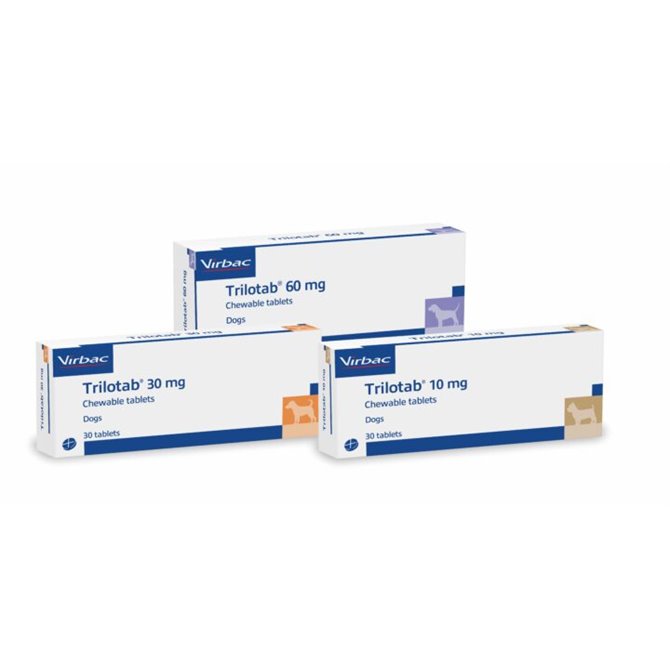
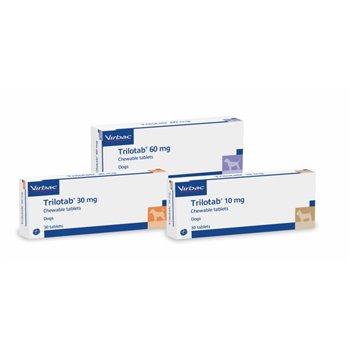
10mg Trilotab Chewable Tablets for Dogs - Pack of 30
10mg Trilotab Chewable Tablets for Dogs are a prescription-only veterinary medicine used to help control Cushing’s syndrome (hyperadrenocorticism) in dogs.
10mg Trilotab tablets contains trilostane, a medication that helps reduce excessive cortisol production in the adrenal glands. The chewable, flavoured format supports steady daily dosing. 10mg Trilotab is supplied as a pack of 30 tablets for ongoing management. The tablets have a cross-shaped break line so they can be divided into halves or quarters when your vet is fine-tuning the dose to match your dog’s individual response.
10mg Trilotab is used for dogs diagnosed with either pituitary-dependent or adrenal-dependent hyperadrenocorticism.
VETERINARY PRESCRIPTION REQUIRED
Product Features
- Pack Size: - Box of 30 Tablets
- Target Animal: - Dog (Canine)
- Pet Prescription Required?: - Yes
Additional Product Information
Description
Cushing’s syndrome in dogs develops when the body is exposed to higher-than-normal levels of cortisol over a prolonged period. Cortisol is a natural steroid hormone and it helps regulate blood sugar, fat metabolism, immune responses, and blood pressure; when it stays high, it can drive changes ranging from muscle wasting to fragile skin and recurrent infections.
In most dogs, Cushing’s is pituitary-dependent hyperadrenocorticism (PDH), where a small (often benign) pituitary tumour produces excess adrenocorticotropic hormone (ACTH) and overstimulates both adrenal glands. Less commonly, adrenal-dependent hyperadrenocorticism (ADH) occurs due to a tumour in an adrenal gland, which may be benign or malignant.
Some dogs develop iatrogenic Cushing’s after long-term corticosteroid medication, and this needs careful veterinary guidance. Treatment with trilostane, including 10mg Trilotab when prescribed, aims to control clinical signs and improve quality of life rather than remove an underlying tumour, and the dose may need adjusting as your dog’s needs change.
The signs of Cushing’s can be subtle at first and may be mistaken for ageing or weight gain, because the changes often develop gradually. Many owners notice thirst and urination changes early on, then see coat, skin, and muscle changes later. Common clinical signs include:
- You may notice increased thirst (polydipsia) and increased urination (polyuria).
- Your dog may seem constantly hungry (polyphagia) and gain weight despite no obvious diet change.
- You may see panting, reduced exercise tolerance, and muscle weakness.
- A pot-bellied appearance can develop due to abdominal muscle loss and fat redistribution.
- Hair thinning or symmetrical hair loss (alopecia) may occur, and coat regrowth can be slow after clipping or grooming.
- The skin can become thinner, and recurrent skin or ear infections may be more likely.
Because cortisol influences multiple organs, your vet will usually run blood biochemistry and urinalysis, and then confirm the diagnosis with endocrine testing such as an ACTH stimulation test or a low-dose dexamethasone suppression test. Some dogs also need ultrasound imaging to assess the adrenal glands and look for changes that help distinguish PDH from ADH. These steps help your vet choose a safe starting dose, identify complications such as hypertension, urinary tract infection, or diabetes, and set sensible monitoring targets once 10mg Trilotab is started.
How does 10mg Trilotab work?
Trilostane reduces cortisol production at its source within the adrenal glands. Cortisol is made through a step-by-step biochemical pathway, and 10mg Trilotab inhibits an enzyme called 3β-hydroxysteroid dehydrogenase, which is involved in converting precursor hormones into cortisol. By partially blocking this enzyme, 10mg Trilotab helps reduce excessive cortisol synthesis and brings hormone levels closer to a healthier range. Trilostane can also influence aldosterone, which is why electrolyte monitoring matters. 10mg Trilotab does not remove a pituitary or adrenal tumour, but it can reduce the clinical impact of excess cortisol so the body can function more normally. Improvements are often gradual; drinking and urination may settle first, while skin health, coat regrowth, and muscle strength can take longer. Your vet will balance test results with how your dog is acting at home to keep treatment on track.
Because every dog responds differently, Trilotab dosing must be individualised and guided by a veterinary surgeon. Your vet will choose a starting dose based on body weight, clinical signs, and other health factors such as kidney disease, liver changes, diabetes risk, or concurrent medicines. Follow-up testing is essential because the goal is controlled cortisol levels, not over-suppression. Monitoring may include ACTH stimulation testing, blood biochemistry, and electrolyte checks (including sodium and potassium), alongside review of thirst, appetite, weight, and energy levels. As with any endocrine medicine, side effects can occur. Contact your vet promptly if your dog develops vomiting, diarrhoea, marked lethargy, loss of appetite, weakness, shaking, or collapse, as these can be signs that cortisol has dropped too low (hypoadrenocorticism) or that your dog needs urgent assessment. If your vet advises stopping 10mg Trilotab for safety reasons, they will guide you on the next steps and any supportive treatment that may be needed.
Give 10mg Trilotab exactly as prescribed and at the same time each day, and do not change the dose or schedule without veterinary advice, even if your dog seems brighter or is drinking less. Many vets recommend giving trilostane with food to support absorption and reduce stomach upset, so ask your vet how they want you to offer 10mg Trilotab and whether once-daily or twice-daily dosing is best for your dog. If you miss a dose, do not double up unless your vet specifically tells you to; make a note and continue with the next scheduled dose. A simple diary of water intake, appetite, urination, energy, and skin changes can be very helpful between appointments. Dogs with Cushing’s can be more prone to urinary tract infections and diabetes mellitus, so seek veterinary advice if your dog becomes painful when urinating, starts vomiting, seems unusually tired, or shows a sudden change in drinking or appetite while taking 10mg Trilotab.
How soon will my dog feel better on 10mg Trilotab?
Some dogs show early improvement in drinking, urination, and appetite within days to a couple of weeks, but changes to coat quality, skin thickness, and muscle strength can take longer. Response varies, so follow-up blood tests and your day-to-day observations help your vet adjust 10mg Trilotab safely.
What are the most common symptoms of Cushing’s syndrome in dogs?
Common signs include increased thirst and urination, increased appetite, panting, a pot-bellied look, weight gain, muscle weakness, and hair thinning or symmetrical hair loss. Many dogs also develop thin, fragile skin and recurrent skin or ear infections. If you notice these changes, your vet can assess for endocrine disease.
How is Cushing’s syndrome diagnosed in dogs?
Diagnosis usually starts with a clinical exam plus blood and urine tests to look for supportive patterns and rule out similar conditions. Vets then use endocrine tests such as an ACTH stimulation test or a low-dose dexamethasone suppression test. Ultrasound imaging may be recommended to assess the adrenal glands.
What side effects should I watch for with 10mg Trilotab?
Mild stomach upset can occur, including reduced appetite, vomiting, or diarrhoea. More serious signs, such as marked lethargy, weakness, shaking, or collapse, need urgent veterinary advice because they may indicate cortisol has dropped too low (hypoadrenocorticism). Always contact your vet if your dog seems unwell on treatment.
What should I do if I miss a dose of 10mg Trilotab?
If you miss a dose, do not automatically give a double dose. The safest approach is to contact your vet or follow the plan they have given you for missed doses. Keep a note of when it happened, and restart the normal schedule at the next planned dosing time.
What our customers say about us.
I always use vetdispense to order my dogs Cytopoint. It always arrives pronptly and well packaged.
Victoria
Source: Trustpilot Review
Ordering and payment were smoothly carried out, dispatch was timed to coincide with the delivery service to ensure the drugs reached me in a chilled state within the stated delivery time.
JB
Source: Trustpilot Review
Great prices on most products. Good availability of products and fast delivery. Highly recommend this company for all prescription medicines.
Alastair
Source: Trustpilot Review
You may also like
- Tracked 24 Delivery Follow your parcel online
- VMD & RCVS Registered VetDispense is a registered UK Dispensary
- Secure Payment Pay securely online by card or PayPal
- Independent Since 2008 A Trusted UK Dispensary