


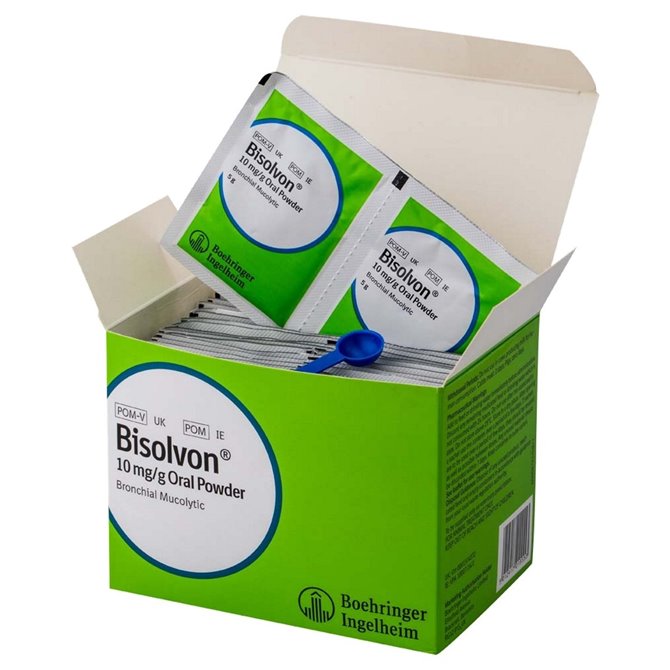
Bisolvon Sachet 5g
Bisolvon 5g Sachets are a prescription veterinary mucolytic used to help dogs, cats, cattle and pigs with respiratory disease where thick mucus is making breathing or airway clearance more difficult.
Each Bisolvon sachet contains bromhexine hydrochloride, which helps thin and loosen dense bronchial secretions so they can be moved more easily through the respiratory tract. Bisolvon Sachets are not an antibiotic or cough suppressant, but they may be prescribed as part of a wider treatment plan when mucus is contributing to a chesty cough, rattly breathing, nasal discharge or reduced comfort.
Bisolvon should be given exactly as directed by your veterinary surgeon, usually mixed with feed or drinking water, with urgent veterinary advice sought if breathing becomes laboured or the animal worsens.
VET PRESCRIPTION REQUIRED
Product Features
- Pack Size: - Sold Individually
- Target Animal: - Dogs and Cats
- Pet Prescription Required?: - Yes
- Product Name: - Bisolvon 5g Sachet
Additional Product Information
Description
Bisolvon Sachet 5g is a prescription veterinary mucolytic used to support animals with respiratory disease where thick mucus is making breathing and clearance of secretions more difficult. Bisolvon 5g Sachets contain bromhexine hydrochloride, an active ingredient designed to help loosen dense bronchial mucus so it can be moved more easily through the respiratory tract. This can be helpful when a dog, cat, pig or cattle patient has a chesty, mucus-related respiratory problem and your veterinary surgeon wants to make airway secretions less sticky. Bisolvon Sachets are not a cough suppressant and they are not an antibiotic. Instead, they are commonly used as part of a wider clinical plan, especially when mucus is a complicating factor alongside infection, inflammation, irritation or reduced mucociliary clearance. The 5g sachet format offers a measured powder presentation that can be administered in feed or drinking water as directed by your vet. This makes the medicine suitable for carefully supervised use across several species, while still requiring individual assessment and accurate dosing for the animal being treated.
Bisolvon works by changing the nature of mucus within the airways. During respiratory illness, mucus can become thick, adhesive and difficult for the animal to clear, particularly when the lower airways, bronchi or upper respiratory tract are affected. Bromhexine has mucolytic and secretolytic actions, which means it helps to thin and mobilise airway secretions. It stimulates fluid production from the mucus glands of the respiratory tract and helps break down the glycoprotein structure that gives mucoid sputum its viscosity. As the mucus becomes less dense, the animal’s normal mucociliary clearance mechanisms can work more effectively. Bisolvon Sachets therefore help support the natural process of moving secretions up and out of the airways, which may make coughing more productive and reduce the feeling of congestion. This is why Bisolvon Sachets are often described as helping to loosen and clear mucus rather than simply stopping a cough. By supporting clearance, they may also help other prescribed respiratory treatments reach a more manageable airway environment. This is especially valuable when secretions are heavy enough to interfere with comfort, feeding, exercise tolerance or normal airway hygiene.
Bisolvon is used as an aid to the treatment of respiratory disease in cattle, pigs, dogs and cats when mucus is present and causing concern. Your vet may prescribe Bisolvon 5g when symptoms suggest that airway secretions are too thick, such as a moist or chesty cough, rattly breathing, nasal discharge, reduced tolerance of exercise, or difficulty shifting phlegm. These signs can occur with several respiratory conditions, so it is important that the underlying cause is assessed rather than assuming all coughs need the same approach. Some animals need antimicrobial therapy, anti-inflammatory treatment, bronchodilators, supportive nursing or further diagnostics, depending on the clinical picture. Bisolvon Sachets may be used alongside other prescribed medicines where appropriate, but they should not be used as a substitute for veterinary examination if the animal is breathless, lethargic, off food, feverish, producing blood-stained discharge or deteriorating. Rapid breathing, open-mouth breathing in cats, blue-tinged gums or collapse should be treated as urgent warning signs.
The powder in Bisolvon Sachets is intended for oral administration and should be mixed with feed or drinking water immediately before it is offered, following the dosing schedule supplied by your veterinary surgeon. Dosage depends on the species, weight, frequency and duration of treatment, so the instructions on the prescription should always take priority over general guidance. Dogs, cats, cattle and pigs have different requirements, and even animals of the same species may need a different plan depending on their size and clinical condition. Bisolvon Sachets should be given for the full course advised unless your vet tells you otherwise, as stopping early may mean mucus remains difficult to clear. If the animal refuses medicated food or water, vomits, worsens, or shows no improvement within the expected timeframe, contact your vet for advice. Do not increase the dose or combine medicines without checking with your veterinary practice first. Where a measuring spoon is supplied, it should be used consistently and kept clean between administrations.
For pet owners and animal carers, Bisolvon Sachets can feel reassuring because they target one of the most uncomfortable parts of many respiratory illnesses: thick secretions that sit in the airways and make coughing harder work. A productive cough can sound alarming, but in mucus-related conditions it may be part of the body’s attempt to remove material from the respiratory tract. By reducing mucus viscosity, Bisolvon can help make this process more efficient while the main condition is being treated. It is still important to monitor the animal closely, especially overnight or after exercise, and to keep them in a calm, well-ventilated environment away from smoke, dust and strong aerosols. Bisolvon Sachets should be handled with care, avoiding contact with the eyes and unnecessary skin contact, and hands should be washed after administration. For food-producing animals, any withdrawal information and restrictions must be followed exactly as prescribed. Good hydration, appropriate rest and reduced exposure to respiratory irritants can also support recovery alongside veterinary treatment.
Bisolvon Sachets are classed as POM-V, which means they require a valid prescription from a veterinary surgeon. This is an important safeguard because coughs and breathing changes can have many causes, including bacterial infection, viral disease, allergic airway disease, heart disease, parasites, foreign bodies or environmental irritation. A vet can decide whether a mucolytic is appropriate, whether additional diagnostics are needed, and whether medicines such as antibiotics, bronchodilators or anti-inflammatory treatment should be used alongside it. Bisolvon Sachets are best understood as a supportive respiratory medicine that helps with mucus clearance while the underlying condition is managed. Always store and use Bisolvon Sachets according to the label and veterinary directions, keep the powder away from children and other animals, and seek urgent veterinary help if breathing becomes laboured, gums appear pale or blue, or the animal becomes weak or collapsed. Never use leftover medication for another animal, even when the signs appear similar, because the cause and safe dose may be different.
What are Bisolvon Sachets used for in animals?
Bisolvon 5g is used as a mucolytic aid for respiratory disease where mucus is a complicating factor. They help loosen thick airway secretions in dogs, cats, pigs and cattle, making mucus easier to clear. They should only be used when prescribed by a veterinary surgeon.
How do Bisolvon Sachets work?
Bisolvon Sachets contain bromhexine hydrochloride, which helps thin and mobilise mucus in the respiratory tract. It increases fluid in airway secretions and reduces the viscosity of mucoid sputum, supporting normal mucociliary clearance. This can make coughing more productive rather than simply suppressing it.
Do Bisolvon Sachets stop a cough?
Bisolvon Sachets do not work like a cough suppressant. They help loosen and clear mucus, so an animal may still cough as the airways move secretions. A cough should always be assessed by a vet, particularly if breathing is difficult, symptoms persist or the animal seems unwell.
Can Bisolvon Sachets be used for dogs and cats?
Yes, Bisolvon Sachets may be prescribed for dogs and cats when thick mucus is involved in a respiratory condition. The dose and treatment length are different for each animal and depend on bodyweight and clinical need, so follow your veterinary surgeon’s instructions exactly.
Can Bisolvon Sachets be mixed with food?
Bisolvon Sachets are intended for oral use and can usually be mixed with feed or drinking water immediately before administration. Make sure the animal consumes the medicated portion. If your pet refuses it or only eats part of it, contact your vet for advice.
Are Bisolvon Sachets an antibiotic?
No, Bisolvon 5g Sachets are not an antibiotic. They are mucolytic, meaning they help change the thickness of mucus in the airways. Your vet may prescribe them alongside antibiotics, bronchodilators or other medicines if the respiratory condition requires a broader treatment plan.
Do I need a prescription for Bisolvon Sachets?
Yes, Bisolvon Sachets are a POM-V veterinary medicine, so a valid prescription is required. This helps ensure the animal has been properly assessed and that the treatment is suitable for the cause of the respiratory signs, rather than masking a more serious problem.
Brand

What our customers say about us.
First time I have used this company and pleased the Order arrived fairly quickly and at a reasonable price, will definitely be using this company again
MW
Source: Trustpilot Review
I bought some pills for my cat that the vet had recommended. I shopped around at various pet product sites and found Vetdispense far the cheapest even after including the postage charge. Delivery was within a few days of my order. By all means if you are buying something for your pet, check all the sites but make sure you check Vetdispense!
Martin
Source: Trustpilot Review
This was the first order I have made from vet dispense, very easy to order and quick delivery. I would highly recommend ordering from Vetdispense and I will definitely use again for my dogs probiotic sachets next month. I would suggest vetdispense to have promo/discount codes for customers on general pet goods.
Lauren
Source: Trustpilot Review
You may also like
- Tracked 24 Delivery Follow your parcel online
- VMD & RCVS Registered VetDispense is a registered UK Dispensary
- Secure Payment Pay securely online by card or PayPal
- Independent Since 2008 A Trusted UK Dispensary