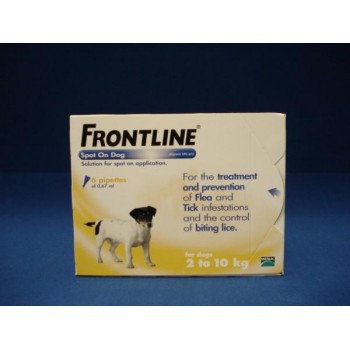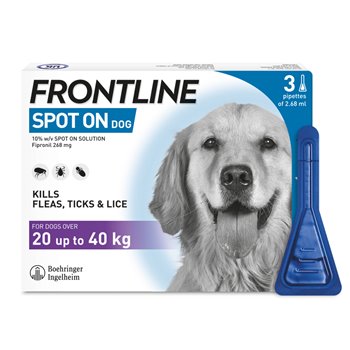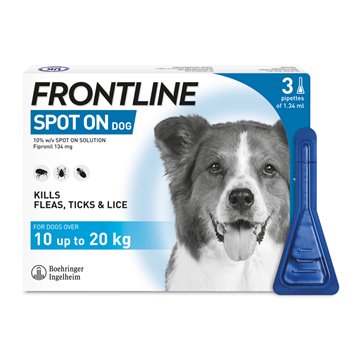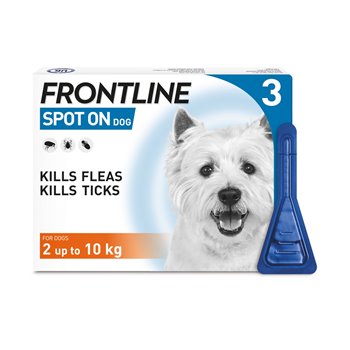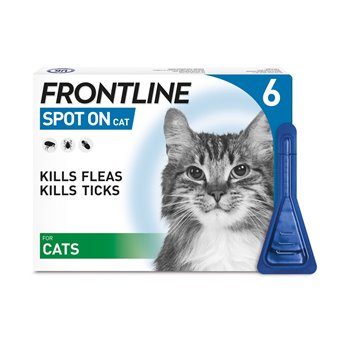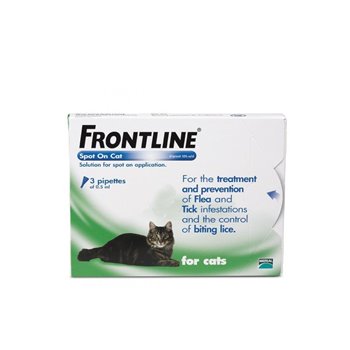
Frontline Flea Spot On for Cats - 3 pipettes of 0.5 ml
3 Pipette Pack. The UK's favourite spot-on Flea and Tick Treatment. Fast-acting and Long-lasting Protection for Cats
Flea problems are rarely limited to what you see on the coat. Adult fleas live on the host, but eggs fall off into the environment, hatch into larvae, and then develop into pupae before emerging as new adults. In many households, the majority of the flea population is in carpets, bedding, and soft furnishings rather than on the dog or cat itself. This explains why infestations can seem to come back even after you treat your pet once. Consistency matters because newly emerged fleas must be killed before they can bite repeatedly and lay more eggs. Frontline is designed to keep working for a period after application, helping to control the adult fleas that hop onto your pet between treatments. If you are tackling a household infestation, treating the pet and the environment at the same time is important, because one without the other can lead to a frustrating cycle of reinfestation. Using Frontline on all cats and dogs in the household, and keeping up with washing and vacuuming, usually gives the most reliable results.
Frontline works through active ingredients that act on parasites living in the coat and on the skin surface. Many Frontline products contain fipronil, a phenylpyrazole ectoparasiticide that targets the flea’s nervous system. In simple terms, it disrupts normal nerve signalling in the insect, which leads to paralysis and death. After application, the medication spreads through the skin’s lipid layer and can accumulate in the sebaceous (oil) glands, creating a reservoir effect that helps maintain activity over time. Some Frontline formulations also include an insect growth regulator (an example is (S)-methoprene), which helps inhibit the development of flea eggs and larvae and supports life-cycle control. Frontline is designed to work by contact, so fleas do not need to bite for the active ingredient to take effect, which can be helpful for pets prone to flea allergy dermatitis (FAD). Depending on the specific Frontline product you choose, there may also be activity against ticks and biting lice, which is useful for pets that spend time outdoors or live with other animals.
Recognising fleas early helps you intervene before the skin becomes intensely inflamed. Dogs may scratch, nibble, or rub along the back and tail base, while cats often over-groom, which can make the problem less obvious until you notice hair thinning. A fine-toothed flea comb can help you find live fleas or “flea dirt”, and it is worth checking any pet with sudden itchiness. Flea allergy dermatitis is an immune-mediated condition where even a small number of bites provokes a marked reaction. In kittens and puppies, heavy flea burdens can contribute to anaemia, and fleas can spread tapeworm (Dipylidium caninum), so controlling fleas supports broader parasite management. Common signs linked with flea infestation include:
Frontline can help by reducing flea exposure, although pets with significant dermatitis may also need veterinary assessment, anti-inflammatory care, or treatment for infection.
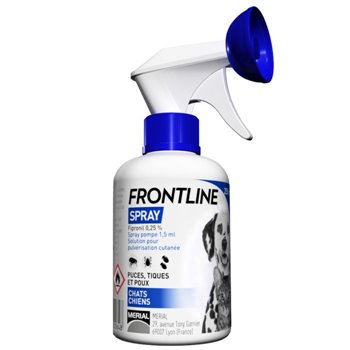
Choosing and applying Frontline correctly matters, because dosing and technique affect how well the product distributes across the skin. Always use a Frontline product that is specifically labelled for your pet’s species and weight range, and never apply a dog product to a cat or vice versa. With spot-on treatments, part the fur and apply directly to intact skin at the back of the neck or between the shoulder blades, where licking is difficult. With sprays, follow the instructions carefully and apply as directed. Try to avoid bathing or shampooing immediately before and after application, because excessive washing can reduce the skin’s natural oils that help the active ingredient spread. Let the application site dry before close cuddling, and keep children away from the treated area until dry. Do not split pipettes between pets, and avoid use on other species unless the label says it is safe; Frontline products are not intended for rabbits. In multi-pet households, treat every dog and cat at the same time, and wash bedding and vacuum thoroughly to reduce environmental stages.
It is understandable to worry if you still notice fleas after applying Frontline, but this can happen for practical reasons. Pupae in the environment can remain dormant and then emerge in waves, so you may see newly emerged fleas jump on before they are affected. You might also see continued scratching while existing inflammation settles, particularly in pets with FAD. If you think Frontline is not controlling fleas as expected, check that the correct dose and timing are being used, and that all in-contact pets are treated. Persistent itchiness can also have other causes, such as mites, contact dermatitis, or food allergy, so a veterinary check is sensible if the skin does not improve. Like any topical medication, Frontline can occasionally cause mild redness or irritation at the application site, and excessive salivation can occur if a pet licks wet product. If your pet is unwell, very young, pregnant, or has chronic skin disease, or if you see vomiting, marked lethargy, tremors, or breathing changes after application, seek veterinary advice promptly.
How quickly does Frontline start killing fleas?
Frontline is designed to act on contact once it has spread across the skin’s natural oils. Many owners notice fewer live fleas within the first day, but results can vary with coat type, bathing, and the level of environmental infestation. Keep combing and vacuuming while the cycle breaks.
Why am I still seeing fleas after using Frontline?
Seeing fleas after treatment is often due to the home environment. Flea pupae can hatch over days or weeks and jump onto your pet before they are affected. Treat every dog and cat in the household, repeat Frontline on schedule, and clean bedding and soft furnishings to reduce reinfestation.
Does Frontline treat ticks as well as fleas?
Some Frontline products are formulated to help control ticks as well as fleas, but coverage depends on the product and species. Always check the box to confirm what parasites are included and how long protection lasts. If tick risk is high where you live, ask your vet which option fits best.
Do I need to treat my house when using Frontline?
Often, yes. Adult fleas live on the pet, but eggs, larvae, and pupae develop in carpets, bedding, and crevices. Alongside Frontline, wash pet bedding on a hot cycle where possible, vacuum thoroughly, and keep cleaning consistent for several weeks. This supports faster, more lasting control.
3 Pipette Pack. The UK's favourite spot-on Flea and Tick Treatment. Fast-acting and Long-lasting Protection for Cats
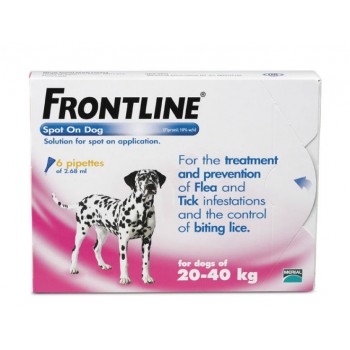
6 Pipette Pack. The UK's favourite spot-on Flea and Tick Treatment. Fast-acting and Long-lasting Protection for Cats
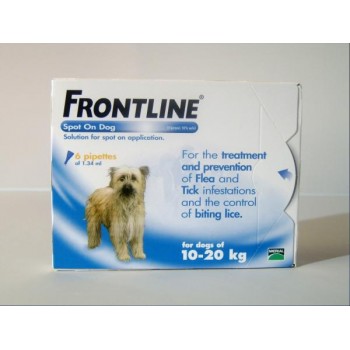
The UK's favourite spot-on Flea and Tick Treatment. Fast-acting and Long-lasting Protection
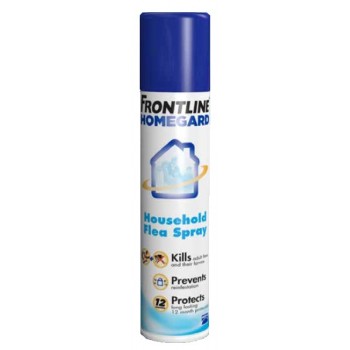
HomeGard is a household flea spray designed for use in your home and surrounding environments. It kills adult fleas and larvae in your home and prevents eggs and larvae developing there for approximately 12 months, providing enhanced year-round protection