


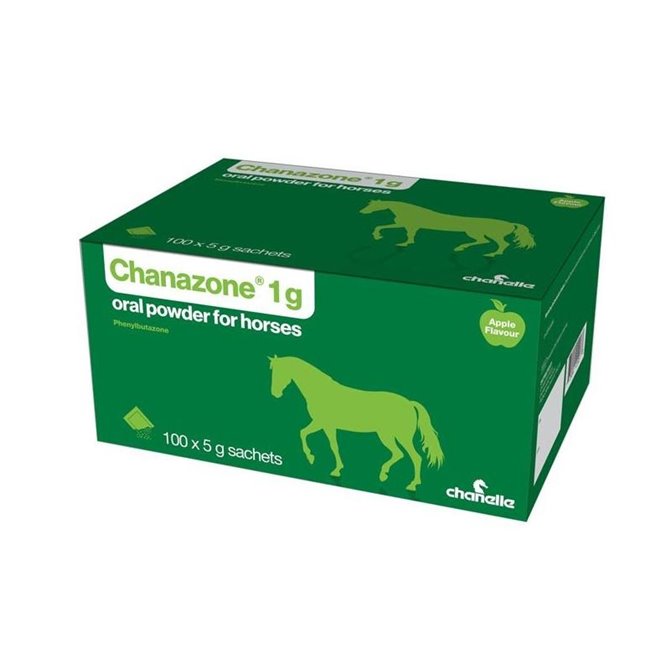
Chanazone Powder for Horses - 1g Sachet
Chanazone for Horses is an oral non‑steroidal anti‑inflammatory medicine (an NSAID) used in horses when both pain relief and a reduction in associated inflammation are required. It is commonly prescribed for musculoskeletal conditions, where inflammation within joints or surrounding soft tissues can make movement uncomfortable and slow down rehabilitation.
VETERINARY PRESCRIPTION REQUIRED
When a horse is sore, the body naturally “guards” the painful area by shortening the stride, shifting weight, and tightening the surrounding muscles. Over time, that compensation can overload other structures, encourage stiffness, and make it harder for the horse to move freely. Chanazone can help a horse rest, move, and eat more normally, which are all important parts of recovery.
The active ingredient in Chanazone for Horses is phenylbutazone, an NSAID that reduces pain and inflammation by limiting the production of prostaglandins. Prostaglandins are chemical messengers the body makes in response to tissue injury; they contribute to pain signalling, the widening of blood vessels, and the leakage of fluid into tissues that leads to swelling (oedema). Phenylbutazone works by inhibiting cyclo‑oxygenase (COX) enzymes involved in prostaglandin synthesis. In practical terms, Chanazone for Horses can reduce pain (analgesia), decrease inflammatory swelling, and improve comfort so that a horse can bear weight more evenly and move with a more natural gait. It does not “mask” injury in the sense of fixing the cause, so a diagnosis, appropriate rest, controlled exercise, farriery, and other veterinary treatments remain important. However, when pain is better controlled, horses are often calmer and easier to manage, which helps owners provide the consistent care that musculoskeletal problems usually need.
Product Features
- Pack Size: - Single Sachet
- Target Animal: - Horse (Equine)
- Related Condition: - For the treatment of musculoskeletal conditions in the horse
- Pet Prescription Required?: - Yes
- Active Ingredient: - Phenylbutazone
- Product Name: - Chanazone 1g Oral Powder for Horses
Additional Product Information
Description
Musculoskeletal pain in horses is not always dramatic. Many horses remain bright and willing, but show subtle signs that something is not quite right, particularly after work, on hard ground, or in cold weather. Your vet may recommend Chanazone for Horses when clinical findings suggest inflammation within the locomotor system, such as synovitis (inflammation of the joint lining), tendinitis (inflammation of a tendon), bursitis, or flare‑ups of osteoarthritis. Owners often notice one or more of these signs:
- stiffness on first moving off, especially after being stabled
- a shortened stride, toe‑dragging, or reluctance to turn tightly
- heat, swelling, or increased sensitivity around a joint, tendon, or ligament
- reduced performance, resistance to being ridden, or changes in temperament under saddle
- resting a limb, shifting weight frequently, or lying down more than usual
These changes can have several causes, which is why veterinary assessment matters, but they can indicate that targeted analgesia and anti‑inflammatory treatment may improve comfort and help the horse settle into a safe recovery routine.
Chanazone for Horses is used where pain and inflammation are closely linked, particularly in conditions affecting joints and soft tissues. It is commonly prescribed for lameness associated with osteoarthritis (degenerative joint disease), acute sprains and strains, inflammation around the fetlock or pastern, and soreness after injury to tendons or ligaments. Vets may also consider Chanazone for Horses for short‑term control of inflammation in some hoof‑related problems where pain restricts mobility, including painful flare‑ups of laminitis, alongside the wider management plan. The aim is to reduce the inflammatory cascade that contributes to heat, swelling, and tenderness, so the horse can stand more comfortably, move enough to support circulation, and cope with handling. In acute injuries, reducing inflammation early can limit secondary tissue damage. In longer‑term conditions, careful anti‑inflammatory support may help keep a horse comfortable while a broader plan focuses on weight management, physiotherapy, surface changes, and workload adjustments.
Most horses receive Chanazone as an oral powder supplied in pre‑measured sachets to support accurate dosing. The powder is usually mixed into a small, palatable feed, dampened chaff, or a mash so the full amount is taken, and it helps to offer it in a portion your horse reliably finishes before giving the rest of the meal. If you are managing box rest or restricted turnout, it can be useful to keep a dedicated “medicine feed” so you can see straight away that nothing has been left behind. Many owners find it easiest to give Chanazone for Horses at consistent times each day, because steady dosing can provide more predictable relief. Your vet will set the dose and duration based on the diagnosis, the horse’s size and age, and any other medicines or health issues, and it is important not to increase the dose or extend the course without advice. Because NSAIDs are processed by the body’s normal liver and kidney pathways, your vet may recommend the lowest effective dose for the shortest suitable period, especially in older horses. In the UK, medicines containing phenylbutazone have specific rules around the equine passport and the food chain, so your vet will confirm that Chanazone for Horses is appropriate for your horse’s status before prescribing.
As with any NSAID, Chanazone for Horses is most appropriate when used under veterinary guidance and when the horse is monitored for tolerance as well as clinical response. Side effects are uncommon at appropriate doses, but they can include reduced appetite, dullness, mouth ulceration, diarrhoea, or colic‑type discomfort, which may indicate gastric irritation or ulceration. NSAIDs can also affect kidney function, particularly if a horse is dehydrated, on restricted water intake, or has pre‑existing renal disease, so fresh water and good hydration are important. Tell your vet about every medicine and supplement your horse receives, because combining Chanazone for Horses with other NSAIDs or with corticosteroids (such as prednisolone or dexamethasone) can increase the risk of gastrointestinal complications and is usually avoided unless a vet specifically directs otherwise. If your horse becomes inappetent, shows signs of abdominal pain, develops diarrhoea, seems unusually depressed, or the lameness worsens, stop Chanazone for Horses and contact your vet promptly. For horses in training or competition, remember that NSAIDs are controlled under most rules, so you should discuss appropriate withdrawal times with your vet and the relevant governing body.
What is Chanazone used for?
Chanazone for Horses is prescribed to relieve pain and reduce inflammation linked to musculoskeletal problems, such as osteoarthritis, soft‑tissue injuries, and other causes of lameness. It can help your horse move more comfortably while the underlying issue is treated with rest, controlled exercise, farriery, or further veterinary care.
How does Chanazone for Horses work in the body?
Chanazone contains phenylbutazone, an NSAID that lowers prostaglandin production. Prostaglandins are involved in pain signalling and inflammatory swelling, so reducing them can ease soreness, heat, and oedema around affected tissues. The aim is improved comfort, not a cure, so the cause still needs attention.
How quickly will Chanazone start to relieve pain?
Many horses show some improvement in comfort within the first day of Chanazone, although the response depends on the condition and how inflamed the tissues are. Acute injuries may settle quickly, while chronic arthritis can need a little longer and a broader management plan. If there is no improvement, speak to your vet.
How do I give Chanazone if my horse is a fussy eater?
Mix Chanazone for Horses into a small, tasty “medicine feed” such as a damp mash or a handful of chaff with a flavour your horse likes. Offer that first so you can see it is fully eaten, then give the rest of the feed. If your horse refuses it, do not force dosing; ask your vet for alternatives.
Can Chanazone for Horses be given with other pain relief medicines?
Do not combine Chanazone with other NSAIDs (such as meloxicam) or corticosteroids unless your vet specifically directs it, because the risk of gastric ulceration and kidney strain can increase. Always tell your vet about all medicines, supplements, and herbal products your horse receives so interactions can be avoided.
What our customers say about us.
I have used Vetdispense for my elderly springer spaniels medication for a number of years. Our vets were charging double the price as medication had to be stored in refrigerators. I get a prescription from my vets and send a copy with my order and it has always been processed and despatched promptly. I use an app on my mobile and can keep track of the order. If there have ever been any queries you can call and speak to someone (a rare and much appreciated thing these days). I highly recommend their service.
Audrey
Source: Trustpilot Review
They are efficient and their procedures are easy. They are also fast and delivery is quick. Everything you need when your dog needs medication.
Nick
Source: Trustpilot Review
I wouldn’t go anywhere else for my cat’s medication. Price is competitive, but the difference here is the customer service - it is second to none. They’re so helpful, and the medicine is always delivered immediately. Nice clear invoices too makes claiming back on my insurance a doddle. Fantastic company
Nikki
Source: Trustpilot Review
You may also like

- Tracked 24 Delivery Follow your parcel online
- VMD & RCVS Registered VetDispense is a registered UK Dispensary
- Secure Payment Pay securely online by card or PayPal
- Independent Since 2008 A Trusted UK Dispensary