


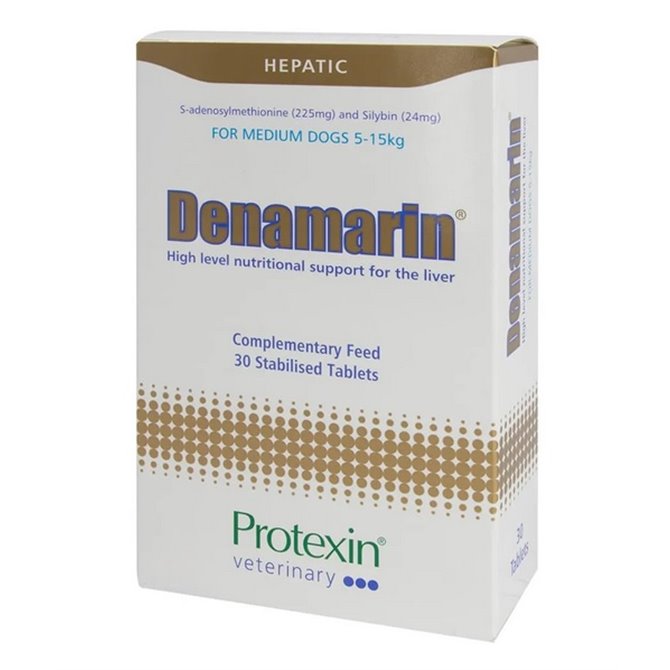
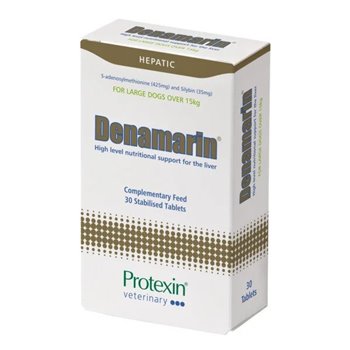
Protexin Denamarin 225mg Tablets for Medium Dogs - Pack of 30
Denamarin is a liver supplement that combines S‑adenosylmethionine (SAMe) and silybin to support liver cell health in dogs and cats. SAMe is a naturally occurring molecule found in every living cell, and it acts as a methyl donor in normal metabolic reactions. SAMe is valued because it supports the liver’s antioxidant defences and helps maintain cell membrane integrity.
Silybin, the second ingredient in 225mg Denamarin Tablets, is the most active fraction of milk thistle (Silybum marianum) extract. It is used for its hepatoprotective and antioxidant properties, and it is especially relevant when oxidative stress is contributing to liver cell damage.
Product Features
- Pack Size: - Pack of 30
- Target Animal: - Dog (Canine)
- Pet Prescription Required?: - No
- Product Name: - Protexin Denamarin Liver Supplement 225mg Tablets for Medium Dogs - Pack of 30
Additional Product Information
Description
Living with a dog who has liver concerns can feel unsettling, especially if blood tests show raised liver enzymes or your vet is monitoring a long‑term hepatic condition. The liver supports detoxification, protein synthesis, bile production, and the metabolism of many medicines, so it influences energy levels, appetite, and digestion.
225mg Denamarin Tablets are a veterinary‑recommended liver support supplement for medium dogs, combining SAMe and silybin in a single daily tablet to support hepatocyte resilience. They are not a replacement for investigating the underlying cause of liver changes, but they can be a part of a wider care plan that may include dietary management, monitoring, and prescribed treatment.
Liver disease is not one single diagnosis, and your vet will decide whether support is needed based on clinical signs, physical examination, and tests such as ALT, ALP, bilirubin, or bile acids. The liver has a large functional reserve, so early changes can be subtle. Often, the liver is dealing with inflammation, oxidative stress, altered bile flow (cholestasis), or exposure to substances that can irritate hepatic tissue, leaving hepatocytes more vulnerable to injury.
225mg Denamarin Tablets are commonly used as adjunctive support in situations where the liver needs ongoing protection, and they can be used alongside other veterinary recommendations rather than as a stand‑alone solution. It can also help to recognise when your dog may need a prompt review rather than simply continuing supplements. Signs worth discussing with your vet include:
- Your dog has a reduced appetite or is leaving meals more often than usual.
- Your dog shows nausea, lip‑smacking, or intermittent vomiting that does not settle promptly.
- Your dog has loose stools or diarrhoea that becomes persistent or is linked with weight loss.
- Your dog seems unusually tired, dull, or reluctant to exercise compared with their normal behaviour.
- Your dog develops yellowing of the gums or whites of the eyes (jaundice), which is always a reason to contact your vet urgently.
These points are not a diagnosis, but they help you and your vet judge whether 225mg Denamarin Tablets are fitting the picture and whether follow‑up testing or a change in treatment is needed.
SAMe is sensitive to stomach acid and can degrade before it reaches the small intestine where absorption is more reliable. For that reason, 225mg Denamarin Tablets are enterically coated, meaning the tablet is designed to resist the low pH of the stomach and dissolve later in the gastrointestinal tract.
Most dogs tolerate Denamarin Tablets very well. Many vets advise giving 225mg Denamarin Tablets on an empty stomach for best absorption, unless your dog is prone to nausea or your vet recommends a different approach, and you can ask how to space the tablet from meals or other medicines if your dog is on a complex plan. In practice, liver support is often paired with other sensible steps such as a veterinary hepatic diet, maintaining a healthy body weight, and avoiding unnecessary supplements that may add metabolic load. Your vet may recommend periodic monitoring of liver enzymes, bilirubin, and bile acids, and they may reassess sooner if your dog becomes markedly unwell, develops persistent vomiting or diarrhoea, or shows any worsening of jaundice. If your dog is taking long‑term medicines such as anticonvulsants or anti‑inflammatories, your vet may be particularly keen to monitor liver values while using 225mg Denamarin Tablets.
Can Denamarin Tablets be given with other medicines?
Often, yes, and they are commonly used alongside prescription medicines when a dog has an ongoing liver condition. Because the liver metabolises many drugs, it is important to tell your vet everything your dog takes, including supplements. Your vet may advise spacing doses to reduce stomach upset.
Should Denamarin Tablets be given with food?
Many vets recommend giving them on an empty stomach for best absorption, because SAMe can be sensitive to stomach conditions and food may reduce uptake. If your dog gets nausea when given tablets without food, your vet can advise a practical compromise. Always follow your vet’s instructions.
Is milk thistle the same as silybin in 225mg Denamarin Tablets?
Milk thistle is the plant source, but silybin is the most active fraction used for liver support. It is a specific component of milk thistle extract and is studied for hepatoprotective, antioxidant actions.
What symptoms suggest my dog’s liver problem is getting worse?
Reduced appetite, vomiting, diarrhoea, weight loss, increased thirst, worsening lethargy, abdominal distension, or behavioural changes can all be warning signs. Yellowing of the eyes or gums (jaundice) is particularly important and should be treated as urgent. If you notice any of these, contact your vet promptly.
Brand

You may also like
What our customers say about us.
Quick delivery
Emma
Source: Trustpilot Review
Always quick to respond and send out my dogs medication and at competitive prices. Easy to navigate the website and upload prescriptions. All in all a great service and would recommend this company whole heartedly.
Janet
Source: Trustpilot Review
I bought some pills for my cat that the vet had recommended. I shopped around at various pet product sites and found Vetdispense far the cheapest even after including the postage charge. Delivery was within a few days of my order. By all means if you are buying something for your pet, check all the sites but make sure you check Vetdispense!
Martin
Source: Trustpilot Review
- Tracked 24 Delivery Follow your parcel online
- VMD & RCVS Registered VetDispense is a registered UK Dispensary
- Secure Payment Pay securely online by card or PayPal
- Independent Since 2008 A Trusted UK Dispensary