


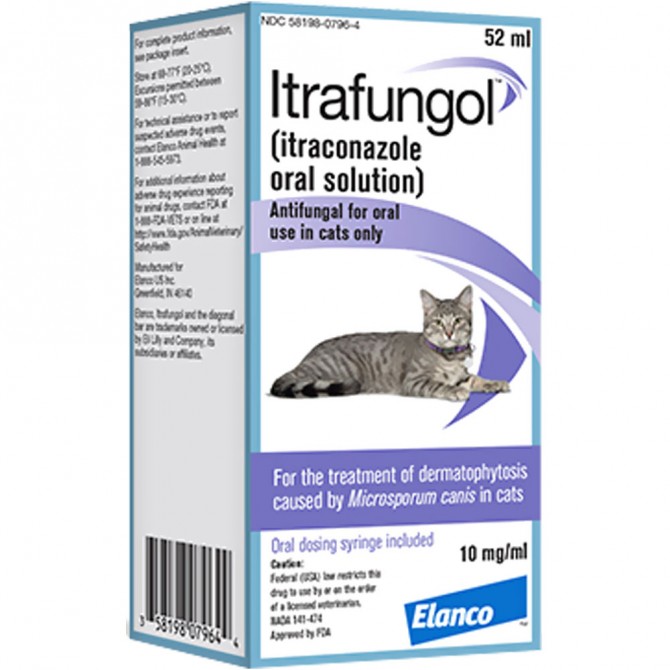
Itrafungol Oral Solution for Cats 52ml + syringe
Itrafungol for Cats is a prescription-only oral antifungal treatment used to help manage ringworm, a contagious fungal skin infection also known as dermatophytosis. Despite its name, ringworm is not caused by worms, but by fungi that can affect your cat’s skin, coat and claws, often causing hair loss, scaling, crusting or broken hairs.
VET PRESCRIPTION REQUIRED
Itrafungol contains itraconazole, which helps target the fungal infection from within as part of a veterinary treatment plan. When used exactly as prescribed, alongside good hygiene and environmental cleaning, Itrafungol for Cats can help support recovery and reduce the spread of infection.
Product Features
- Pack Size: - Sold Individually
- Target Animal: - Cat (Feline)
- Pet Prescription Required?: - Yes (For UK Orders)
- Product Name: - Itrafungol Oral Solution for Cats 52ml + syringe
Additional Product Information
Description
Itrafungol for Cats is a prescription oral antifungal medicine used in cats diagnosed with ringworm, also known clinically as dermatophytosis. Ringworm in Cats is a fungal skin infection, most commonly linked with Microsporum canis. It can affect the coat, claws and outer layers of the skin, and it may spread between cats, dogs and people. Itrafungol contains itraconazole, a triazole antifungal medicine, and is designed for use when a vet has confirmed or strongly suspects a dermatophyte infection. This product is not intended for self-diagnosis; it can only be supplied with a veterinary prescription.
Ringworm in Cats can look different from one cat to another. Some cats develop obvious circular patches of hair loss, while others show mild scaling, broken hairs or very subtle coat changes. Kittens, elderly cats, long-haired breeds, cats from multi-cat homes and cats with other health concerns may be more vulnerable or may take longer to clear the infection. Symptoms can include patchy alopecia, dry scale, crusting, redness, increased grooming, brittle hairs, lesions around the face, ears, feet or tail, and occasionally inflamed claws. A vet may diagnose ringworm using a Wood’s lamp examination, microscopic hair assessment, fungal culture or laboratory PCR testing, especially when symptoms are unclear. Accurate diagnosis matters because allergies, mites, flea irritation, bacterial pyoderma and other dermatological conditions can sometimes produce similar signs, yet need a different treatment approach.
Itrafungol for Cats works by interfering with the fungal cell membrane. Its active ingredient, itraconazole, binds to fungal cytochrome P450 enzymes and reduces the production of ergosterol, an essential component that fungi need to build and maintain their cell membranes. When ergosterol synthesis is disrupted, the fungal cells become weaker and less able to grow, replicate and survive in the skin and hair shafts. Because dermatophytes live in keratinised tissues such as hair and the surface layer of the skin, treatment often needs time to work even when the cat starts to look better. Itrafungol for Cats is commonly prescribed in an intermittent course, often with treatment weeks separated by rest weeks, but the exact dose and schedule should always follow the prescription label and your vet’s instructions.
Successful ringworm management is rarely about medication alone. Itrafungol treats the infection in the cat, but fungal spores can remain on bedding, grooming tools, carpets, furniture and soft furnishings. This is why vets often recommend a wider plan that includes:
- separating affected cats where possible,
- reducing direct contact with other pets,
- washing bedding,
- vacuuming frequently,
- using suitable disinfectant,
- cleaning grooming equipment thoroughly.
In some cases, clipping may be discussed, particularly when the coat is long or lesions are widespread, but this should only be done with veterinary advice because clipping can irritate the skin and spread infected hairs if it is not managed carefully. Wearing gloves, washing hands and limiting handling of affected areas can help protect the household while treatment is ongoing. Families should be especially cautious where there are young children, older adults or anyone who is immunocompromised, because Ringworm in Cats is zoonotic and may cause skin lesions in people. Environmental cleaning can feel demanding, but a steady routine is often more effective than occasional deep cleaning.
What is Itrafungol for Cats used for?
Itrafungol is used under veterinary prescription to treat dermatophytosis, commonly called ringworm, in cats. It is specifically aimed at fungal infection caused by Microsporum canis. Your vet may recommend testing first, because several other skin conditions can resemble ringworm but require different treatment.
Is ringworm in cats actually a worm?
No. Ringworm in Cats is not caused by a worm. It is a fungal skin infection, usually involving dermatophytes such as Microsporum canis. The name comes from the ring-like patches that can appear on skin, although cats do not always develop obvious circular lesions.
What are the signs of ringworm in cats?
Common signs include patchy hair loss, scaling, broken hairs, crusting, redness and scaly lesions around the face, ears, feet or tail. Some cats show very mild signs and may simply have a dull or uneven coat. A vet can confirm whether ringworm is the cause.
How long does ringworm in cats take to clear?
Recovery time varies depending on the cat’s immune system, coat type, living environment and how widely spores have spread. Some cats look better before testing shows the fungus has cleared. This is why vets may recommend completing the full course and arranging rechecks.
Can ringworm spread from cats to people?
Yes. Ringworm in Cats is zoonotic, which means it can spread between animals and people. Children, older adults and immunocompromised people may be more vulnerable. Wearing gloves, washing hands, cleaning bedding and reducing contact with affected areas can help lower household risk.
Can I use Itrafungol for Cats without a prescription?
No. Itrafungol for Cats is a prescription-only veterinary medicine and should only be used when supplied or authorised by a vet. This helps ensure your cat receives the correct diagnosis, dose and monitoring, especially if they have liver, kidney, heart or immune health concerns.
How should I give Itrafungol for Cats?
Give Itrafungol for Cats exactly as your vet has prescribed. It is an oral solution measured with a dosing syringe and gently placed into the mouth. Do not change the dose, stop early or restart treatment later unless your vet tells you to do so.
Brand

What our customers say about us.
Always responsive and ready to help, parcels well packaged and always on time!! Perfect service thank you.
LA
Source: Trustpilot Review
Ordering and payment were smoothly carried out, dispatch was timed to coincide with the delivery service to ensure the drugs reached me in a chilled state within the stated delivery time.
JB
Source: Trustpilot Review
Definitely recommend great service very reasonable and fast delivery.
Jordan
Source: Trustpilot Review
You may also like
- Tracked 24 Delivery Follow your parcel online
- VMD & RCVS Registered VetDispense is a registered UK Dispensary
- Secure Payment Pay securely online by card or PayPal
- Independent Since 2008 A Trusted UK Dispensary