


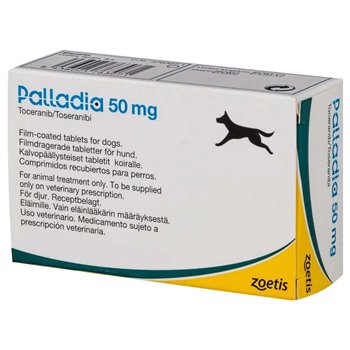
Palladia - 15mg Palladia Tablets for Dogs - Per Tablet
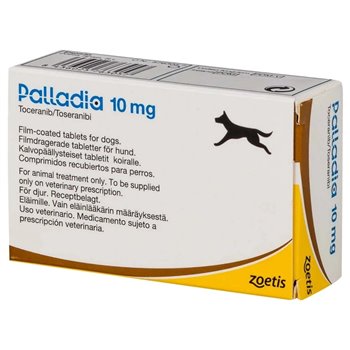
Palladia 15mg is an oral cancer medicine for dogs with certain recurrent mast cell tumours of the skin that cannot be removed surgically. Each film-coated tablet contains toceranib, which blocks signals involved in tumour-cell growth and the development of blood vessels supplying the tumour. Treatment can help shrink some tumours or keep disease stable, depending on the individual response.
15mg Palladia forms part of a range that allows whole tablets to be combined for the required amount. Supplied per tablet, Palladia offers an oral treatment option for suitable dogs receiving ongoing veterinary oncology care.
Product Features
- Pack Size: - Sold Individually
- Target Animal: - Dog (Canine)
- Related Condition: - Mast cell tumours in dogs
- Pet Prescription Required?: - Yes
- Active Ingredient: - Toceranib Phosphate
- Product Name: - 15mg Palladia Tablets for Dogs
Additional Product Information
Description
Palladia 15mg is an oral anticancer medicine for dogs with certain recurrent cutaneous mast cell tumours that cannot be removed surgically. Its active ingredient is toceranib, supplied as toceranib phosphate, and each film-coated tablet provides 15mg toceranib. The authorised indication covers non-resectable, recurrent Patnaik grade II or III mast cell tumours of the skin. Palladia 15mg can help reduce tumour size or maintain stable disease in dogs that respond to treatment. This listing is supplied per tablet. The medicine offers an oral treatment option within veterinary oncology, allowing suitable dogs to receive their tablets at home while their response and tolerance are assessed. The aim is meaningful control of the cancer while preserving the dog’s comfort and quality of life.
Mast cells are immune cells found in tissues including the skin, where they take part in inflammatory and allergic responses. A mast cell tumour develops when these cells multiply abnormally. The resulting lump can vary greatly in appearance, from a small raised area to a larger, inflamed or ulcerated mass. Some tumours change size because mast cells release substances such as histamine, which can cause local swelling and irritation. Palladia 15mg is used for a defined group of these tumours, rather than for every skin lump. Histopathology describes the tumour’s cellular features and grade, while staging assesses how far disease has spread. These characteristics influence treatment choices and expectations. Palladia 15mg is particularly relevant when a qualifying tumour has returned and further surgical removal is not feasible.
Toceranib in Palladia 15mg belongs to a group of medicines called tyrosine kinase inhibitors. These medicines interrupt signals carried by particular receptors that regulate cell growth and survival. Toceranib inhibits several receptors, including KIT, which can be involved in the behaviour of mast cell tumours. It also acts on receptors associated with angiogenesis, the formation of blood vessels that can supply a growing tumour. Palladia 15mg therefore works through effects on tumour-related signalling and blood-vessel development. This mechanism offers a different therapeutic approach from surgical removal of a mass. The biological behaviour of mast cell tumours varies between dogs, so the response to the same medicine also varies. A reduction in growth signals can produce tumour shrinkage in some dogs and disease stabilisation in others.
Surgery remains the first choice for a mast cell tumour that can be removed appropriately. Palladia 15mg provides an option for the specific recurrent, non-resectable disease described in its authorisation. During treatment, tumour measurements and the dog’s general condition help establish whether the disease is responding, remaining stable or progressing. A complete response means that the measurable tumour has disappeared; a partial response means that its size has reduced without disappearing completely. Stable disease can also be a worthwhile outcome when the cancer is being held without unacceptable adverse effects. Palladia 15mg is continued according to both tumour response and tolerability. No fixed course length suits every patient, and an oral treatment should not be presented as a guaranteed cure or a promise of a particular survival time.
Palladia 15mg tablets are orange, round and film-coated, with the strength marked on one side. They must be given whole and must not be broken or ground. The range also contains 10mg and 50mg tablets, allowing different whole-tablet combinations where needed. Palladia 15mg can be given with or without food, and the authorised starting schedule is every second day. Treatment may require planned pauses or changes to the amount when adverse effects occur. Appetite loss, vomiting, diarrhoea and lethargy are among the important effects to watch for, and gastrointestinal bleeding can be serious. Blood in the stool, black tarry stools, repeated vomiting or marked deterioration warrant prompt veterinary contact. Blood and urine testing during treatment also help detect effects that may not be visible at home.
Careful handling is important with Palladia 15mg because exposure can affect fertility and unborn babies. Avoid direct skin contact with the tablets and with urine, faeces or vomit from a treated dog; disposable gloves help when handling tablets or cleaning up waste. Wash hands thoroughly afterwards. Pregnant women should not routinely administer the medicine and should avoid contact with the dog’s waste or broken and moistened tablets. Keep children away from the medicine and contaminated material. Palladia 15mg is not for dogs under two years old or under 3kg, pregnant or lactating dogs, breeding dogs, or dogs with gastrointestinal bleeding. A tablet rejected after being broken by chewing should be safely discarded. Store the medicine in its original packaging and arrange appropriate disposal of unused tablets through a veterinary medicines take-back service.
What is Palladia 15mg used for in dogs?
Palladia 15mg treats certain recurrent mast cell tumours of the skin that cannot be removed surgically. Its authorised indication covers Patnaik grade II or III tumours. Toceranib, the active ingredient, interferes with tumour-related signals and can help shrink tumours or maintain stable disease in responding dogs.
How does Palladia work?
Palladia contains toceranib, a tyrosine kinase inhibitor. It blocks several receptors involved in cell growth and survival, including KIT, and affects signals involved in tumour blood-vessel development. These actions can slow tumour growth, although the extent and duration of response differ between individual dogs.
Is Palladia a chemotherapy medicine?
Palladia is an anticancer medicine used in veterinary oncology. More specifically, it is a tyrosine kinase inhibitor, a type of molecularly directed cancer treatment given by mouth. It requires ongoing assessment of tumour response and adverse effects, just as other forms of cancer treatment do.
Can Palladia cure mast cell tumours?
Palladia can produce tumour shrinkage or stable disease in some dogs, but it does not guarantee a cure. Treatment results depend on the tumour and the dog’s response. Even when measurable disease disappears, that response needs continued assessment rather than being assumed to mean permanent eradication.
How often is Palladia given?
The authorised starting schedule is every second day. The amount and any planned treatment interruptions depend on the dog’s oncology assessment and tolerance. Palladia tablets can be given with or without food, and the 10mg, 15mg and 50mg strengths allow different whole-tablet combinations.
Can Palladia 15mg tablets be split or crushed?
No. Palladia tablets must be administered whole and must not be broken or ground. Different strengths are available to provide the required amount using whole tablets. If a dog chews and rejects a broken tablet, it should be disposed of safely rather than handled with bare skin.
What side effects can Palladia cause?
Important adverse effects include diarrhoea, vomiting, reduced appetite, lethargy and gastrointestinal bleeding. Blood-cell counts and other laboratory values can also change. Contact the treating vet promptly for blood in the stool, black tarry stools, repeated vomiting or marked deterioration, as treatment may need to be interrupted.
What our customers say about us.
Always amazing and very efficient.
Julie K
Source: Trustpilot Review
Always responsive and ready to help, parcels well packaged and always on time!! Perfect service thank you.
LA
Source: Trustpilot Review
Very impressive order turnaround and competitive pricing.
Lina
Source: Trustpilot Review
You may also like


- Tracked 24 Delivery Follow your parcel online
- VMD & RCVS Registered VetDispense is a registered UK Dispensary
- Secure Payment Pay securely online by card or PayPal
- Independent Since 2008 A Trusted UK Dispensary