


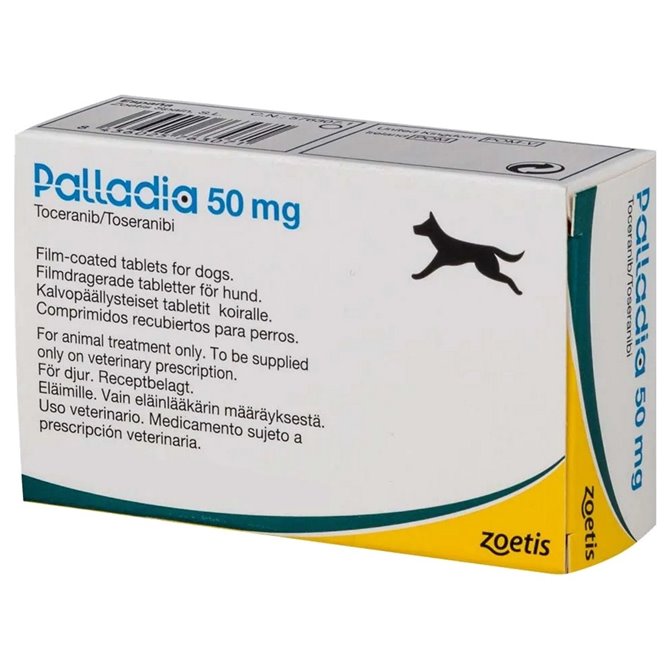
Palladia - 50mg Palladia Tablets for Dogs - Per Tablet
Palladia 50mg Tablets are prescription-only cancer treatment tablets for dogs, used under veterinary supervision for certain mast cell tumours. Mast cell tumours are a common type of canine skin cancer and can vary widely in appearance and behaviour, from small skin lumps to more aggressive tumours that may return, spread, or become difficult to remove surgically.
50mg Palladia contains toceranib, a targeted veterinary oncology medicine that helps block signals involved in tumour growth and blood vessel formation. For suitable dogs, Palladia 50mg Tablets may help support tumour control, slow disease progression, or form part of a wider treatment plan focused on comfort, quality of life and regular veterinary monitoring.
VET PRESCRIPTION REQUIRED
Product Features
- Pack Size: - Sold Individually
- Target Animal: - Dog (Canine)
- Related Condition: - Mast cell tumours in dogs
- Pet Prescription Required?: - Yes (For UK Orders)
- Active Ingredient: - Toceranib Phosphate
- Product Name: - 50mg Palladia Tablets for Dogs
Additional Product Information
Description
50mg Palladia Tablets are prescription-only film-coated tablets for dogs, containing toceranib phosphate, an antineoplastic medicine used in veterinary oncology. Your vet may prescribe 50mg Palladia for dogs with non-resectable, recurrent cutaneous mast cell tumours, particularly Patnaik grade II or III tumours where surgery is not possible, has not removed the full disease, or where the tumour has returned.
Mast cell tumours are one of the more commonly diagnosed skin tumours in dogs. Mast cells are normal immune cells that contain histamine and other inflammatory chemicals, but when they become cancerous they can form masses in or under the skin and may behave unpredictably. Some mast cell tumours remain fairly local, while others can invade surrounding tissue, spread to lymph nodes, or affect organs such as the spleen, liver or bone marrow. They can appear raised, soft, firm, red, ulcerated, itchy, swollen or change size from day to day. Owners should contact a vet promptly if they notice:
- A new skin lump, especially one that grows, bleeds, ulcerates or changes shape.
- A lump that becomes red, irritated, itchy or swollen after being touched.
- Vomiting, diarrhoea, black stools, lethargy or collapse alongside a suspicious lump.
- Enlargement of nearby lymph nodes or unexplained weight loss
Diagnosis usually involves a fine-needle aspirate, biopsy and grading, because appearance alone cannot reliably show how aggressive a mast cell tumour is. Staging may include blood tests, lymph node sampling or imaging, depending on the case. 50mg Palladia may be considered when the clinical picture suggests that medical tumour control is appropriate.
50mg Palladia works differently from many older forms of chemotherapy. Its active ingredient, toceranib, is a small-molecule tyrosine kinase inhibitor. Tyrosine kinases are enzymes involved in sending growth and survival signals inside cells. Some canine mast cell tumours are driven by abnormal signalling through receptors such as c-Kit, and 50mg Palladia helps block selected receptor tyrosine kinases involved in tumour growth, angiogenesis and metastatic progression. Angiogenesis is the formation of new blood vessels, which tumours can use to obtain oxygen and nutrients. By acting on these pathways, 50mg Palladia may help slow tumour progression, reduce tumour size, or support a period of stable disease in responding dogs. It is best understood as a targeted cancer medicine rather than a simple anti-inflammatory or pain relief tablet. The aim is often to improve tumour control while preserving comfort, mobility, appetite and day-to-day routines for as long as clinically possible. Response cannot be guaranteed, and regular monitoring is essential, but the targeted nature of 50mg Palladia is one reason vets may include it in treatment plans for suitable dogs.
Safe handling is important because 50mg Palladia is an anti-cancer medicine. Keep tablets in a secure place away from children and other animals, wash hands after handling, avoid contact with broken or moistened tablets, and follow your vet’s advice for cleaning up urine, faeces or vomit from treated dogs. Pregnant women, people trying to conceive and nursing mothers should take extra care and should not routinely administer 50mg Palladia unless advised by a healthcare professional. Living with a dog receiving cancer treatment can feel emotionally demanding, but you do not have to manage it alone. Your vet can help you understand expected monitoring, quality-of-life signs, appetite changes, digestive support, pain control and when to seek help. 50mg Palladia may form one part of a wider plan that can include surgery, staging, supportive care, antihistamine or gastroprotective support where clinically suitable, and regular reassessment.
What is 50mg Palladia used for in dogs?
50mg Palladia is used under veterinary prescription for certain canine mast cell tumours, especially recurrent cutaneous tumours that are not suitable for complete surgical removal. It is usually considered after diagnosis, grading and staging, so your vet can decide whether targeted medical treatment is appropriate for your dog’s case.
How does 50mg Palladia work?
50mg Palladia contains toceranib phosphate, a tyrosine kinase inhibitor. It blocks selected cell-signalling pathways that can help tumour cells grow, survive and develop blood supply. By interfering with these signals, it may reduce tumour growth, encourage tumour shrinkage, or help stabilise disease in dogs that respond to treatment.
Are mast cell tumours in dogs always cancerous?
Mast cell tumours are cancerous, but their behaviour varies widely. Some are low grade and may be controlled with surgery, while others are more aggressive, recurrent or likely to spread. A vet usually recommends cytology, biopsy, grading and staging to understand the tumour and choose the most suitable treatment plan.
What signs can mast cell tumours cause in dogs?
Mast cell tumours often appear as lumps on or under the skin. They may change size, become red, itchy, swollen, ulcerated or bleed. Some dogs also show vomiting, diarrhoea, black stools, reduced appetite or lethargy because mast cells release histamine and other chemicals that can affect the body.
What side effects should owners watch for with Palladia?
Contact your vet if your dog has repeated vomiting, watery diarrhoea, black or bloody stools, loss of appetite, marked lethargy, unexplained bruising, weakness, lameness or sudden changes in behaviour. Some dogs need a pause, dose adjustment or supportive treatment, so early reporting is important during 50mg Palladia therapy.
What our customers say about us.
Very impressive order turnaround and competitive pricing.
Lina
Source: Trustpilot Review
I have used Vetdispense for my elderly springer spaniels medication for a number of years. Our vets were charging double the price as medication had to be stored in refrigerators. I get a prescription from my vets and send a copy with my order and it has always been processed and despatched promptly. I use an app on my mobile and can keep track of the order. If there have ever been any queries you can call and speak to someone (a rare and much appreciated thing these days). I highly recommend their service.
Audrey
Source: Trustpilot Review
Always prompt in order turn around, with a person at the end of a line to help when needed. I can only recommend their professionalism and reliability.
Mikey
Source: Trustpilot Review
You may also like
- Tracked 24 Delivery Follow your parcel online
- VMD & RCVS Registered VetDispense is a registered UK Dispensary
- Secure Payment Pay securely online by card or PayPal
- Independent Since 2008 A Trusted UK Dispensary