


- Online only
- Out-of-Stock
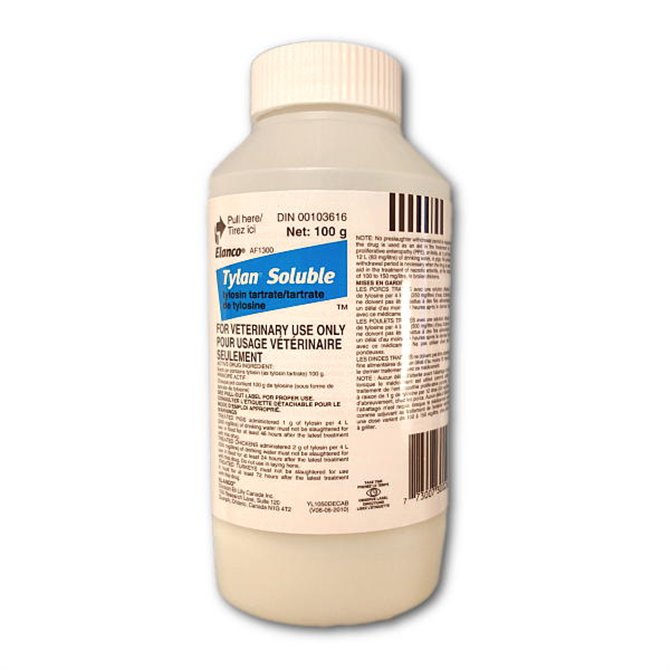
Tylan Soluble for Chickens - 100g
Tylan Soluble is a prescription-only veterinary antibiotic used in chickens when a vet has diagnosed, or strongly suspects, a bacterial condition that is likely to respond to tylosin. The active ingredient in Tylan Soluble is tylosin tartrate, a macrolide antimicrobial supplied as a powder for oral solution, usually given in drinking water under veterinary direction.
A valid veterinary prescription is required before this medicine can be supplied because respiratory signs, diarrhoea, weight loss and a drop in egg production can have several different causes. Your vet may need to assess husbandry, recent stress, vaccination history, flock age, water intake and the pattern of illness before deciding whether Tylan Soluble is appropriate. Using antibiotics without that assessment risks delayed treatment, unnecessary exposure, and poor antimicrobial stewardship, so Tylan should always be used exactly as prescribed.
VET PRESCRIPTION REQUIRED
Product Features
- Pack Size: - 100g
- Target Animal: - Chickens
- Pet Prescription Required?: - Yes
- Product Name: - Tylan Soluble for Chickens - 100g
Additional Product Information
Description
Tylan Soluble works by interfering with bacterial protein synthesis. Tylan binds to the bacterial ribosome and helps stop susceptible organisms from making the proteins they need to grow and multiply. This bacteriostatic action gives the bird’s immune system a better chance to bring the infection under control. Tylan Soluble is particularly associated with infections involving Mycoplasma species and with certain Gram-positive bacteria, including Clostridium perfringens.
Because the powder dissolves for administration in drinking water, Tylan Soluble can be used across a group when individual handling would be difficult or stressful. The exact concentration needs veterinary direction, because sick birds often drink less, and under-dosing can reduce effectiveness and encourage bacterial resistance. Your vet will decide whether the likely pathogen, the severity of disease, and the flock’s overall condition make Tylan a sensible choice, and whether any additional investigation, isolation, environmental correction or supportive care is needed alongside treatment.
In chickens, Tylan Soluble is commonly prescribed for respiratory disease linked to mycoplasma, including problems such as airsacculitis and chronic respiratory disease, and it may also be used as an aid in the control of outbreaks of necrotic enteritis caused by Clostridium perfringens when your vet considers it appropriate. Some vets may also consider Tylan Soluble in situations where birds are under stress and a known mycoplasma problem is present. Poultry owners often contact a vet about Tylan Soluble when they notice signs such as:
- sneezing, coughing or rattly breathing
- swollen sinuses or watery eyes
- reduced appetite and poor growth
- lethargy or birds standing hunched
- a drop in laying performance
- loose droppings or signs of intestinal upset
- uneven flock health, with some birds deteriorating quickly
These signs are not specific to one disease, which is why Tylan Soluble should only be used after veterinary advice. A vet may recommend examination, post-mortem findings, or susceptibility information before prescribing it, especially if there has been repeat disease on the holding or previous antibiotic exposure.
Fresh medicated water should be prepared as directed, and birds should have reliable access to it throughout the treatment period. It is important not to guess the dose, shorten the course, or keep leftover Tylan Soluble for future problems without speaking to your vet. If birds seem brighter after a day or two, the infection may still be present, and stopping early can increase the risk of relapse and resistance. Likewise, if the flock is not improving, treatment should not simply be continued indefinitely; your vet may need to review the diagnosis, investigate secondary disease, or look at ventilation, stocking density, litter condition, hygiene and biosecurity. Tylan Soluble forms one part of a wider clinical plan, not the whole answer on its own. Good supportive care, clean water lines, sensible isolation of affected groups where possible, and close observation of droppings, breathing and appetite all help your vet judge whether it is working as expected.
What is Tylan Soluble used for in chickens?
Tylan Soluble is a prescription antibiotic that vets may use for certain bacterial conditions in chickens, especially mycoplasma-associated respiratory disease and, in some cases, as an aid in controlling necrotic enteritis caused by Clostridium perfringens. It should only be used after veterinary assessment, not as a routine flock treatment.
How does Tylan Soluble work in chickens?
Tylan Soluble contains tylosin, a macrolide antibiotic. It works by interfering with bacterial protein synthesis, which slows the growth of susceptible organisms and helps the bird’s immune system gain control of the infection. It is commonly prescribed where mycoplasma or other tylosin-sensitive bacteria are part of the clinical picture.
Do I need a prescription for Tylan Soluble for chickens?
Yes. Tylan Soluble is a prescription-only veterinary medicine, so a valid prescription from your vet is required before we can supply it. This is important because similar symptoms can be caused by viruses, parasites, husbandry problems or resistant bacteria, and antibiotic choice should be made responsibly.
Is Tylan Soluble used for necrotic enteritis in chickens?
Yes, a vet may prescribe Tylan Soluble as an aid in the control of outbreaks of necrotic enteritis caused by Clostridium perfringens in chickens. It is not suitable for every digestive problem, so birds with diarrhoea, weight loss or sudden decline should still be assessed properly before treatment is started.
Can laying hens have Tylan Soluble?
Whether Tylan Soluble is suitable for laying hens depends on the indication, the birds involved and the current veterinary advice on withdrawal periods. Your vet will tell you whether it is appropriate for your flock and what you need to know about eggs, meat and record keeping before treatment starts.
Brand

What our customers say about us.
I wouldn’t go anywhere else for my cat’s medication. Price is competitive, but the difference here is the customer service - it is second to none. They’re so helpful, and the medicine is always delivered immediately. Nice clear invoices too makes claiming back on my insurance a doddle. Fantastic company
Nikki
Source: Trustpilot Review
Ordering prescription meds for my dog was quick and easy, quick delivery is always welcome. Fantastic customer service.
M Wilson
Source: Trustpilot Review
They are efficient and their procedures are easy. They are also fast and delivery is quick. Everything you need when your dog needs medication.
Nick
Source: Trustpilot Review
You may also like

- Tracked 24 Delivery Follow your parcel online
- VMD & RCVS Registered VetDispense is a registered UK Dispensary
- Secure Payment Pay securely online by card or PayPal
- Independent Since 2008 A Trusted UK Dispensary