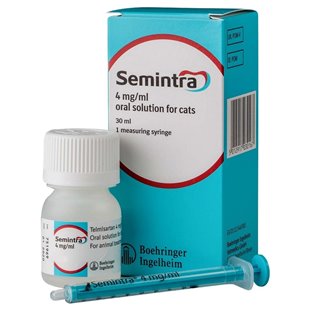
Semintra for Cats is an oral prescription medicine used in cats to help manage two common problems that often occur together: systemic hypertension (high blood pressure) and proteinuria (protein in the urine) associated with chronic kidney disease (CKD). It is supplied as a liquid solution that is given by mouth once daily, using a measured dosing syringe, so the dose can be tailored to your cat’s bodyweight.
High blood pressure and kidney disease can affect each other. When blood pressure is consistently raised, it can damage delicate blood vessels in organs such as the kidneys, eyes, brain, and heart. At the same time, CKD can contribute to increased blood pressure by changing how the body regulates fluid balance and blood vessel tone. Proteinuria is another important sign in CKD. Healthy kidneys filter the blood and keep important proteins inside the body. When the kidney’s filters are damaged, protein can leak into the urine. Ongoing protein loss is not just a laboratory finding. It can be a marker of more active kidney damage and is often linked with faster progression of kidney disease.
How Semintra works
Semintra contains telmisartan. Telmisartan works by blocking the effect of a hormone pathway in the body called the renin–angiotensin–aldosterone system (RAAS). The RAAS helps regulate blood pressure and how tightly blood vessels constrict. In many cats with CKD and hypertension, the RAAS can be overactive, leading to narrowed blood vessels and increased pressure within the kidney’s filtering units.
By blocking the action of angiotensin II at its receptor, telmisartan encourages blood vessels to relax and widen. This can lower systemic blood pressure and reduce the pressure inside the tiny kidney filters (glomeruli). Lower pressure within these filters can reduce the amount of protein pushed through into the urine. In simple terms, Semintra helps reduce strain on the kidneys and helps limit protein loss, while also helping bring high blood pressure under control.
Semintra for systemic hypertension in cats
Systemic hypertension in cats is often silent at first. Many cats do not show clear signs until complications develop. Possible signs include sudden vision changes (from retinal damage), disorientation, weakness, reduced appetite, weight loss, or changes in behaviour. Because the signs can be vague, blood pressure measurement is an important part of monitoring older cats and cats with kidney disease.
Semintra may be prescribed when your vet diagnoses hypertension or when a cat has CKD with evidence of blood pressure concerns. Treatment aims to reduce blood pressure into a safer range and to reduce the risk of organ damage. Blood pressure is usually rechecked after starting therapy, and then at intervals to confirm the response and guide any dose adjustments or additional treatment decisions.
Semintra for proteinuria associated with CKD
Proteinuria is commonly assessed using a urine protein-to-creatinine ratio (UPC) and urine dipstick testing, alongside blood tests and a general kidney assessment. In CKD, proteinuria suggests that the kidney’s filtering structures are inflamed or damaged enough to allow proteins to leak. Managing proteinuria can be a key part of slowing disease progression and supporting quality of life.
Semintra is used to reduce protein loss in the urine by lowering pressure within the kidney’s filtration system and by moderating RAAS effects that contribute to ongoing damage. Your vet will usually monitor urine results over time to see whether protein levels improve after starting treatment. Changes are not always immediate, so planned rechecks are important.
Chronic kidney disease in cats
CKD is a long-term condition in which kidney function gradually declines. The kidneys normally filter waste products from the blood, regulate hydration, and help maintain a stable balance of salts and minerals. As kidney function reduces, waste products can build up, cats can become dehydrated more easily, appetite may change, and weight loss can occur.
CKD is often managed with a combination of approaches. These may include kidney-support diets, ensuring good water intake, managing nausea, addressing phosphate levels if needed, and treating complications such as hypertension and proteinuria. Semintra is often one part of a broader plan, rather than a stand-alone solution. Regular monitoring allows your vet to adjust the plan as your cat’s needs change.
How Semintra is given
Semintra is given by mouth as a liquid solution, typically once daily. The dose is based on your cat’s bodyweight, and the product is provided with a dosing syringe designed to help measure the correct amount. Many cats tolerate liquids well when they are given gently into the side of the mouth. Some owners find it easier to dose at the same time each day as part of a routine.
You should follow your vet’s instructions carefully and avoid changing the dose without veterinary advice. If you miss a dose, contact your veterinary practice for guidance on what to do next. Do not double-dose unless your vet specifically instructs you to do so.
What to expect after starting treatment
Your vet will usually arrange follow-up checks to assess response and safety. These may include:
- Blood pressure readings to confirm improvement in hypertension.
- Urine testing (including UPC) to assess proteinuria.
- Blood tests to monitor kidney values and electrolytes.
- General health checks to review appetite, hydration, and bodyweight.
It is helpful to report any changes you notice at home, including appetite changes, vomiting, diarrhoea, tiredness, or altered drinking and urination patterns. Many cats take Semintra without significant issues, but monitoring is important because cats with CKD can be sensitive to changes in hydration and blood pressure.
Semintra should be used under veterinary guidance, especially in cats with established kidney disease or other underlying conditions. Your vet will decide whether it is appropriate as a single therapy or whether additional medicines are needed to achieve blood pressure targets. Always inform your vet about any other medications or supplements your cat is receiving, because overall treatment decisions are based on the complete clinical picture.
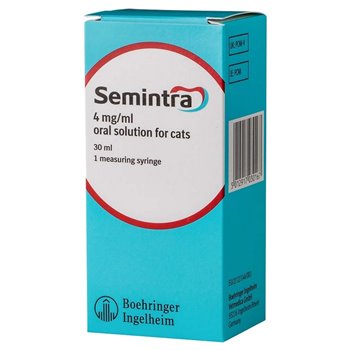
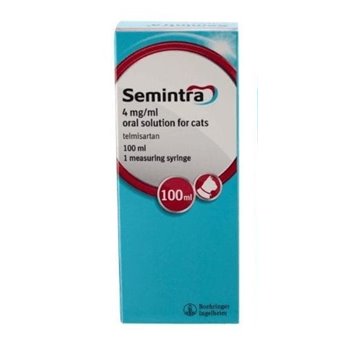
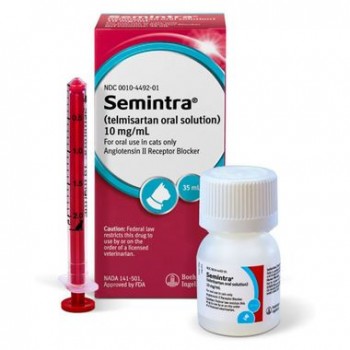
Semintra is available as:
- 30ml (4mg/ml) - Blue Box
- 100ml (4mg/ml) - Blue Box
- 35ml (10mg/ml) - Red Box
How does Semintra reduce protein in a cat’s urine?
Semintra contains telmisartan, which blocks angiotensin II at its receptor. This reduces pressure within the kidney’s filtering units and can decrease the leakage of protein into urine. Lowering intraglomerular pressure can help protect kidney structures that are already vulnerable in chronic kidney disease.
How quickly does Semintra lower blood pressure in cats?
Some cats show improvement within days to a few weeks, but response varies. Blood pressure is usually rechecked after starting treatment to confirm that it is moving towards a safer range. Ongoing checks help your vet decide whether the current dose is effective or needs adjustment.
What is proteinuria and why is it important in CKD?
Proteinuria means protein is present in the urine because the kidney’s filters are damaged or inflamed. In CKD, persistent proteinuria can be a sign of more active kidney injury and is often linked with faster disease progression. Reducing proteinuria can be an important treatment goal.
Is Semintra a cure for chronic kidney disease?
No. CKD is a long-term condition that cannot usually be reversed. Semintra is used to manage complications such as hypertension and proteinuria, which can worsen kidney damage. Many cats benefit from a combination of treatments, including dietary support and regular veterinary monitoring.
What should I do if my cat misses a dose of Semintra?
Contact your veterinary practice for advice. In many cases, you may be advised to give the next dose at the usual time rather than doubling up. The best approach depends on how long ago the dose was missed and your cat’s overall condition, especially if CKD is present.