


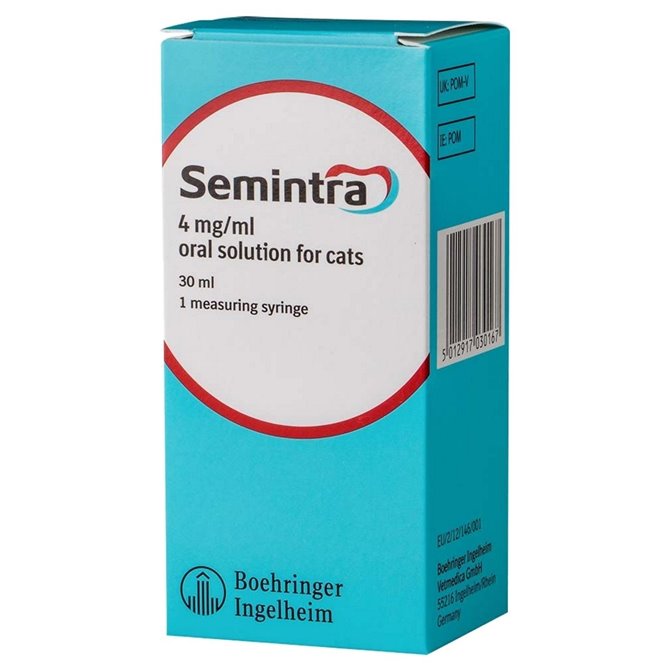
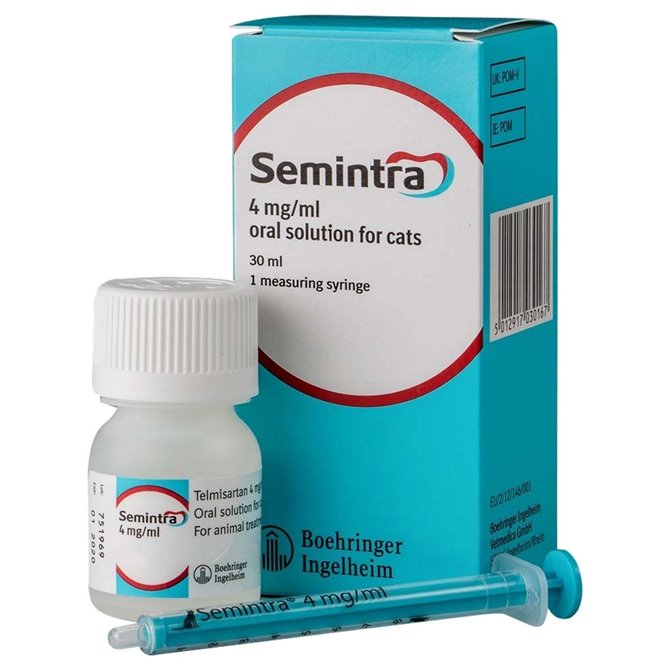


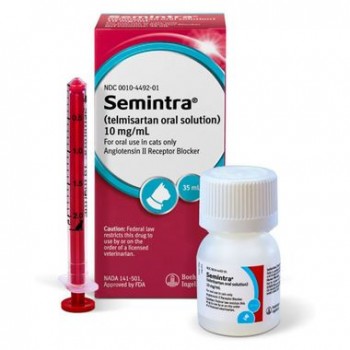
Semintra Oral Solution for Cats - 30ml
Semintra for Cats is an oral medicine used in cats with chronic kidney disease (CKD) when there is excess protein in the urine (proteinuria). This 30ml bottle is a convenient option for smaller cats, for cats starting treatment, or where a smaller bottle suits your dispensing routine. Semintra is used under veterinary direction, because CKD care needs individual assessment and ongoing checks.
What is Semintra
Semintra contains telmisartan. Telmisartan belongs to a group of medicines called angiotensin II receptor blockers (ARBs). In cats with CKD, the kidney’s filtering units can become damaged and allow protein to leak into the urine. Semintra is used to reduce this protein loss.
Proteinuria matters because it is linked with faster progression of kidney damage in many cats. Reducing protein loss can therefore be an important treatment goal alongside diet and supportive care.
How Semintra works
Healthy kidneys filter waste into the urine while keeping most proteins in the bloodstream. In CKD, the tiny filters (glomeruli) and the surrounding tissue can be injured. This damage can increase pressure inside the filters and weaken the barrier that normally holds protein back.
Angiotensin II is a natural hormone that helps regulate blood pressure and fluid balance. In kidney disease, its effects can contribute to higher pressure within the glomeruli. Telmisartan blocks angiotensin II at specific receptors. This can lower pressure in the filters and reduce protein leakage into the urine. Your vet will usually monitor response with urine testing over time.
Telmisartan can also influence blood pressure. Cats with CKD can develop high blood pressure without obvious signs. Blood pressure monitoring is therefore common in CKD plans, even when Semintra is prescribed primarily for proteinuria.
30ml. VETERINARY PRESCRIPTION REQUIRED
Product Features
- Pack Size: - 30ml Bottle
- Target Animal: - Cat (Feline)
- Related Condition: - Chronic Kidney Disease
- Pet Prescription Required?: - Yes (For UK Orders)
- Active Ingredient: - Telmisartan
- Product Name: - Semintra
Additional Product Information
Description
Semintra may only be supplied with a valid veterinary prescription issued by your vet. You should only purchase Semintra if you have or are in the process of arranging such a prescription. See information bar for further details.
Chronic kidney disease (CKD) in cats
CKD is a long-term, usually progressive reduction in kidney function. The kidneys regulate water balance, help control minerals and electrolytes, remove metabolic waste, and contribute to hormone processes such as red blood cell production. Cats can compensate for a long time, so early CKD may be detected on routine blood and urine testing rather than obvious symptoms.
Signs that can be linked with CKD include increased thirst, passing larger volumes of urine, weight loss, reduced appetite, nausea or vomiting, dehydration, and lower energy. Some cats develop a dull coat or bad breath. These signs can also occur with other conditions, so diagnosis relies on testing.
Your vet may use blood tests to assess kidney markers and hydration, and urine tests to see how well the kidneys concentrate urine and whether protein is present. A urine protein-to-creatinine (UPC) ratio is commonly used to measure and monitor proteinuria. Blood pressure checks and, where needed, imaging can add useful information.
What is Proteinuria
Protein in the urine can come from several sources. Inflammation, urinary infection, or bleeding can affect results, so vets often consider these possibilities before focusing on kidney-related proteinuria. When proteinuria is linked to CKD, the protein is typically leaking through the kidney filters.
The aim of treatment is a sustained reduction in protein loss, together with a stable clinical picture. Your vet will decide what improvement is realistic for your cat and how often monitoring should be repeated.
How Semintra fits with other CKD support
Most cats with CKD benefit from a structured plan rather than a single treatment. A renal diet is often recommended, because it can help manage phosphorus intake and support nutritional needs. Hydration is also important, as dehydration can worsen how a cat feels and can affect kidney test results. Depending on the individual cat, your vet may also advise treatments for nausea, appetite, constipation, phosphate binding, or low potassium.
Semintra can be used alongside these measures when proteinuria is present. Treatment is usually long term, and dose decisions should be based on veterinary review and follow-up test results.
How to give Semintra
Semintra is a liquid medicine for oral use. It is usually given once daily at the dose prescribed for your cat’s body weight and health status. Many owners give it directly into the mouth using the measuring syringe supplied. Some cats accept it more easily if it is placed onto a small amount of food, but you should follow the method your vet recommends.
Give the dose at roughly the same time each day. If your cat vomits soon after dosing, or if you miss a dose, ask your vet for advice. In many situations you would avoid doubling up, but your vet can confirm what is appropriate for your cat.
CKD management involves regular monitoring, even when a cat seems comfortable at home. Your vet may recheck a UPC ratio to assess protein loss and may repeat blood tests to monitor kidney markers, hydration, and electrolytes. Blood pressure checks are also common, because hypertension can be silent but damaging.
Contact your vet if your cat becomes unusually quiet, stops eating, vomits repeatedly, has persistent diarrhoea, seems weak or faint, or shows signs of dehydration. These signs do not automatically mean Semintra is the cause, but they do indicate that your cat needs assessment.
Side effects can occur with any medicine. With oral kidney medicines, the most common problems reported are digestive, such as reduced appetite, vomiting, or softer stools. Cats with CKD can also have similar signs from the disease itself, so your vet may consider both medication tolerance and overall disease control.
Medicines that affect the renin–angiotensin system can influence blood pressure and kidney blood flow. Vets take extra care in cats that are dehydrated, acutely unwell, or receiving other medicines that can affect blood pressure. Tell your vet about all medicines and supplements your cat receives.
Store Semintra as directed on the label and keep it out of reach of children and pets. Keep the bottle tightly closed and use the provided measuring device for accurate dosing. Do not use the product beyond its expiry date, and ask your vet or pharmacist if you are unsure about storage guidance after opening.
Legal category
Semintra is a POM-V (Pet Prescription Required)
How does Semintra reduce protein in urine?
Semintra contains telmisartan, which blocks the effects of angiotensin II at specific receptors. This can reduce pressure inside the kidney’s filtering units and strengthen how effectively they retain protein. Reduced pressure can mean less protein leaks into the urine over time.
What are the signs of chronic kidney disease in cats?
CKD signs can include drinking more, urinating more, weight loss, reduced appetite, nausea or vomiting, dehydration, and lower energy. Some cats have a dull coat or bad breath. These signs are not unique to CKD, so blood and urine tests are needed for diagnosis.
How quickly does Semintra start working?
Some cats show improvement in urine protein measurements within a few weeks, but response varies. Your vet may schedule a follow-up urine test to check the urine protein-to-creatinine ratio and assess the trend over time. Long-term monitoring is important because CKD can change.
Can Semintra be given with a renal diet and other supplements?
Semintra is often used alongside a renal diet and other supportive treatments. Many cats need multiple approaches, such as diet changes, hydration support, phosphate binders, or potassium supplementation. Always tell your vet about supplements you use, so the plan stays coordinated and safe.
What should I do if I miss a dose of Semintra?
If you miss a dose, follow your vet’s guidance. In many cases you give the next dose at the usual time and avoid giving a double dose. If you are unsure, or if your cat is unwell, contact your vet for advice tailored to your cat’s situation.
You may also like
What our customers say about us.
Very easy and efficient way of ordering prescription meds for my dog. Much cheaper than buying from the vets.
Ian
Source: Trustpilot Review
Always prompt in order turn around, with a person at the end of a line to help when needed. I can only recommend their professionalism and reliability.
Mikey
Source: Trustpilot Review
I've been using Vetdispense for over a year. Very straightforward service. Always a prompt response and the dispensing vet will call if there's a question to be answered.
Janis
Source: Trustpilot Review
- Tracked 24 Delivery Follow your parcel online
- VMD & RCVS Registered VetDispense is a registered UK Dispensary
- Secure Payment Pay securely online by card or PayPal
- Independent Since 2008 A Trusted UK Dispensary