


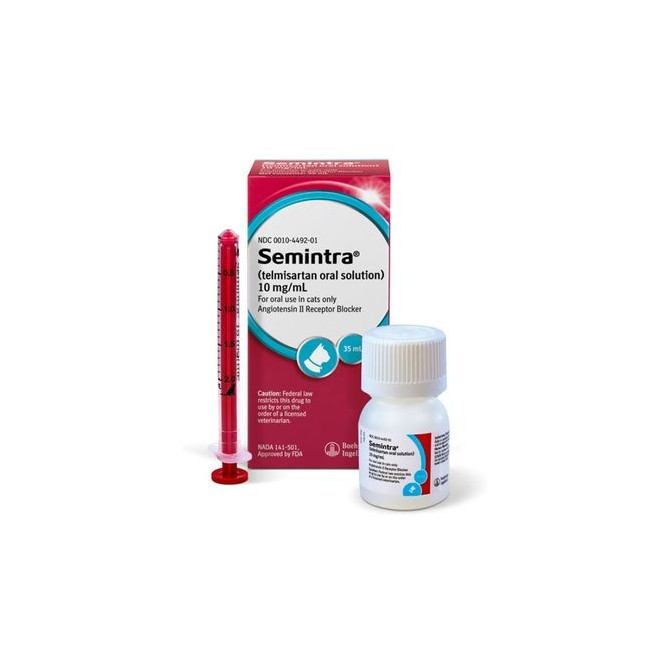
Semintra Oral Solution 10mg/ml - 35ml
Semintra Oral Solution (10mg/ml) is a prescription veterinary medicine used to treat systemic hypertension (high blood pressure) in cats. It is supplied as an oral liquid in a RED 35ml bottle so the dose can be measured accurately for each cat. Your vet will decide whether Semintra is appropriate and will advise on dosing, monitoring, and follow-up checks.
Semintra is available in different strengths for different uses. This 10mg/ml formulation is intended for managing systemic hypertension, so it is important to follow the prescription label and confirm you have been supplied with the correct product.
What is Semintra Oral Solution
Semintra contains telmisartan. Telmisartan belongs to a group of medicines called angiotensin II receptor blockers (ARBs). These medicines act on a natural hormone pathway that influences blood pressure. By modifying this pathway, telmisartan helps reduce persistently high blood pressure and lowers the risk of complications that can occur when hypertension is left untreated.
How Semintra works
Angiotensin II is a hormone that causes blood vessels to narrow and encourages the body to retain salt and water. Both effects can increase blood pressure. Telmisartan blocks angiotensin II at specific receptors, which allows blood vessels to relax and widen. When blood vessels widen, resistance in the circulation reduces and blood pressure can fall.
The same hormone pathway affects blood flow within the kidneys. High blood pressure can damage kidney blood vessels, and kidney disease can contribute to raised blood pressure. For many cats, hypertension and chronic kidney disease occur together. Controlling blood pressure helps reduce ongoing strain on organs that are sensitive to pressure changes.
Product Features
- Pack Size: - 35ml Bottle
- Target Animal: - Cat (Feline)
- Related Condition: - Hypertension in Cats
- Pet Prescription Required?: - Yes (For UK Orders)
- Active Ingredient: - Telmisartan
- Product Name: - Semintra
Additional Product Information
Description
Semintra may only be supplied with a valid veterinary prescription issued by your vet. You should only purchase Semintra if you have or are in the process of arranging such a prescription. See information bar for further details.
Systemic hypertension in cats
Systemic hypertension means the pressure inside the arteries is consistently above normal. Many cats show no clear signs at first. Signs often appear only when damage develops in a target organ such as the eyes, brain, kidneys, or heart.
Possible signs include sudden vision changes, dilated pupils, bumping into objects, disorientation, weakness, head tilt, seizures, or collapse. Some cats also lose weight or become less interested in food, especially if an underlying condition is present. Because these signs are not specific, diagnosis relies on examination and blood pressure testing.
Why treating feline hypertension matters
Persistently raised blood pressure can injure small blood vessels. In cats, the eyes are particularly vulnerable. High blood pressure can cause bleeding in the eye or retinal detachment, and this may present as sudden blindness. The brain can be affected, causing neurological signs, and the kidneys and heart can also be damaged over time. Treatment aims to reduce blood pressure into a safer range to limit further injury.
Common causes of high blood pressure in cats
Many cats have secondary hypertension, where high blood pressure develops because of another medical problem. Chronic kidney disease and hyperthyroidism are common causes, especially in older cats. Diabetes, certain hormonal disorders, and some heart conditions can also contribute. In some cats, no single cause is identified.
Because hypertension is often secondary, your vet may recommend tests to assess kidney function and hydration, along with thyroid testing when appropriate. Managing the underlying problem helps improve long-term control and overall wellbeing.
How hypertension is diagnosed and monitored
Blood pressure in cats is measured using a cuff and monitor, usually placed on a limb or the tail. Stress can increase readings, so vets often take several measurements and allow time for the cat to settle. Stress can affect the reading, sometimes called “white coat” hypertension. Your vet may suggest repeating measurements on different days, or taking readings after your cat has had time to relax in a quiet room. This helps distinguish a temporary stress response from true persistent hypertension and supports safer dose decisions. Your vet may also examine the back of the eye for changes linked with high blood pressure, particularly if there are vision concerns. Follow-up measurements are used to confirm response to treatment and guide any adjustments.
How to give Semintra Oral Solution
Semintra is given by mouth, usually once daily, using a measuring syringe or dosing device. The dose is prescribed according to your cat’s body weight and clinical needs. Many owners give the liquid gently into the side of the mouth. A consistent routine can make dosing easier and helps you notice changes in appetite, drinking, or behaviour.
If your cat vomits soon after dosing, refuses doses repeatedly, or you miss a dose, contact your vet for advice. You should not change the dose or give an extra dose unless your vet instructs you to do so.
Your vet will usually recheck blood pressure after starting Semintra to assess response. Further checks may be advised because hypertension control can change over time, especially if kidney disease or hyperthyroidism is present. If there is an underlying condition, your vet may also monitor blood and urine tests and adjust the wider management plan as needed.
Some cats require more than one medicine to control blood pressure. Amlodipine is widely used for feline hypertension and may be prescribed alone or alongside other treatments. Your vet will decide the safest approach based on blood pressure readings, clinical signs, and your cat’s overall health.
Always tell your vet about all medicines and supplements your cat receives. This includes appetite stimulants, anti-nausea medicines, pain relief, and over-the-counter products.
Some cats may develop digestive upset such as reduced appetite, vomiting, or diarrhoea. Lethargy or weakness can occur, particularly if blood pressure falls too low or if the cat becomes unwell. Cats with underlying disease can have fluctuating symptoms, so it is helpful to report patterns and timing.
Your vet may take extra care in cats that are dehydrated or have significant kidney impairment. If you notice collapse, severe weakness, repeated vomiting, or sudden vision problems, contact your vet urgently.
Store Semintra as directed on the label and keep it out of reach of children and pets. Keep the bottle tightly closed and use the supplied dosing device for accuracy. Do not use the product beyond its expiry date.
What is systemic hypertension in cats?
Systemic hypertension is persistently high blood pressure in the arteries. It is often seen in older cats and may occur alongside conditions such as chronic kidney disease or hyperthyroidism. Many cats show no obvious signs until complications develop, which is why routine blood pressure checks can be important.
Can hypertension cause sudden blindness in cats?
Yes. High blood pressure can damage the delicate vessels in the eye and may lead to bleeding or retinal detachment. This can cause sudden vision loss, dilated pupils, or bumping into objects. Sudden blindness is an emergency, so your cat should be assessed by a vet as soon as possible.
How does Semintra lower blood pressure?
Semintra contains telmisartan, an angiotensin II receptor blocker. Angiotensin II normally narrows blood vessels and supports fluid retention. Telmisartan blocks its action at specific receptors, allowing blood vessels to relax and widen. Reduced vessel resistance helps lower systemic blood pressure into a safer range.
How quickly does Semintra start to work?
Some cats show an improvement in blood pressure readings within days, but the full response may take longer and varies between individuals. Your vet will usually schedule a recheck to assess how well blood pressure has reduced and whether any adjustment or additional treatment is needed.
What should I do if I miss a dose of Semintra?
If you miss a dose, contact your veterinary practice for advice. In many cases you will be told to give the next dose at the usual time and avoid doubling up. The best approach can depend on how long ago the dose was missed and your cat’s overall health.
What our customers say about us.
Always amazing and very efficient.
Julie K
Source: Trustpilot Review
Always quick to respond and send out my dogs medication and at competitive prices. Easy to navigate the website and upload prescriptions. All in all a great service and would recommend this company whole heartedly.
Janet
Source: Trustpilot Review
Very fast delivery, simple ordering
Charlotte
Source: Trustpilot Review
You may also like
- Tracked 24 Delivery Follow your parcel online
- VMD & RCVS Registered VetDispense is a registered UK Dispensary
- Secure Payment Pay securely online by card or PayPal
- Independent Since 2008 A Trusted UK Dispensary