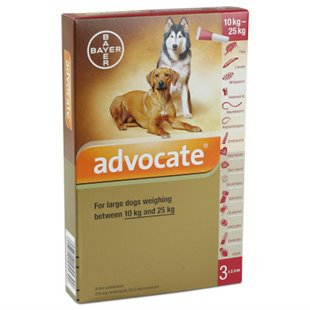
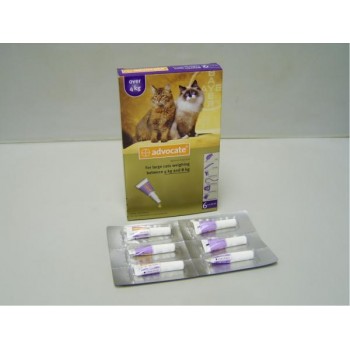
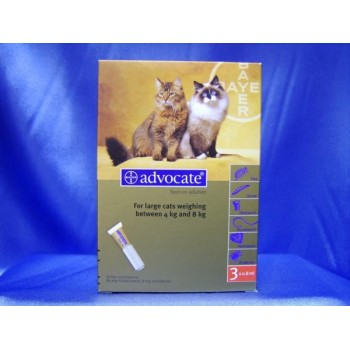
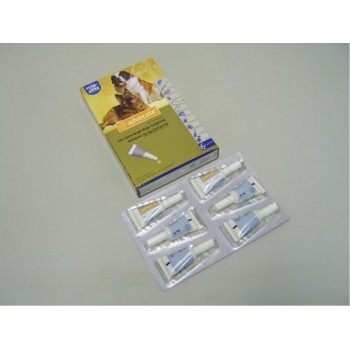
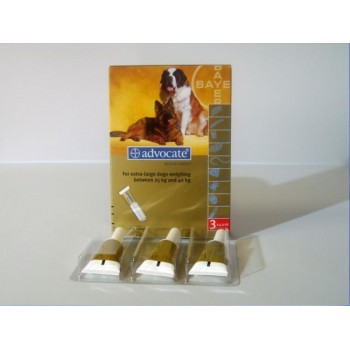
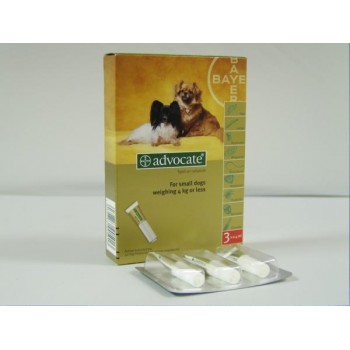
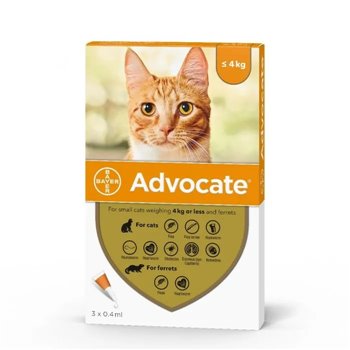
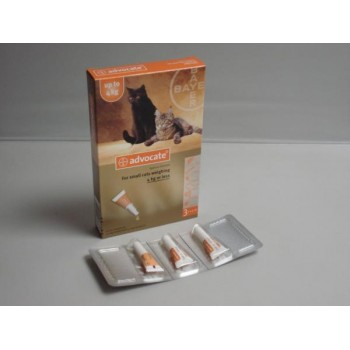
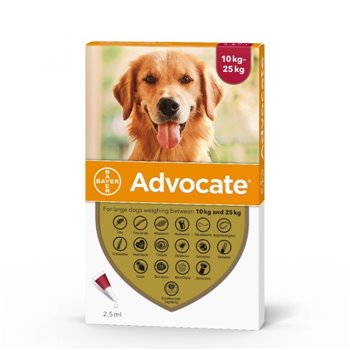
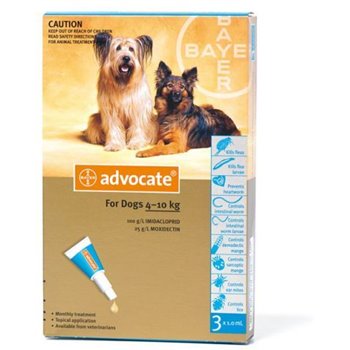
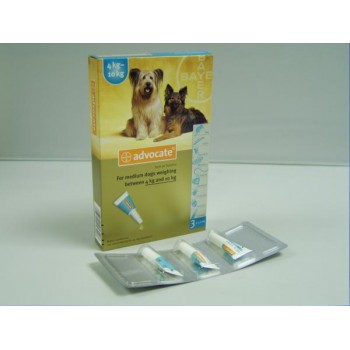
Advocate for Dogs and Cats is a prescription spot-on treatment designed to help protect pets from a wide range of common parasites that live on the skin (ectoparasites) and inside the body (endoparasites).
VETERINARY PRESCRIPTION REQUIRED
Parasites are more than a nuisance. Fleas can trigger persistent itching and skin inflammation, and intestinal worms can quietly affect digestion, growth, and general wellbeing. Advocate is formulated for routine use, with different pipette strengths chosen according to species and bodyweight, so the dose remains appropriate as your pet grows. Many parasite-control plans use Advocate every month, which fits well with the flea life cycle and helps maintain steady cover against susceptible worms.
Many owners like the practicality of a single monthly application that can support both flea control and internal parasite management, especially for pets that share the home with children or other animals. Because parasite problems can look similar to allergies, bacterial skin infections, or dietary upset, Advocate is best used as part of a planned parasite-control programme, guided by your vet and informed by your pet’s lifestyle, travel history, and local parasite risks.
Advocate works using two active ingredients with complementary actions: imidacloprid and moxidectin. Imidacloprid concentrates within the skin’s natural oils and spreads across the haircoat, where it targets adult fleas (most commonly Ctenocephalides felis). It affects insect nerve signalling at nicotinic acetylcholine receptors, leading to paralysis and death, which helps explain why fleas can be killed without needing to bite. Moxidectin is a macrocyclic lactone (an endectocide) that is absorbed through the skin and distributed within the body.
Once in the bloodstream and tissues, it acts against susceptible internal parasites such as gastrointestinal nematodes (for example roundworm and hookworm) and also has activity against certain mites. Together, these ingredients allow Advocate to address both external and internal parasite burdens from a single application. It is important to understand that no one product covers every parasite. For example, Advocate does not treat tapeworm, so a separate tapeworm treatment may still be needed, particularly for pets that hunt, eat raw meat, or have had fleas.
Fleas are a frequent cause of pruritus (itching) and dermatitis in both dogs and cats, and even a small number of fleas can be enough to trigger flea allergy dermatitis (FAD) in a sensitive pet. Left unmanaged, heavy flea burdens can contribute to anaemia, especially in kittens, puppies, and small breeds. Advocate helps by killing adult fleas on the animal and supporting a reduction in the flea life cycle in the home, which matters because most flea stages are in the environment rather than on your pet. If you are trying to work out whether fleas may be involved, these signs are commonly seen and are worth discussing with a veterinary professional:
- Persistent scratching, biting, or over-grooming, especially around the rump and tail base.
- Flea dirt (tiny black specks) in the coat, which can turn reddish-brown when dampened.
- Red papules, scabs, or moist “hot spots” from self-trauma.
- Patchy hair loss (alopecia) or a dull, broken coat.
- Restlessness or disturbed sleep from irritation.
- Pale gums or lethargy in heavy infestations, particularly in small animals.
- In cats, small crusts along the back or neck (miliary dermatitis).
Using Advocate regularly, and treating all pets in the household as advised, helps prevent “ping-pong” reinfestations. During an active infestation, vacuuming, washing bedding, and using an appropriate environmental flea product can be important, because no spot-on can instantly remove every egg, larva, and pupa already present in carpets and soft furnishings.
Internal parasites are often less obvious than fleas, but they can be clinically significant, especially for puppies, kittens, older pets, and animals that roam, hunt, or scavenge. Gastrointestinal nematodes can cause vomiting, diarrhoea, a pot-bellied appearance, weight loss, reduced appetite, and poor coat quality, although some pets show few signs even when infected. Some worms, such as roundworm (Toxocara species), are also considered zoonotic, meaning their eggs can pose a hygiene risk to people, so regular control is part of responsible pet care.
Advocate provides systemic cover through moxidectin, supporting the treatment and control of common worm burdens such as roundworm and hookworm (Ancylostoma species). In areas where it is relevant, moxidectin is also used in prevention programmes for heartworm disease (Dirofilaria immitis), and some veterinary protocols use it in managing certain lungworm risks in dogs. Your vet may recommend faecal testing, targeted worming, or additional treatments depending on your pet’s history and whether there are risks that Advocate does not address. Tapeworm is a good example. Because fleas can transmit tapeworm (Dipylidium caninum), pets with flea exposure may need separate tapeworm control even when they are otherwise well protected with Advocate.
Advocate also offers protection against mites, which can be intensely irritating and can lead to secondary skin infections if scratching breaks the skin barrier. Ear mite infestation (Otodectes cynotis) can cause head shaking, ear scratching, and a build-up of dark, waxy debris; your vet may recommend Advocate alongside gentle ear cleaning when needed. In dogs, sarcoptic mange (Sarcoptes scabiei) is associated with severe itching, reddened skin, and crusting, while demodicosis (Demodex canis) may present as patchy hair loss, scaling, and recurrent skin problems. In cats, some mite conditions can also respond to moxidectin-based treatment when appropriately diagnosed.
To use Advocate, part the hair and apply the full pipette directly onto the skin in the recommended spot (usually at the back of the neck or between the shoulder blades). Allow the application site to dry, keep pets from grooming each other until dry, and wash your hands after use; it is sensible to avoid stroking the area until it is dry, especially around children. If your pet is bathed or swims frequently, ask your vet how to time application for best effect, as shampoos can reduce surface oils. Skin reactions are uncommon but can include mild, temporary irritation or a slightly greasy patch at the application site. Only use Advocate on the species stated on the pack and never share doses between pets. If your pet is unwell, underweight, pregnant, or you are treating a very young animal, ask your vet for tailored advice, and always follow the product leaflet for safe, effective use of Advocate.
What parasites does Advocate treat in dogs and cats?
Advocate is designed to cover multiple parasites at once. It targets fleas on the skin and provides systemic activity against certain internal worms, such as roundworm and hookworm, as well as some mites. Coverage can differ by species and country, so it is sensible to check the leaflet and follow veterinary advice.
How quickly does Advocate kill fleas?
Advocate starts working soon after application because the flea-killing ingredient spreads across the skin and coat. Many pets show a noticeable reduction in scratching within the first day, although skin inflammation can take longer to settle. During heavy infestations, you may still see emerging fleas for a short period while the home environment clears.
Does Advocate treat tapeworm?
No. Advocate does not treat tapeworm. If your pet has tapeworm risk factors, such as hunting, eating raw meat, or recent flea exposure, your vet may recommend an additional tapeworm treatment. Managing fleas is still helpful, because fleas can transmit a common tapeworm to dogs and cats.
Can I bathe my pet after applying Advocate?
It is best to let the application site dry fully and avoid washing the area straight away. Shampoos and frequent bathing can reduce surface oils on the coat, which may affect how topical products spread. If your dog swims regularly or needs medicated baths, ask your vet how to time Advocate for best effect.
Do I still need to treat my home for fleas when using Advocate?
Often, yes, at least initially. Advocate kills fleas on your pet, but eggs and larvae already in carpets and bedding can continue to develop for a while. Regular vacuuming, washing pet bedding, and using a suitable household flea treatment can speed up control. Treating all pets in the home is also important.