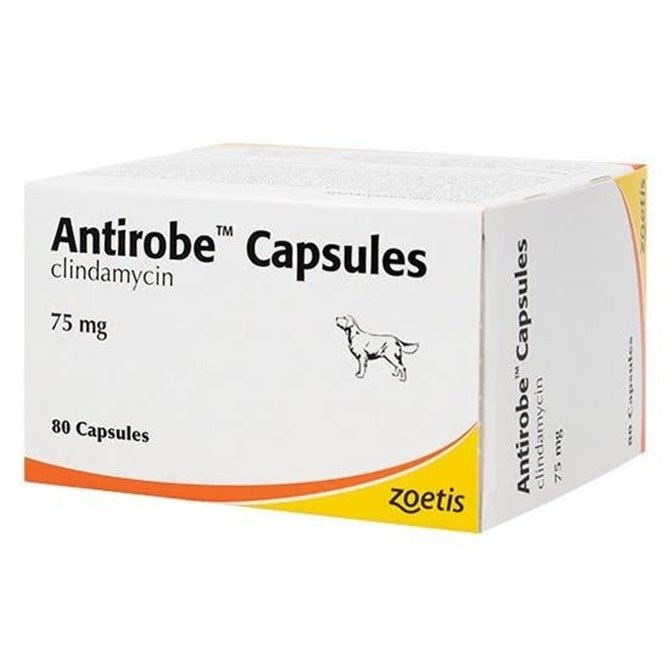
75mg Antirobe Capsule - per Capsule
238545
75mg Antirobe is an oral antibiotic for dogs and cats. VET PRESCRIPTION REQUIRED
Product Features
- Pack Size: - Sold Individually
- Target Animal: - Dogs and Cats
- Related Condition: - For the treatment of infected wounds and abscesses, and infected mouth cavity and dental infections and pyoderma
- Pet Prescription Required?: - Yes (For UK Orders)
- Active Ingredient: - Clindamycin
- Product Name: - 75mg Antirobe Capsule - per Capsule
More Information
Description
Antirobe is an oral antibiotic for dogs and cats.
This medication may only be supplied with a valid veterinary prescription, issued by your vet. You should only purchase this item if you have or are in the process of arranging such a prescription. See information bar for further details.
Each Antirobe capsule contains 25, 75, 150 or 300 mg clindamycin (as clindamycin hydrochloride).
Antirobe is used as an oral antibiotic for dogs and cats (25 mg only)
Dogs - Antirobe is used for the treatment of infected wounds and abscesses, and infected mouth cavity and dental infections, caused by or associated with Staphylococcus spp., Streptococcus spp. (except Streptococcus faecalis), Bacteroides spp., Fusobacterium necrophorum and Clostridium perfringens. To help provide antimicrobial cover during dental procedures. For the treatment of superficial pyoderma associated with Staphylococcus intermedius. For the treatment of osteomyelitis, caused by Staphylococcus aureus.
Cats - Antirobe is used for the treatment of infected wounds and abscesses and infected mouth cavity and dental infections, caused by bacteria sensitive to clindamycin. To help provide antimicrobial cover during dental procedures. Before Antirobe therapy is initiated, the involved pathogens should be identified and sensitivity to clindamycin established. Clindamycin has been shown to have in vitro activity against isolates of the following organisms: Aerobic Gram-positive cocci, including: Staphylococcus intermedius and Staphylococcus aureus (penicillinase and non-penicillinase producing strains), Staphylococcus epidermidis, Streptococcus spp. (except Streptococcus faecalis), Pneumococcus spp. Anaerobic Gram-negative bacilli, including: Bacteroides spp., Fusobacterium spp. Anaerobic Gram-positive non-spore-forming bacilli, including: Propionibacterium spp., Eubacterium spp., Actinomyces spp. Anaerobic and microaerophilic Gram-positive cocci, including: Peptococcus spp., Peptostreptococcus spp., microaerophilic streptococci. Clostridia: Most Cl.perfringens are susceptible; other species such as Cl. sporogenes and Cl. tertium frequently are resistant to clindamycin. Mycoplasma species: Most mycoplasma species are susceptible to clindamycin. Dosage and administration For oral administration only. 1.For the treatment of infected wounds and abscesses, and infected mouth cavity and dental infections in dogs and cats, administer either: -5.5 mg/kg of bodyweight every 12 hours for 7 to 10 days, or -11 mg/kg of bodyweight every 24 hours for 7 to 10 days If no clinical response is seen within 4 days, redetermine the diagnosis. To help provide anti-microbial cover during dental procedures, a 10 day course is recommended. This should be initiated five days before dental therapy and continued for five days thereafter. In dogs, treatment may be extended to a maximum of 28 days based on clinical judgement. 2.For the treatment of superficial pyoderma in dogs, administer either: -5.5 mg/kg of bodyweight every 12 hours -11 mg/kg of bodyweight every 24 hours Therapy of canine superficial pyoderma is usually recommended for 21 days, with extension of therapy based on clinical judgement. 3.For the treatment of osteomyelitis in dogs, administer: -11 mg/kg of bodyweight every 12 hours for a minimum of 28 days If no clinical response is seen within 14 days, the treatment should be stopped and the diagnosis redetermined. Dosage table Bodyweight Superficial pyoderma1, dental infections, wounds and abscesses, Osteomyelitis1 5.5 mg/kg ev. 12h 11 mg/kg ev. 24h 11 mg/kg ev. 12h 4.5 kg 1 x 25 mg twice daily 2 x 25 mg once daily 2 x 25 mg twice daily 13.5 kg 1 x 75 mg twice daily 1 x 150 mg once daily 1 x 150 mg twice daily 27.0 kg 1 x 150 mg twice daily 1 x 300 mg once daily 1 x 300 mg twice daily 1 dogs only
Legal category - Antirobe is a POM-V (Pet Prescription Required)
You may also like
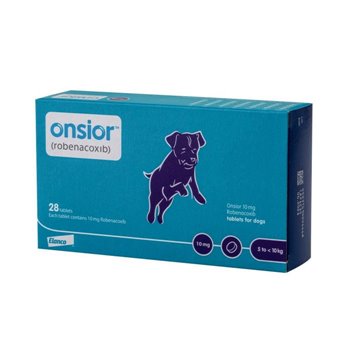
Onsior 10mg for Dogs - per Tablet
10mg Onsior for Dogs is a non-steroidal anti-inflammatory drug (NSAID) specifically designed to alleviate pain and inflammation associated with chronic osteoarthritis in dogs. Onsior is part of the coxib class of NSAIDs, which are renowned for their effectiveness and safety.
Chronic osteoarthritis (Arthritis) is a common condition in dogs, particularly as they age. It involves the progressive degeneration of the cartilage within joints, leading to discomfort, pain, and reduced mobility. Arthritis can significantly impact a dog's quality of life, making everyday activities such as walking, running, or even standing up increasingly difficult.
Onsior 10mg works by targeting and inhibiting an enzyme responsible for producing prostaglandins, substances that play a key role in triggering pain and inflammation. By blocking this enzyme, Onsior effectively reduces the discomfort associated with chronic osteoarthritis, helping your dog lead a more active and fulfilling life.
VET PRESCRIPTION REQUIRED
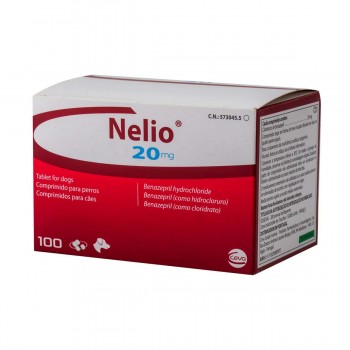
20mg Nelio for Dogs - Individual Tablet
Nelio is used for the treatment of congestive heart failure in dogs and cats. VET PRESCRIPTION REQUIRED
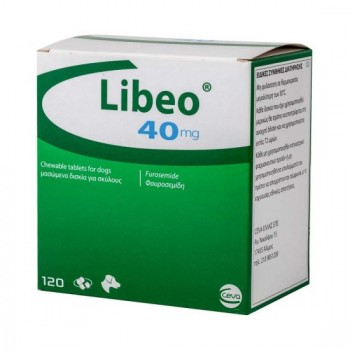
40mg Libeo Tablets For Dogs - per Tablet
40mg Libeo is a prescription-only chewable tablet for dogs. Each tablet contains 40mg of furosemide, a diuretic (water tablet) that helps the body remove excess fluid. Libeo is used to treat oedema (fluid in tissues) and ascites (fluid in the abdomen), particularly when these problems are linked to cardiac insufficiency or congestive heart failure in dogs. Your veterinary surgeon will decide whether Libeo is suitable and will prescribe a dose for your dog’s weight and clinical needs.
Heart failure means your dog's heart is not pumping as effectively as it should. When circulation becomes less efficient, pressure can rise in blood vessels and the body can activate hormone systems that conserve salt and water. The aim is to support circulation, but the side effect can be fluid retention. Extra fluid can then leak from blood vessels and collect in places where it causes symptoms. Fluid may build up in the lungs (leading to coughing or fast, effortful breathing), in the abdomen (ascites), or in tissues (oedema). Reducing this excess fluid can ease breathing, improve comfort, and help dogs tolerate gentle activity.
How 40mg Libeo works
Furosemide is a loop diuretic. It acts in the kidneys, where it reduces the reabsorption of sodium and chloride. Water follows salt, so more water stays in the urine and is passed out of the body. As urine output increases, the volume of fluid in the bloodstream falls. This helps reduce congestion and encourages excess fluid in the lungs, abdomen, or tissues to move back into the circulation so it can be removed. Because furosemide affects salt and water balance, it can also alter electrolytes such as potassium and sodium, so dosing and monitoring matter.
When Libeo may be prescribed
Libeo is commonly used when a dog has signs of fluid retention linked to heart disease. Your vet may prescribe it if your dog has abdominal fluid, visible swelling, or congestion affecting breathing. Libeo is often used alongside other heart medicines, such as pimobendan and ACE inhibitors, depending on the type and stage of heart disease. In some dogs, Libeo is used short term to bring fluid under control. In other dogs, it forms part of longer-term management, with the dose reviewed over time.
VETERINARY PRESCRIPTION REQUIRED
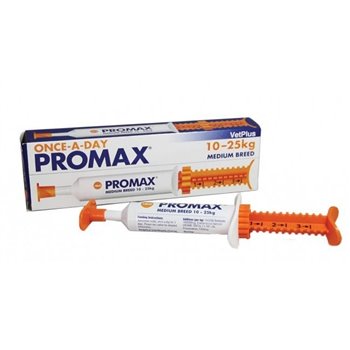
Promax Nutritional Supplement for Medium Breed Dogs - 18ml
Promax is a nutritional supplement designed to support the digestive health of medium breed dogs (10kg-25kg). Promax is formulated to help manage digestive disturbances such as diarrhoea, upset stomach, or digestive imbalance caused by stress, dietary change, illness, or antibiotic treatment.
Promax contains a unique triple-action formula combining a probiotic, a prebiotic, and a binding agent. These ingredients help restore the natural balance of the digestive system, improve nutrient absorption, and support faster recovery.
Promax is suitable for dogs weighing between 10kg and 25kg. It comes in an easy-to-use oral syringe containing a measured 18ml dose, divided for a three-day course. The syringe allows for accurate, clean administration directly into the dog's mouth.
How Promax Works
Promax targets the three key areas involved in digestive support: stabilising the gut microflora, binding harmful toxins, and reinforcing the gut lining.
The probiotic component is Enterococcus faecium, a beneficial bacterium that helps replenish the natural gut flora. This is particularly useful when a dog has been on antibiotics, which can disrupt the balance of healthy bacteria. Restoring these microbes supports normal digestion and helps prevent harmful bacteria from taking hold.
The prebiotic is fructo-oligosaccharides (FOS). These are complex sugars that serve as food for the healthy bacteria in the gut. Feeding the beneficial bacteria helps them thrive, which in turn helps regulate digestive function and improves resilience against gut disturbances.
The binding agent is montmorillonite clay, a naturally occurring compound that helps to bind toxins and excess fluids in the digestive tract. This has a stabilising effect on the stool, which is particularly useful in cases of diarrhoea.
Promax also includes a blend of glutamine and pectin. Glutamine is an amino acid that supports the cells of the gut lining and encourages repair, while pectin is a natural fibre that soothes the intestinal walls and helps regulate bowel movements.
Each of these components has been chosen to work synergistically, providing a comprehensive approach to digestive care.
18ml Syringe for Medium Dogs (10-25kg)