


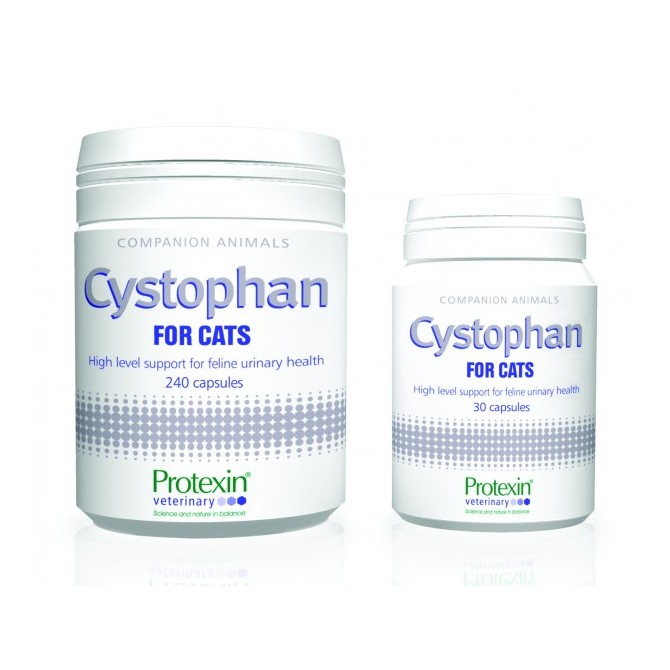
Cystophan for Cats - Pot of 240 Capsules
Cystophan for Cats is a nutritional supplement designed to support the lower urinary tract and help maintain a comfortable, resilient bladder. Many cats experience episodes of urinary irritation. Cystophan Capsules are made for simple daily use, and the capsule can usually be given whole or opened and mixed with a small amount of food for cats that dislike tablets. Used alongside veterinary advice, hydration support and stress reduction, Cystophan Capsules can be a practical way to help cats that are prone to recurring bladder flare-ups.
One of the most common reasons for repeated urinary signs in otherwise healthy cats is Feline Idiopathic Cystitis (FIC). “Idiopathic” means there is no single identifiable cause, and FIC is typically a diagnosis made after your vet has ruled out problems such as bacterial urinary tract infection, bladder stones (uroliths), anatomical issues or systemic disease. Your vet may recommend a urinalysis to look for blood, crystals and inflammatory cells, and may also suggest a urine culture, blood tests or imaging such as ultrasound or X‑rays if the pattern is severe, recurrent or unusual. Many cases of Feline Idiopathic Cystitis are linked to stress and changes in routine, with the nervous system, stress hormones and the bladder’s protective barrier all playing a part. FIC can be intermittent, with flare-ups that settle and then recur, which is why supportive measures, including Cystophan Capsules, are often used as part of long-term management.
Product Features
- Pack Size: - Pot of 240
- Target Animal: - Cat (Feline)
- Pet Prescription Required?: - No
- Product Name: - Cystophan for Cats - Pot of 240 Capsules
Additional Product Information
Description
It helps to know the typical signs of lower urinary tract discomfort and when to seek help. With FIC, urine often contains inflammatory debris and may contain blood (haematuria), even though bacteria are not present. You might notice any of the following signs, and each one should be taken seriously, particularly if it is new for your cat:
- Your cat strains to urinate (stranguria) or appears painful in the litter tray.
- Your cat passes very small amounts of urine more often than usual (pollakiuria).
- Your cat urinates outside the tray (periuria), often on cool, smooth surfaces.
- Your cat cries, over-grooms the belly area, or seems restless and unsettled.
- Your cat’s urine looks pink, red or unusually strong-smelling.
A vet check is important because the same signs can also be caused by stones, urethral plugs or infection, and male cats can develop a life-threatening urethral obstruction. If your cat is repeatedly trying to pass urine but producing little or none, or seems dull and distressed, treat it as an emergency.
Cystophan Capsules work by supporting two key areas that matter in many cats with FIC: the bladder lining and the stress response. The inside of the bladder is protected by a mucosal barrier that contains glycosaminoglycans (often shortened to the “GAG layer”). When this protective layer is weakened, irritating substances in urine can come into closer contact with the bladder wall, which may contribute to inflammation, nerve sensitivity and pain. Cystophan Capsules provide nutritional support aimed at helping the bladder maintain this barrier by supplying building blocks that are associated with GAG production, such as forms of glucosamine, and some formulations also include hyaluronic acid, which is naturally found in connective tissues. In addition, many cats with FIC benefit from help with stress modulation, because stress can influence bladder function and trigger episodes; some versions of Cystophan Capsules include an amino acid such as L-tryptophan to support calm behaviour. While supplements cannot “cure” FIC on their own, Cystophan Capsules are commonly used to help reduce the frequency and severity of episodes when combined with a broader management plan.
Giving Cystophan Capsules is straightforward, which matters when your cat is uncomfortable and you want to avoid adding extra stress. Follow the label directions or your vet’s advice, as the amount can vary with your cat’s size and whether you are in a short initial support period or a longer maintenance phase. If your cat accepts capsules, you can offer Cystophan Capsules as directed, ideally at the same time each day. If your cat refuses, you can often open the capsule and mix the contents into a small portion of a favourite wet food, then offer the rest of the meal once that is eaten. Try to keep medication and feeding times calm and predictable, and avoid chasing or force-feeding where possible, because negative experiences can increase anxiety around the litter tray. Many carers start to notice steadier litter tray habits over the following weeks, although every cat is different and flare-ups can still happen. If your cat has frequent episodes, keeping a simple diary of litter tray behaviour, stress events and when you give Cystophan Capsules can help you and your vet spot patterns and tailor support.
Because FIC is influenced by the whole cat, not just the bladder, the best results usually come from combining Cystophan Capsules with lifestyle measures that reduce urinary concentration and minimise stress. Encouraging water intake is particularly helpful, as more dilute urine is generally less irritating to the bladder lining; wet food, extra water bowls, water fountains and flavouring water with a small amount of tuna water can all help, if your vet agrees. Environmental enrichment and predictable routines also matter, including multiple clean litter trays in quiet locations, safe hiding spaces, play sessions and pheromone support when appropriate. Cystophan Capsules can often be used alongside prescription urinary diets and other vet-recommended treatments, but you should tell your vet about any supplements your cat is taking, especially if your cat is on other medicines or has chronic conditions. If signs worsen, if you see repeated blood in the urine, or if your cat cannot pass urine normally, veterinary assessment should always come first, with Cystophan Capsules used as supportive care rather than a substitute for diagnosis and treatment.
What is Cystophan for Cats used for?
Cystophan Capsules are used as nutritional support for cats that get recurrent lower urinary tract signs, especially when Feline Idiopathic Cystitis is suspected. They are designed to support the bladder’s protective lining and, in some formulations, help with stress-related triggers. They do not replace a veterinary diagnosis.
How is Feline Idiopathic Cystitis different from a urine infection?
Feline Idiopathic Cystitis causes cystitis without a bacterial cause, so urine tests often show inflammation and sometimes haematuria, but culture is negative. A urinary tract infection is less common in healthy adult cats and usually needs antibiotics. Your vet may use urinalysis and culture to tell them apart.
How long do Cystophan Capsules take to work?
Some cats seem more comfortable within a couple of weeks, while others need longer before flare-ups become less frequent. Because Feline Idiopathic Cystitis can come and go, it helps to judge progress over several weeks and alongside changes such as better hydration and reduced stress. Follow your vet’s plan.
Can my cat take Cystophan Capsules long term?
Many cats use Cystophan Capsules for extended periods as part of a long-term management approach for recurrent episodes. Long-term use is usually about prevention and stability rather than treating an acute crisis. If your cat has other conditions or is on medicines, ask your vet to confirm it is appropriate.
How do I give Cystophan Capsules if my cat hates tablets?
Cystophan Capsules can often be given whole, but many cats accept them better when the capsule is opened and the contents mixed into a small amount of strong-smelling wet food. Offer that portion first so you know it is eaten. Try to keep the routine calm to avoid adding stress.
Brand

What our customers say about us.
I have used Vetdispense for my elderly springer spaniels medication for a number of years. Our vets were charging double the price as medication had to be stored in refrigerators. I get a prescription from my vets and send a copy with my order and it has always been processed and despatched promptly. I use an app on my mobile and can keep track of the order. If there have ever been any queries you can call and speak to someone (a rare and much appreciated thing these days). I highly recommend their service.
Audrey
Source: Trustpilot Review
Always prompt in order turn around, with a person at the end of a line to help when needed. I can only recommend their professionalism and reliability.
Mikey
Source: Trustpilot Review
I bought some pills for my cat that the vet had recommended. I shopped around at various pet product sites and found Vetdispense far the cheapest even after including the postage charge. Delivery was within a few days of my order. By all means if you are buying something for your pet, check all the sites but make sure you check Vetdispense!
Martin
Source: Trustpilot Review
You may also like

- Tracked 24 Delivery Follow your parcel online
- VMD & RCVS Registered VetDispense is a registered UK Dispensary
- Secure Payment Pay securely online by card or PayPal
- Independent Since 2008 A Trusted UK Dispensary