


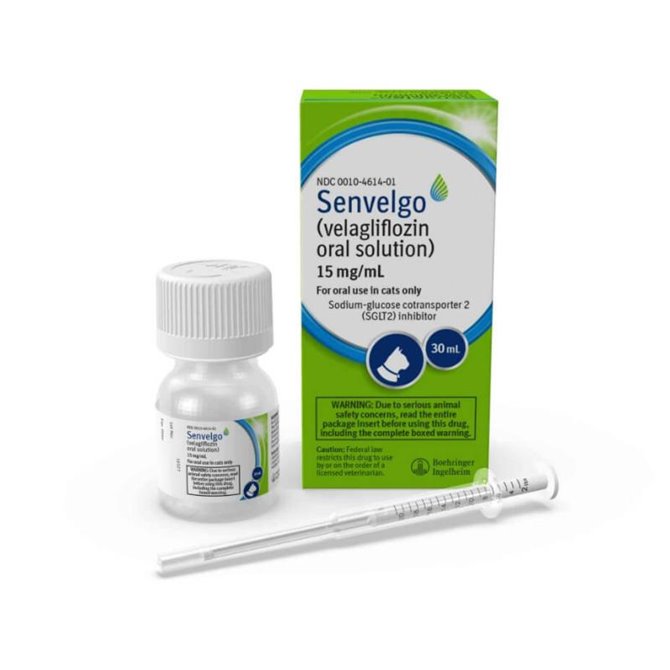
Senvelgo 30ml for Cats with Diabetes
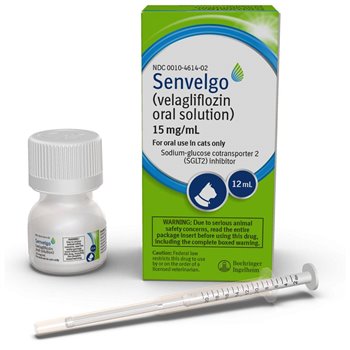
Senvelgo 30ml for Cats is a prescription-only veterinary medicine that may be prescribed for some cats with non-insulin-dependent diabetes. Senvelgo is an oral liquid that is given once daily using a dosing syringe, with the dose and treatment plan set by your Vet. Senvelgo is intended to support long-term control of blood glucose and reduce the clinical signs of diabetes when it is appropriate for your cat. 12ml Senvelgo bottles can be ordered here.
Senvelgo works in a different way from insulin injections. It acts primarily at the kidneys. When blood passes through the kidneys, glucose is filtered into the urine-forming fluid and is normally reabsorbed back into the bloodstream. Senvelgo reduces this reabsorption by blocking a transporter that moves glucose back into the body. As a result, more glucose leaves the body in the urine, which can lower blood glucose levels. This insulin-independent approach is one reason oral treatment may be considered for some cats, under veterinary guidance.
Product Features
- Pack Size: - 30ml
- Target Animal: - Cat (Feline)
- Related Condition: - Diabetes in Cats
- Pet Prescription Required?: - Yes
- Active Ingredient: - velagliflozin
- Product Name: - Senvelgo for Cats
Additional Product Information
Description
Senvelgo 30ml is used to reduce hyperglycaemia (high blood glucose) in cats with non-insulin-dependent diabetes mellitus. For suitable cats, this once-daily liquid provides an oral treatment rather than injections. Common signs of diabetes include increased thirst, frequent urination, weight loss despite a good appetite, and reduced energy. Some cats also develop weakness in their back legs. These signs need veterinary investigation rather than treatment based on symptoms alone, and Senvelgo 30ml should only be given to the cat for whom it has been prescribed.
Senvelgo 30ml works mainly through the kidneys rather than by supplying insulin. Normally, the kidneys filter glucose from the blood and then return most of it to the circulation. Velagliflozin blocks a protein called sodium-glucose co-transporter 2, usually shortened to SGLT2, which is involved in this reabsorption. More glucose can then leave the body in urine, helping to lower blood glucose levels. This process is called glucosuria, and it is an expected effect of treatment, not automatically a sign that the medicine is failing. Your cat must still produce enough of their own insulin for this approach to be appropriate. Although Senvelgo 30ml reduces blood glucose without replacing insulin, it does not remove the body's need for that hormone. Improved glucose control may ease diabetic signs, but the response differs between cats. Your vet will assess progress using your cat's wellbeing and appropriate tests, rather than promising a particular result or assuming that diabetes has been cured.
Before prescribing Senvelgo 30ml, your vet will assess your cat's appetite, hydration, weight, medical history and test results, including checking for ketones in blood or urine. Ketones are substances produced when the body breaks down fat for energy; an excessive build-up can lead to diabetic ketoacidosis, or DKA, a potentially life-threatening complication. Senvelgo must not be used in cats with DKA, diabetic ketonuria, meaning diabetes-related ketones in urine, or severe dehydration requiring intravenous fluids. Other illnesses, including pancreatitis, infections and significant kidney, liver or heart disease, need careful assessment. Senvelgo 30ml is not suitable for every diabetic cat, and injectable insulin remains necessary for some patients. Cats previously treated with insulin may have a higher risk of DKA when changing treatment, so never stop insulin or make a switch yourself. Combined use with insulin or other glucose-lowering medicines is not recommended. Tell your vet about all medicines and supplements your cat receives, and mention any planned surgery or period when they may be unable to eat normally.
Give Senvelgo 30ml by mouth once daily, at approximately the same time each day, following your vet's directions. The labelled dose is 1mg of velagliflozin per kilogram of bodyweight, but use the supplied oral dosing syringe and the instructions provided for your individual cat rather than estimating a volume. The syringe has bodyweight markings to help measure the prescribed amount. Senvelgo 30ml can be given directly into the mouth or mixed with a small amount of food that your cat will eat completely at once. Giving it in a full bowl could leave part of the dose uneaten, and other pets must not share medicated food. Keep fresh drinking water available at all times and follow the feeding plan agreed with your vet. A record of each dose can help when several people share feeding duties. If your cat spits out medicine, leaves medicated food or misses a dose, ask the veterinary team what to do rather than giving extra medicine to compensate.
Monitoring is particularly important when starting Senvelgo 30ml. Ketones must be checked before treatment and every one to three days during the first two weeks, as well as whenever your cat shows signs of illness. Your veterinary team can demonstrate the testing method and explain which results require action. DKA can develop even when blood glucose is not raised, a form called euglycaemic diabetic ketoacidosis, so a reassuring glucose result does not exclude an emergency. If your cat stops eating, vomits, becomes unusually lethargic, weak or dehydrated, stop Senvelgo 30ml and contact a vet immediately for assessment. Do not wait for a scheduled appointment or delay urgent care while trying to collect a urine sample. Treatment must also be stopped if DKA or diabetic ketonuria is suspected or confirmed. The risk is greatest early in treatment, but problems can occur later. Keeping a diary of appetite, drinking, toileting, weight and behaviour gives your vet useful context, while planned follow-up visits allow blood glucose, hydration and urine findings to be assessed together.
Possible adverse effects of Senvelgo 30ml include loose stools or diarrhoea, increased thirst and urination, weight loss and dehydration. Drooling and urinary tract infections can also occur. Report side effects promptly, particularly persistent diarrhoea, discomfort when urinating or continuing weight loss; your vet may need to investigate or change treatment. Do not assume these changes are simply part of getting older. For ongoing care, agree a suitable diet and weight-management plan rather than making abrupt food changes. Arrange repeat prescriptions in good time so that planned treatment is not interrupted unexpectedly. Senvelgo 30ml does not require special storage conditions and does not need refrigeration. Keep the bottle securely closed, away from children and other animals, and note the opening date because the liquid must be used within six months of first opening, without exceeding the printed expiry date. Do not wash the dosing syringe with water. Wash your hands after handling the medicine and wash bowls after medicated food has been eaten. Ask your veterinary practice about returning unused medicine for safe disposal rather than pouring it down the sink.
How does Senvelgo 30ml work compared with insulin injections for diabetic cats?
Insulin injections replace or supplement the cat’s insulin to help move glucose from the blood into body cells. Senvelgo works differently by reducing glucose reabsorption in the kidneys, so more glucose leaves the body in urine. Your vet chooses the most appropriate approach based on your cat’s condition.
Which cats are suitable for Senvelgo 30ml?
Senvelgo may be considered for cats with diabetes that are otherwise stable and can be safely managed with an oral option. It may not be appropriate if a cat is unwell, dehydrated, not eating, vomiting repeatedly, or has evidence of ketones/diabetic ketoacidosis (DKA). Your vet will confirm suitability with clinical checks and tests.
How quickly does Senvelgo start lowering blood glucose in cats?
Many cats show changes in blood glucose and urine glucose soon after starting treatment, but the time to stable control varies. Improvement in thirst, urination, appetite, energy, and weight trends may take days to weeks. Your vet will advise how and when to monitor progress.
What should I do if I miss a dose of Senvelgo, or if my cat vomits after taking it?
Do not give a double dose unless your vet has specifically instructed it. If you miss a dose, give the next dose at the usual time unless your vet advises differently. If your cat vomits soon after dosing, contact your vet for advice, particularly if vomiting repeats or your cat will not eat.
What should a diabetic cat eat, and should diet be changed when starting Senvelgo?
Diet is an important part of diabetes management, and your vet may recommend a measured feeding plan and weight control if needed. Changes to diet should be planned and gradual, because sudden changes in food or treats can destabilise diabetes control. Always follow veterinary guidance for feeding and treats.
Brand
SenvelgoWhat our customers say about us.
I always use vetdispense to order my dogs Cytopoint. It always arrives pronptly and well packaged.
Victoria
Source: Trustpilot Review
Good all round. Great service, good prices
Tim
Source: Trustpilot Review
First time I have used this company and pleased the Order arrived fairly quickly and at a reasonable price, will definitely be using this company again
MW
Source: Trustpilot Review
You may also like
- Tracked 24 Delivery Follow your parcel online
- VMD & RCVS Registered VetDispense is a registered UK Dispensary
- Secure Payment Pay securely online by card or PayPal
- Independent Since 2008 A Trusted UK Dispensary