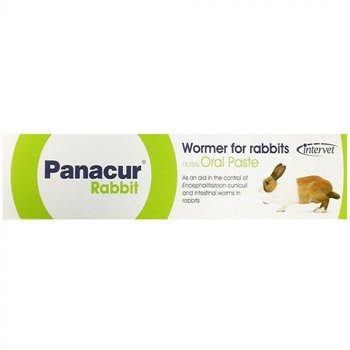
Rabbit wormers are used to control particular internal parasites, with treatment chosen according to the rabbit’s needs. Panacur Rabbit oral paste contains fenbendazole and is an aid in the control and treatment of intestinal worms and Encephalitozoon cuniculi, usually shortened to E. cuniculi. The current manufacturer’s directions restrict this paste to domestic rabbits weighing more than 2.5kg.
Choosing rabbit wormers is not simply a matter of following the same calendar used for a dog or cat. Intestinal worms are relatively uncommon in pet rabbits, and signs such as weight loss or altered droppings can have many other causes. A vet may recommend examining a faecal sample or investigating diet, dental health and other illness before deciding on treatment. Although Panacur Rabbit’s manufacturer describes a preventative schedule, the Rabbit Welfare Association & Fund advises against routine worming solely to prevent E. cuniculi without discussing the need with a vet. A...
Rabbit wormers are used to control particular internal parasites, with treatment chosen according to the rabbit’s needs. Panacur Rabbit oral paste contains fenbendazole and is an aid in the control and treatment of intestinal worms and Encephalitozoon cuniculi, usually shortened to E. cuniculi. The current manufacturer’s directions restrict this paste to domestic rabbits weighing more than 2.5kg.
Choosing rabbit wormers is not simply a matter of following the same calendar used for a dog or cat. Intestinal worms are relatively uncommon in pet rabbits, and signs such as weight loss or altered droppings can have many other causes. A vet may recommend examining a faecal sample or investigating diet, dental health and other illness before deciding on treatment. Although Panacur Rabbit’s manufacturer describes a preventative schedule, the Rabbit Welfare Association & Fund advises against routine worming solely to prevent E. cuniculi without discussing the need with a vet. An individual assessment is more useful than assuming every rabbit needs an identical programme.
E. cuniculi is a microscopic parasite rather than an intestinal worm. Infection can affect the nervous system, kidneys and eyes, although many infected rabbits never develop obvious illness. Possible signs include head tilt, loss of balance, weakness and changes in urination. These symptoms are not proof of E. cuniculi: other problems can look similar and require different treatment. Rabbit wormers containing fenbendazole may form part of the veterinary plan, but an unwell rabbit can also need pain relief, fluids, nutritional support or other care. Treatment cannot guarantee reversal of damage already caused to affected tissues.
Panacur Rabbit is supplied as a measured oral paste, with a dial on the syringe to control the amount delivered. Accurate body weight is essential before deciding how much to give. The manufacturer distinguishes a nine-day preventative course from a 28-day course for rabbits with clinical signs associated with E. cuniculi. Follow the current packaging and your vet’s instructions, including the amount and duration, rather than transferring directions from another Panacur formulation.
Cleaning is an important part of managing E. cuniculi because infective spores can be shed in urine and contaminate the environment. Keep food and drinking water away from soiled areas, remove wet bedding and clean litter trays regularly. If infection is suspected or confirmed, ask your vet which disinfectant is suitable and how to use it safely around rabbits. Rabbits sharing accommodation may also need assessment. When introducing a new companion, discuss health checks, testing and any treatment before bonding; rabbit wormers alone do not replace planning for a safe introduction.
Watch appetite and droppings throughout any course of treatment. A rabbit eating less, passing fewer droppings or sitting hunched needs prompt veterinary attention, rather than an extra dose of rabbit wormer. Digestive problems may involve pain, dental disease or gut slowdown, and waiting for parasite treatment to work can delay necessary care. Keep the medicine in its original packaging, follow its storage directions and wash your hands after administration.
Do all rabbits need regular worming?
Not necessarily. The need for rabbit wormers depends on the parasite risk, history and clinical findings. Manufacturer preventative directions and rabbit welfare guidance are not identical, so discuss a suitable approach with your vet rather than automatically treating every rabbit several times a year.
What does Panacur Rabbit treat?
Panacur Rabbit contains fenbendazole and is used as an aid in controlling and treating intestinal worms and E. cuniculi in domestic rabbits. It does not treat every cause of poor appetite, weight loss, head tilt or abnormal droppings.
Is E. cuniculi a worm?
No. E. cuniculi is a microscopic parasite that can affect organs including the brain, kidneys and eyes. A medicine described as a rabbit wormer may also have a role against this parasite, but the treatment purpose and duration must be distinguished.
Why are there nine-day and 28-day courses with Panacur?
The manufacturer describes nine days for preventative use and 28 days for rabbits showing clinical signs associated with E. cuniculi. Your vet can decide which approach is appropriate. A nine-day course should not be presented as the standard treatment for a rabbit with suspected clinical disease.
Does a head tilt mean my rabbit has E. cuniculi?
No. Head tilt and balance problems have several possible causes, including ear disease. Your rabbit needs prompt veterinary assessment. Starting rabbit wormers without an examination can delay treatment for another condition, and fenbendazole may be only one part of the care required.
Should I treat my rabbit’s companion too?
If E. cuniculi is suspected or confirmed, tell your vet about rabbits that share housing, runs or equipment. They can assess exposure and decide whether testing or treatment is needed. Do not assume an apparently healthy companion requires exactly the same course.