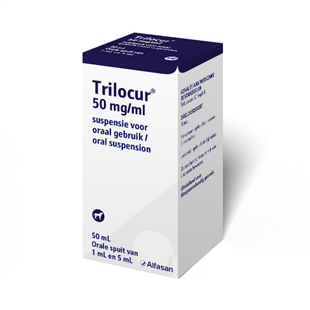
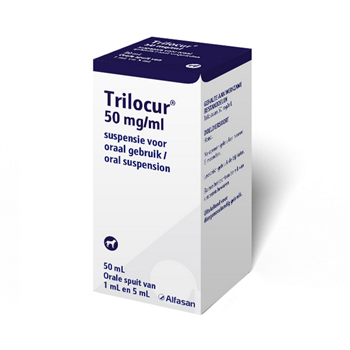
Trilocur for Dogs
Trilocur is a veterinary medicine used to manage Cushing’s disease in dogs, also known as hyperadrenocorticism. Cushing’s disease occurs when the body is exposed to too much cortisol for a long period. Cortisol is a natural steroid hormone involved in metabolism, immune function, blood pressure control, and the stress response. When cortisol stays high, it can gradually affect a dog’s skin, muscles, and internal organs.
What Trilocur is used for
Trilocur contains trilostane and is used to control the clinical signs of naturally occurring Cushing’s disease. Most affected dogs have pituitary-dependent hyperadrenocorticism, where the pituitary gland overstimulates the adrenal glands. A smaller number have adrenal-dependent disease, where an adrenal tumour produces excess cortisol. Trilocur can be suitable for either form, but diagnosis and treatment decisions should be made by a vet.
Trilocur is designed to control cortisol production rather than remove the underlying cause. Because dogs vary in size, disease severity, and response to treatment, dosing is individual and may need adjustment over time.
How Trilocur works
Cortisol is produced in the adrenal glands through a series of chemical steps. Trilostane works by inhibiting an enzyme called 3β-hydroxysteroid dehydrogenase, which is required for cortisol production. By blocking this step, trilostane reduces the adrenal glands’ ability to produce cortisol. The goal is to reduce cortisol into a controlled range. Cortisol is essential for life, so monitoring is used to avoid suppressing it too far.
Management relies on both observation and testing. Vets commonly use blood tests to assess adrenal control while on trilostane and to check general health and electrolytes. Rechecks are typically more frequent at the start of treatment and after dose changes, then less frequent once a stable dose is found. Even stable dogs benefit from ongoing reviews because Cushing’s disease and overall health can change with time.
Your vet will usually ask about thirst, urination, appetite, energy, panting, sleep, and any vomiting or diarrhoea. These day-to-day details matter, because blood results should be interpreted alongside how your dog is feeling. Many owners notice improvements in drinking, urination, appetite, and comfort within a few weeks of good control.
Your vet will check for conditions that may affect treatment, such as kidney or liver disease, diabetes, pancreatitis, or ongoing infections. Trilostane is not suitable for pregnant or breeding animals. Tell your vet about any other medicines or supplements your dog is taking, including anti-inflammatories, heart medicines, or diuretics, because additional monitoring may be needed.
If your dog becomes unwell, is vomiting, has diarrhoea, seems weak, or needs an anaesthetic, your vet may advise extra checks or temporary changes to treatment.
Potential side effects and warning signs
Many dogs tolerate Trilocur well, but side effects can occur. Some dogs develop reduced appetite, vomiting, diarrhoea, lethargy, or weakness. These signs should be discussed with a vet, especially if they are marked or persistent. More serious problems can occur if cortisol is suppressed too far. This can lead to hypoadrenocorticism (a condition similar to Addison’s disease). Signs that need urgent veterinary advice include collapse, extreme weakness, repeated vomiting or diarrhoea, severe lethargy, trembling, or a dog that seems unusually quiet or distressed.
Cushing's disease (hyperadrenocorticism) in dogs
Cushing’s disease means the body is producing excess cortisol. The condition is most often seen in middle-aged to older dogs and typically develops slowly. Early signs can look like normal ageing, which is why careful assessment is important.
Pituitary-dependent hyperadrenocorticism is the most common form. In this form, the pituitary gland produces too much ACTH, which tells the adrenal glands to make more cortisol. Adrenal-dependent hyperadrenocorticism is less common and involves an adrenal tumour producing cortisol directly. In both cases, the result is prolonged exposure to high cortisol.
Increased thirst and increased urination are common early signs. Many dogs also develop an increased appetite and may beg, steal food, or scavenge more than usual. Panting is common, including at rest, and some dogs seem less keen on exercise or tire more easily.
Physical changes can include a “pot-bellied” appearance linked to muscle weakness and changes in fat distribution. Skin and coat changes are also common. The coat may become thin or patchy, hair regrowth after clipping may be slow, and the skin can become fragile. Recurrent skin, ear, or urinary infections can occur because cortisol affects the immune system. Some dogs gain weight, while others lose muscle, particularly over the back and hindquarters.
Diagnosis is based on the combination of clinical signs and testing. Routine blood and urine tests can provide supportive information and help rule out other causes. Specific hormone tests are then used to confirm Cushing’s disease and assess adrenal function. Additional testing, including imaging such as ultrasound, may be recommended to help distinguish pituitary-dependent from adrenal-dependent disease and to guide treatment planning.
Long-term excess cortisol can increase the risk of complications such as high blood pressure, diabetes mellitus, blood clots, pancreatitis, and recurrent infections. It can also reduce muscle strength and affect skin health. When cortisol is controlled, many dogs show improvements in thirst, urination, appetite, and comfort.
Practical tips for owners
Give Trilocur consistently at the same time each day with a meal, unless your vet advises otherwise. Keep a simple record of thirst, urination, appetite, panting, and energy levels. Contact a vet promptly if your dog becomes unwell or if symptoms change, because dose adjustments and repeat tests may be needed to keep cortisol in a safe range.
What is Trilocur used for in dogs?
Trilocur is used to control the clinical signs of naturally occurring Cushing’s disease in dogs. It contains trilostane, which reduces the adrenal glands’ production of cortisol. The aim is to bring cortisol into a safer range so thirst, urination, appetite, and comfort can improve with ongoing veterinary monitoring.
How quickly does Trilocur start working?
Many dogs show some improvement in excessive drinking, urination, and appetite within the first couple of weeks, although responses vary. Panting and energy levels may also improve. Skin and coat changes often take longer because hair growth cycles are slow. Your vet will confirm control with follow-up testing.
Is Trilocur the same as Vetoryl?
Both Trilocur and Vetoryl contain trilostane and are used for managing canine Cushing’s disease. Vetoryl is available as Vetoryl Tablets, or Vetoryl Capsules. Trilocur is an oral liquid.
What is an ACTH stimulation test and why is it used?
An ACTH stimulation test checks how the adrenal glands respond to a hormone signal. It is commonly used to monitor dogs taking trilostane, helping the vet judge whether cortisol control is adequate without being excessive. Results are interpreted alongside your dog’s clinical signs, because comfort and daily behaviour matter too.
Can Trilocur cure Cushing’s disease?
Trilocur manages the condition rather than curing it in most dogs. It reduces cortisol production to control symptoms and lower the risk of complications. Because Cushing’s disease is usually chronic, treatment is often long term. Regular monitoring is used to keep control appropriate as your dog’s needs change.