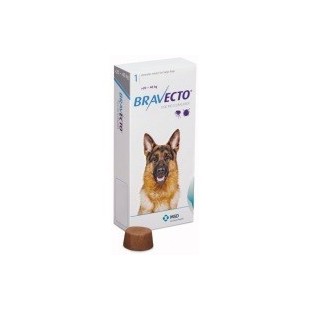
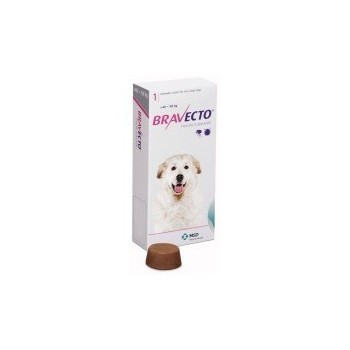
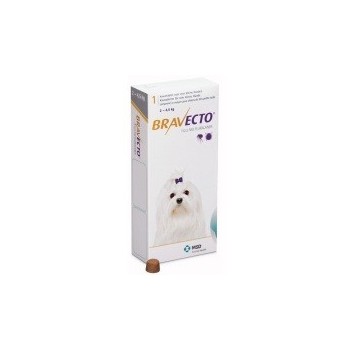
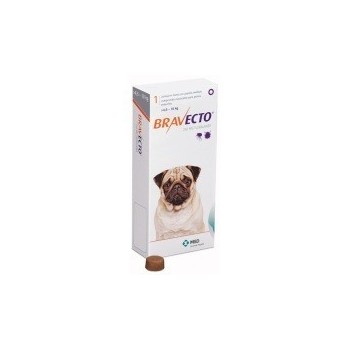
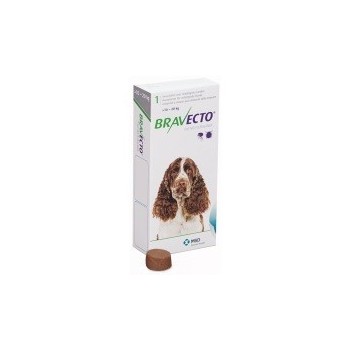
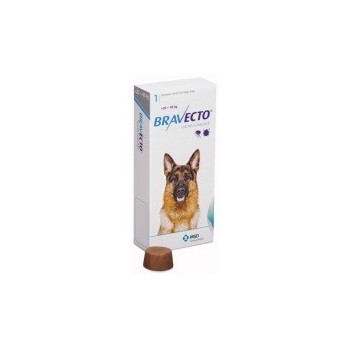
Bravecto Tablets are oral chewable parasite treatments designed specifically for dogs, offering a practical way to manage and control flea and tick infestations without relying on spot-ons or collars. Bravecto Tablets quickly and effectively kill fleas and ticks for up to 12 weeks in a single dose. Bravecto Chewable Tablets contains the active substance Fluralaner; a new extoparasticide belonging to the isoxazolina group. Bravecto Tablets eliminate up to 99% of the fleas and ticks on your dog within 8-12 hours and 100% of them within the 12 week period. The tablets can also be used as part of a treatment strategy for the control of flea allergy dermatitis (FAD).
VET PRESCRIPTION REQUIRED
After treatment with Bravecto, the active ingredient fluralaner is absorbed and circulates in the bloodstream. When a flea or tick attaches and takes a blood meal, it is exposed to fluralaner, which disrupts nerve signalling by blocking ligand-gated chloride channels (including GABA- and glutamate-gated channels) in the parasite. This causes uncontrolled nervous activity, leading to paralysis and death. Bravecto Tablets start killing adult fleas quickly and help stop flea egg production after the flea bites, which supports control of the infestation over time. A single dose of Bravecto Tablets is designed to give long-lasting activity, with protection against fleas and several tick species for up to 12 weeks, although tick duration can vary by species and your vet may advise a different schedule if you are in a higher-risk area.
Fleas and ticks are more than an irritation: they can trigger dermatological disease and transmit infection. Flea bites can cause pruritus (itching), inflamed skin, and secondary infection, and some dogs develop flea allergy dermatitis (FAD), where even a small number of bites leads to marked itching and hair loss. Heavy flea burdens can contribute to anaemia in very small or vulnerable dogs, and fleas can also play a role in tapeworm transmission. Ticks can cause local swelling at the bite site and may transmit pathogens such as Borrelia (Lyme disease) in some regions. Bravecto Tablets treat flea and tick infestations by killing parasites after they feed, which reduces the ongoing bite burden and supports the skin’s recovery. Signs that can suggest a flea or tick problem include:
- Your dog scratches, rubs, or chews the skin repeatedly, especially over the back end or belly.
- You notice hair thinning, broken coat, or sore “hot spots” (acute moist dermatitis).
- You find flea dirt (black specks) or live fleas when combing through the coat.
- You see red, irritated skin, scabs, or signs of secondary bacterial infection.
- You find attached ticks, small lumps, or localised swelling after walks.
If you are unsure what you are seeing, a vet check is reassuring, because pruritus can also be linked to allergies, mites, or infection, and the right diagnosis helps Bravecto Tablets fit into an effective plan.
The dose of Bravecto is selected by your dog’s bodyweight, and it should be given as a complete tablet rather than split, so your dog receives the intended amount of fluralaner. Bravecto Tablets are typically given with or around food, which supports absorption. If your dog is currently infested, giving Bravecto Tablets promptly can reduce adult fleas and ticks on the dog, but you may still need environmental steps to manage eggs and larvae in the home. Because Bravecto Tablets provide long duration, many dogs remain covered with dosing every 12 weeks, but follow your vet’s advice for your location and your dog’s lifestyle. If your dog vomits shortly after dosing or you suspect the tablet was not fully swallowed, contact your vet for guidance, as they can advise whether redosing is appropriate.
Bravecto Tablets are prescription-only veterinary medicines, and that is a useful safeguard because it ensures suitability is checked for your individual dog. Bravecto Tablets are generally used in puppies from 8 weeks of age and weighing at least 2 kg, but the correct strength still depends on accurate weighing. As with any medicine, adverse reactions are possible; the most commonly reported are mild gastrointestinal signs such as vomiting or diarrhoea, reduced appetite, or lethargy. Less commonly, neurological signs (for example tremors or ataxia) have been reported with isoxazoline-class products, so it is sensible to tell your vet if your dog has a history of seizures or neurological disease. Bravecto Tablets are intended for dogs and should not be used in other species unless specifically prescribed, and if your dog is pregnant, lactating, on other medicines, or has chronic illness, your vet can balance the risks and benefits. Bravecto Tablets can often be used alongside routine preventatives such as wormers, but your vet is the best person to confirm what is appropriate for your pet.
For best results, Bravecto Tablets are most effective as part of a broader parasite-control approach, especially if you are dealing with a household infestation. Fleas spend much of their life cycle off the pet as eggs, larvae, and pupae in carpets, bedding, and crevices, which is why you can still see fleas “appear” even after the adult fleas on your dog are killed. While Bravecto Tablets tackle the parasites feeding on your dog, you can support control by washing bedding on a hot cycle, vacuuming thoroughly (and disposing of vacuum contents), and treating other pets in the home with appropriate veterinary products. With ticks, remember that they must attach to feed, so regular coat checks after walks, prompt tick removal with a tick tool, and attention to high-risk areas (ears, neck, underarms, and between toes) remain important even when your dog is on Bravecto Tablets. If your dog has persistent itching despite using Bravecto Tablets, speak to your vet, as they may recommend skin cytology, allergy support, or treatment for secondary infection while the parasite burden is brought under control.
How long do Bravecto Tablets last for dogs?
Bravecto Tablets are designed to provide long-lasting flea control, and many dogs stay protected for up to 12 weeks after a single dose. For ticks, the duration can depend on the tick species and local risk, so your vet may recommend a different interval in certain areas or seasons.
How quickly do Bravecto Tablets kill fleas?
After your dog takes Bravecto Tablets, fluralaner is absorbed into the bloodstream and starts acting once fleas bite. Many dogs see a rapid reduction in live fleas within hours, with continued killing over the first day. This quick knockdown can also reduce flea egg laying and help disrupt the life cycle.
Do Bravecto Tablets stop ticks from biting my dog?
Bravecto Tablets are not a repellent, so a tick may still attach before it is exposed to fluralaner during feeding. The treatment works by killing ticks after they bite, which reduces the time ticks remain attached. Regular coat checks and prompt removal are still important after walks.
What if my dog vomits after taking Bravecto Tablets?
If vomiting happens shortly after dosing, there is a chance the full dose was not absorbed. Check whether the tablet was brought back up, and contact your vet for advice on whether and when to redose. If vomiting is persistent, or your dog seems dull, seek veterinary help promptly.
Do I still need to treat my home for fleas?
Yes, in many cases you do. Bravecto Tablets kill adult fleas on your dog, but flea eggs, larvae, and pupae can be hiding in carpets, bedding, and soft furnishings. Washing bedding, vacuuming thoroughly, and treating other pets can speed up control and reduce the chance of reinfestation.