


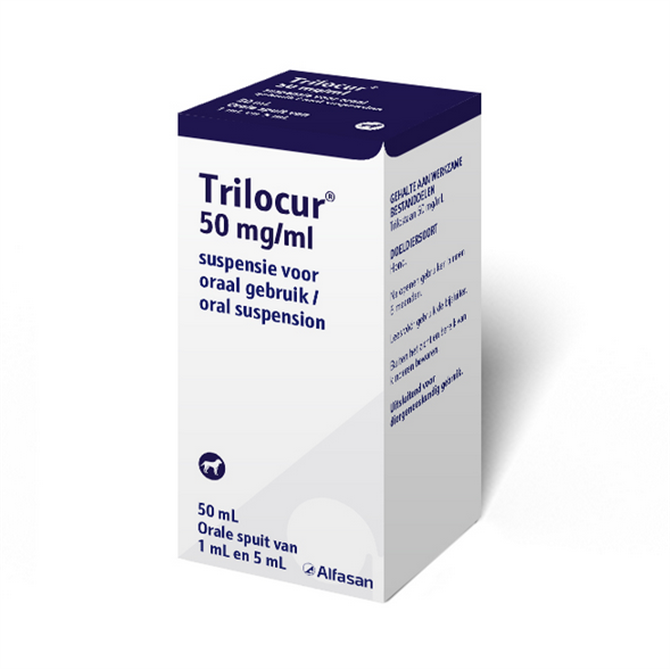
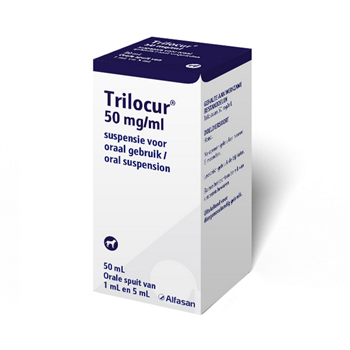
Trilocur 25ml Oral Suspension for Dogs
25ml Trilocur for Dogs (trilostane oral suspension) is a prescription-only medicine used to help manage hyperadrenocorticism, commonly called Cushing’s disease. It is intended for dogs diagnosed by a veterinary surgeon and supplied as an oral liquid that can be measured accurately to match the prescribed dose.
Trilocur contains trilostane. 25ml Trilocur reduces the production of steroid hormones made by the adrenal glands, particularly cortisol. In dogs with Cushing’s disease, cortisol levels are higher than the body needs. Excess cortisol disrupts normal metabolism and immune function and can affect many organs over time. By lowering cortisol production, trilostane can help control clinical signs and improve day-to-day comfort.
How Trilocur works
The adrenal glands sit close to the kidneys and produce several important hormones, including cortisol. Cortisol helps the body respond to stress, regulates the use of fat, protein and carbohydrates, supports blood pressure, and influences the immune system. In Cushing’s disease, cortisol is produced in excess, either because the pituitary gland is stimulating the adrenals too strongly or because an adrenal tumour is producing hormones directly.
Trilocur blocks an enzyme involved in the adrenal gland’s steroid production pathway (3β-hydroxysteroid dehydrogenase). This reduces the synthesis of cortisol and related adrenal steroids. The aim of treatment is not to remove cortisol completely, but to bring production back into a controlled range. Because dogs respond differently, dosing and monitoring are important, especially early on and after any dose changes.
Trilocur may be prescribed for:
- Pituitary-dependent hyperadrenocorticism (the most common form), where a pituitary change increases ACTH stimulation of the adrenal glands.
- Adrenal-dependent hyperadrenocorticism, where an adrenal tumour produces excess hormones.
Additional Product Information
Description
Trilocur 25ml is given by mouth as directed by your vet. It is often administered with food to support consistent absorption. As an oral suspension, it should be measured carefully using the dosing device provided. You should not change the dose or dosing frequency unless your vet instructs you to do so.
Regular veterinary monitoring is part of safe treatment. Your vet may assess clinical signs and use blood tests, which can include an ACTH stimulation test, routine biochemistry and electrolyte checks. Monitoring helps confirm that cortisol is being controlled without suppressing it too far.
As cortisol levels come under control, many owners first notice changes in drinking, urination and appetite. Panting and restlessness may reduce, and some dogs become more willing to exercise. Skin and coat recovery is usually slower, because hair growth cycles take time and secondary infections may need separate treatment. Your vet may treat concurrent problems such as urinary tract infection, dermatitis or high blood pressure alongside trilostane.
Trilostane’s effect is linked to dosing routine. Giving the medicine at a similar time each day and in the same way (for example, always with food) helps your vet interpret follow-up tests and decide whether any adjustment is needed. If your dog’s routine changes, if you switch diets, or if you start new medicines, let your vet know so monitoring can be tailored appropriately.
Many dogs tolerate trilostane well when appropriately monitored, but side effects can occur. Reduced appetite, vomiting, diarrhoea or lethargy may be seen. In some cases, trilostane can suppress adrenal function too strongly, leading to low cortisol (hypoadrenocorticism) or a temporary reduction in adrenal activity. This can become serious and may require urgent veterinary attention.
What is hyperadrenocorticism (Cushing’s disease) in dogs
Hyperadrenocorticism is a hormonal disorder where the body is exposed to persistently high cortisol. It most commonly affects middle-aged to older dogs and tends to develop gradually. Because the early signs can look like normal ageing, it may be missed until symptoms become more obvious.
There are two main naturally occurring forms:
Pituitary-dependent Cushing’s disease (PDH): The pituitary gland releases too much ACTH, which tells the adrenal glands to produce excess cortisol.
Adrenal-dependent Cushing’s disease (ADH): A tumour in one adrenal gland produces cortisol directly.
A third form, iatrogenic Cushing’s disease, can occur after prolonged steroid medication. Management differs and should be guided by a vet.
- Cushing’s disease can affect nearly every body system. Signs may include:
- Increased thirst and increased urination.
- Increased appetite and weight gain.
- A pot-bellied appearance due to muscle weakness and fat redistribution.
- Panting, reduced exercise tolerance and tiredness.
- Thinning coat, hair loss, recurrent skin infections, or slow hair regrowth after clipping.
- Fragile skin, bruising or poor wound healing.
- Recurrent urinary tract infections.
Some dogs also develop complications such as high blood pressure, protein loss through the kidneys, diabetes mellitus, or an increased tendency to form blood clots. Your vet may screen for these issues as part of diagnosis and follow-up.
Diagnosis usually involves a combination of history, physical examination and laboratory testing. Routine blood work may suggest the condition, but specific endocrine tests are typically needed to confirm it. Imaging may also be recommended to assess the adrenal glands and help guide the treatment plan.
Cushing’s disease is usually managed long term. Improvements in thirst, urination and appetite may be noticed within days to weeks, while skin and coat changes often take longer. Ongoing check-ups help keep control stable and allow your vet to adjust treatment if your dog’s needs change.
What is Cushing’s disease in dogs?
Cushing’s disease (hyperadrenocorticism) is a hormonal disorder where a dog’s body is exposed to too much cortisol over time. Cortisol is important for normal stress response and metabolism, but persistently high levels can lead to increased thirst and urination, increased appetite, panting, muscle weakness, and skin or coat changes.
How soon will I see improvement after starting Trilocur?
Some dogs show improvement in thirst, urination and appetite within the first week or two, although response varies. Changes in panting and energy may follow. Skin and coat recovery often takes longer, because hair growth cycles are slow and secondary infections may need separate treatment. Regular rechecks help confirm progress is safe.
Do I need regular blood tests while my dog is on Trilocur?
Yes. Trilostane treatment is usually paired with routine monitoring to make sure cortisol is controlled without being suppressed too far. Your vet may recommend an ACTH stimulation test and standard blood work, including electrolyte checks. Monitoring is especially important after starting treatment, after dose changes, and if your dog becomes unwell.
What should I do if I miss a dose of Trilocur?
If you miss a dose, follow the advice your vet has provided for your dog’s treatment plan. In many cases, a missed dose is given when remembered if it is close to the usual time, but a double dose should not be given. If you are unsure, contact your vet for clear guidance.
Is Trilocur a cure for Cushing’s disease?
Trilocur does not cure the underlying cause of Cushing’s disease in most dogs. It is used to control hormone production and reduce clinical signs. Many dogs remain on treatment long term, with periodic dose adjustments based on symptoms and test results. Your vet will tailor the plan to your dog’s form of disease.
What our customers say about us.
It's so easy to order my cat's medication. He has diabetes, so he needs to have it regularly and with Vets Dispense I don't have to worry as it is always on time.
Alison
Source: Trustpilot Review
Definitely recommend great service very reasonable and fast delivery.
Jordan
Source: Trustpilot Review
This was the first order I have made from vet dispense, very easy to order and quick delivery. I would highly recommend ordering from Vetdispense and I will definitely use again for my dogs probiotic sachets next month. I would suggest vetdispense to have promo/discount codes for customers on general pet goods.
Lauren
Source: Trustpilot Review
You may also like
- Tracked 24 Delivery Follow your parcel online
- VMD & RCVS Registered VetDispense is a registered UK Dispensary
- Secure Payment Pay securely online by card or PayPal
- Independent Since 2008 A Trusted UK Dispensary