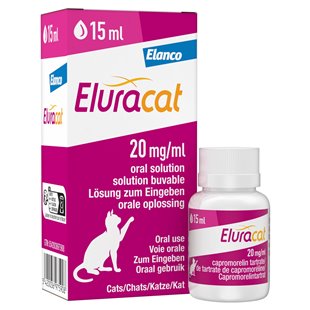
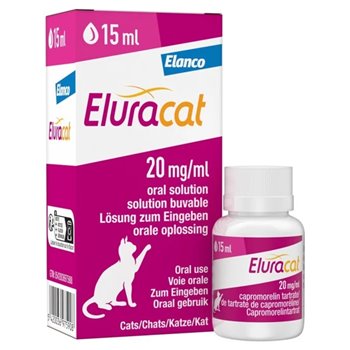
Eluracat Oral Solution for Cats is a prescription medicine used to help cats gain weight when a chronic medical condition causes poor appetite or unintended weight loss. Eluracat contains capromorelin and is given once daily as a liquid directly into the mouth. For a cat that has become thinner, Eluracat can provide support alongside treatment for the underlying illness. Its purpose is to improve food intake and promote weight gain, rather than simply make a meal more appealing.
Capromorelin acts on receptors for ghrelin, a hormone involved in hunger. Eluracat stimulates appetite and also influences the hormonal pathways involved in weight gain. Each millilitre contains 20mg capromorelin tartrate, equivalent to 15.4mg capromorelin. The solution contains vanilla flavouring and the 15ml bottle comes with a dosing syringe. This liquid format allows the prescribed amount to be measured without splitting tablets. It remains a medicine, not a nutritional supplement or a source o...
Eluracat Oral Solution for Cats is a prescription medicine used to help cats gain weight when a chronic medical condition causes poor appetite or unintended weight loss. Eluracat contains capromorelin and is given once daily as a liquid directly into the mouth. For a cat that has become thinner, Eluracat can provide support alongside treatment for the underlying illness. Its purpose is to improve food intake and promote weight gain, rather than simply make a meal more appealing.
Capromorelin acts on receptors for ghrelin, a hormone involved in hunger. Eluracat stimulates appetite and also influences the hormonal pathways involved in weight gain. Each millilitre contains 20mg capromorelin tartrate, equivalent to 15.4mg capromorelin. The solution contains vanilla flavouring and the 15ml bottle comes with a dosing syringe. This liquid format allows the prescribed amount to be measured without splitting tablets. It remains a medicine, not a nutritional supplement or a source of replacement calories.
Chronic kidney disease is one condition in which cats may lose weight and need this type of support. Eluracat has been studied in cats with kidney disease and unintended weight loss, but its authorised use also covers poor appetite or weight loss resulting from other chronic medical conditions. Your vet will assess why your cat is losing weight and whether Eluracat is appropriate. Kidney treatment, suitable nutrition and management of other problems still continue where needed; an improvement in appetite does not mean the underlying disease has resolved.
Eluracat is administered directly into the mouth once a day, using the supplied syringe to measure the amount on the dispensing label. The standard product dose is 0.1ml per kilogram of bodyweight, but your cat's own instructions should guide administration. Insert the syringe into the bottle adapter, turn the bottle upside down and draw up the measured volume. Return it upright before removing the syringe, replace the cap and give the solution gently into the mouth. Afterwards, rinse the syringe and plunger with water and leave them apart to dry.
Response is assessed through changes in weight as well as eating behaviour. A cat may show more interest in food before a clear weight change becomes apparent. Regular measurements using the same scales make gradual changes easier to recognise, while notes about food intake help your vet judge progress. Eluracat is not a treatment with a guaranteed result by a particular day. The veterinary review should consider whether weight is improving, whether the medicine is tolerated and whether other aspects of care need adjusting.
Drooling immediately after Eluracat is very common and usually settles within a few minutes. Other reported effects include vomiting, diarrhoea, lethargy, dehydration and soreness around the mouth or chin. Report new or persistent problems to your vet, especially if your cat eats less or continues losing weight. Eluracat can affect blood glucose, blood pressure and heart rate, so existing illnesses and other medicines influence whether it is suitable. Treatment beyond 90 days requires a further veterinary benefit-risk assessment. Store the bottle at no more than 30°C and use it within three months of first opening.
What is Eluracat used for?
Eluracat helps cats gain bodyweight when poor appetite or unintended weight loss results from a chronic medical condition. It is supportive treatment alongside care for the underlying illness. It is not intended as a general appetite booster for any cat that occasionally leaves food.
Is Eluracat only for cats with kidney disease?
No. Although the clinical evidence includes cats with chronic kidney disease, the authorised indication covers chronic medical conditions more broadly. Your vet will assess the cause of weight loss and the cat's overall health before deciding whether Eluracat is suitable.
How often is Eluracat given?
It is given once daily, directly into the mouth. The labelled dose is 0.1ml/kg, measured with the dosing syringe. Follow the amount on your cat's dispensing label and keep doses approximately 24 hours apart. Ask your vet if the instructions are unclear.
Can I mix Eluracat into my cat's food?
The authorised instructions specify administration directly into the mouth. Mixing it into a meal could make it difficult to know how much was swallowed if food is left. If direct dosing is difficult, ask your vet for help with administration.
How soon should my cat gain weight with Eluracat?
Weight gain is gradual and response varies. Monitor weight and appetite over the review period agreed with your vet. A continuing decline in weight or food intake should be reported rather than waiting for the next routine appointment or increasing the dose yourself.
Does Eluracat require a veterinary prescription?
Yes. Eluracat is a POM-V medicine and requires a valid veterinary prescription. The vet determines whether it is appropriate, the dose and the review schedule. Decisions about continuing beyond 90 days require an assessment of the benefits and risks for that cat.