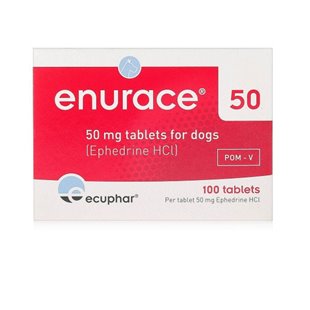
Enurace Tablets for Dogs are a prescription treatment for urinary incontinence caused by urethral sphincter mechanism incompetence in spayed female dogs. This condition occurs when the mechanism that keeps the urethra closed does not work effectively enough to prevent urine escaping. Enurace contains ephedrine hydrochloride, which helps increase urethral closure pressure and reduce unwanted leakage. It is used after a veterinary assessment has established the cause of the problem. Enurace is not a treatment for house-training difficulties, urine marking or other inappropriate urination caused by behaviour problems.
Urine leakage and deliberately passing urine indoors can look similar to an owner, but they do not necessarily need the same treatment. The vet will consider when accidents happen, how much urine is passed and whether drinking or toileting habits have changed. Increased urine production, an infection or difficulty emptying the bladder may require a different app...
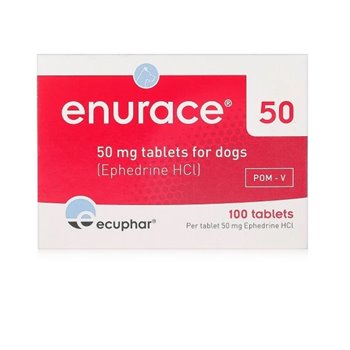
Enurace Tablets for Dogs are a prescription treatment for urinary incontinence caused by urethral sphincter mechanism incompetence in spayed female dogs. This condition occurs when the mechanism that keeps the urethra closed does not work effectively enough to prevent urine escaping. Enurace contains ephedrine hydrochloride, which helps increase urethral closure pressure and reduce unwanted leakage. It is used after a veterinary assessment has established the cause of the problem. Enurace is not a treatment for house-training difficulties, urine marking or other inappropriate urination caused by behaviour problems.
Urine leakage and deliberately passing urine indoors can look similar to an owner, but they do not necessarily need the same treatment. The vet will consider when accidents happen, how much urine is passed and whether drinking or toileting habits have changed. Increased urine production, an infection or difficulty emptying the bladder may require a different approach. Enurace is intended for the specific sphincter problem described in its licence, rather than for every dog with wet bedding.
Enurace is authorised in 10mg and 50mg tablet strengths, allowing the vet to select an appropriate strength for the individual dog. These numbers refer to ephedrine hydrochloride content, so the strengths are not interchangeable tablet for tablet. The 50mg product information states that it must not be used in dogs weighing under 20kg. Enurace 50 tablets have a score line and can be divided into equal halves when the prescribed dose requires this. Do not assume that dividing a stronger tablet removes its weight restriction or makes it suitable for a smaller dog.
Enurace is given by mouth, with the prescribed daily amount generally divided into two doses. The product directions describe giving it before meals in a piece of food. Follow the dispensing label for the actual tablet quantity and timing rather than calculating a dose from the strength alone. The vet adjusts treatment according to the improvement in continence and any adverse effects, aiming for the lowest effective dose.
Because ephedrine can affect heart rate and blood pressure, the dog’s cardiovascular function should be assessed before Enurace starts and monitored during treatment. It must not be used in dogs with glaucoma. Particular care is needed with cardiovascular disease, high blood pressure, partial urethral obstruction, diabetes and certain hormonal or metabolic disorders. Tell the vet about all other medicines, including another continence treatment, as interactions can alter the effects of ephedrine. A dog taking Enurace should also have the medicine recorded when an operation or anaesthetic is being planned.
Regular reviews help establish whether Enurace is controlling leakage without causing unacceptable effects. Product guidance describes checks around two weeks, one month, three months and six months after starting, followed by continued monitoring once the dose is established. Your vet will arrange a schedule appropriate to your dog. Report restlessness, unusual excitement, disturbed sleep, trembling, panting or a noticeable change in heartbeat. Vomiting is also reported. Store Enurace securely in its original container, close the cap properly and keep tablets away from children: accidental ingestion can be dangerous and requires immediate medical advice.
What is Enurace used for?
Enurace treats urinary incontinence caused by urethral sphincter mechanism incompetence in spayed female dogs. It helps the urethra stay closed more effectively between normal toilet trips. A veterinary assessment is needed to distinguish this problem from other causes of urine leakage or accidents indoors.
What is the active ingredient in Enurace?
The active ingredient is ephedrine hydrochloride. It acts on receptors involved in urethral closure, helping reduce leakage. Ephedrine can also affect the cardiovascular system, which is why heart and blood-pressure considerations form part of the veterinary assessment and monitoring plan.
Does Enurace require a prescription?
Yes. Enurace is a prescription-only veterinary medicine. The vet selects the strength and dose after assessing the dog, and treatment is adjusted according to response. Follow the dispensing label rather than using instructions intended for a different dog.
Is Enurace suitable for male dogs?
Its licensed indication is in spayed female dogs with the specified sphincter condition. Urinary problems in a male dog need their own diagnosis and treatment plan. Do not give him another dog’s Enurace or assume all continence medicines are suitable for both sexes.
Can Enurace help with urine marking or house-training?
No. The product information specifically excludes inappropriate urination caused by behavioural problems. Marking, incomplete house-training and involuntary leakage require different approaches. Describe the circumstances of accidents to your vet so the cause can be assessed before treatment is selected.
How should Enurace tablets be given?
The directions describe oral administration before meals in a piece of food, with the daily amount divided into two doses. Use the quantity and timing on your dog’s label. Check that the tablet has been swallowed rather than left behind in the food.