


- New
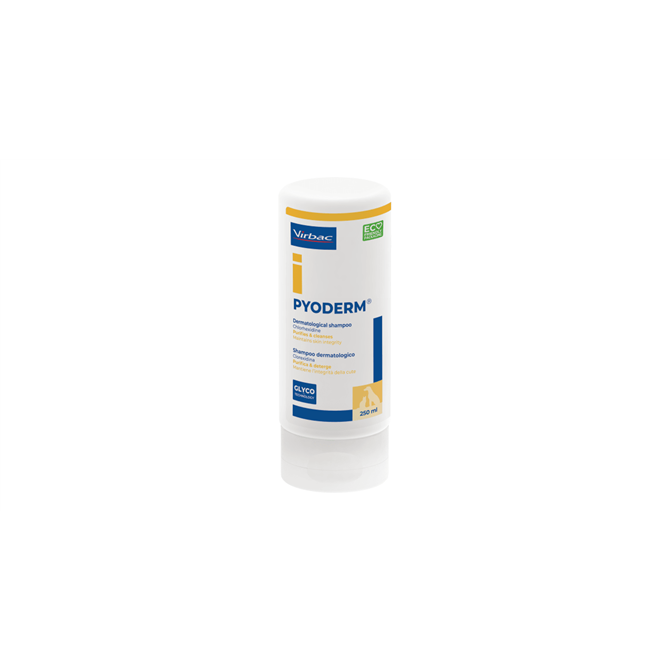
Pyoderm Shampoo for Dogs and Cats - 250ml
Pyoderm Shampoo is a chlorhexidine shampoo for dogs and cats needing antibacterial and antifungal skin care. The 3% chlorhexidine formula helps manage microbial overgrowth, while Glycotechnology and chitosanide support the skin surface and hydration.
It can form part of a veterinary plan for problems such as superficial bacterial overgrowth or Malassezia-associated skin disease. This 250ml bottle is for external, rinse-off use. Follow the supplied contact-time instructions and the bathing schedule recommended for your pet.
Additional Product Information
Description
Pyoderm Shampoo provides antibacterial and antifungal cleansing for dogs and cats whose skin needs help with microbial balance. It contains 3% chlorhexidine, an antiseptic used against common skin bacteria and yeasts, alongside ingredients that support hydration and the skin surface. The 250ml presentation is intended for external use and is rinsed off after bathing. Pyoderm Shampoo may be recommended within a veterinary plan for conditions involving superficial bacterial overgrowth, pyoderma or Malassezia-associated dermatitis. Its purpose is to bring targeted cleansing into that plan while helping care for skin that may already feel dry, itchy or irritated. The correct bathing frequency and any additional veterinary treatment will depend on the animal's condition and the advice provided by the veterinary team.
Dogs and cats naturally carry microorganisms on their skin. Problems can develop when the normal balance changes, allowing some bacteria or yeasts to multiply excessively. An affected pet may have redness, a stronger odour, greasy patches, scaling or repeated scratching and licking. Pyoderm Shampoo helps address the microbial component through chlorhexidine cleansing. Those signs alone cannot identify the organism involved, and similar changes can occur with allergy or other skin disorders. A veterinary examination, sometimes including a sample from the skin surface, helps guide the choice of treatment. Pyoderm Shampoo can then be used where its antiseptic action matches the problem being managed, rather than relying on the appearance of the coat to decide whether every itchy area needs the same product. Malassezia is a yeast that may be present on normal skin, but excessive growth can contribute to inflammation and discomfort. Pyoderma refers to bacterial infection of the skin, and its depth and extent influence treatment decisions. These terms describe different clinical findings, so a pet with recurrent lesions may need further testing rather than repeated changes of shampoo without an examination.
Chlorhexidine is the principal antiseptic ingredient in Pyoderm Shampoo. It acts locally against susceptible microorganisms on the skin, helping reduce unwanted bacterial or yeast overgrowth. Bathing also loosens surface dirt and debris so that the skin can be cleaned effectively. Pyoderm Shampoo is applied through the coat to the skin beneath it; simply coating the tips of the hair will not provide the same contact with affected areas. A thorough but gentle technique is particularly useful for dense coats and skin folds. Avoid scrubbing tender skin or pulling away firmly attached crusts. Where lesions are extensive, painful or difficult to reach, ask the vet to show you how the shampoo should be applied and whether the coat needs additional attention first.
Glycotechnology in Pyoderm Shampoo is a blend of sugars that helps limit microbial adherence to the skin surface. Chitosanide forms a protective film over the skin and hair, helping retain hydration. These features are relevant because repeated cleansing needs to be balanced with care for an already compromised skin barrier. Pyoderm Shampoo combines its antiseptic role with ingredients intended to support comfort and moisture, rather than relying on washing alone. The formula also lists lactic acid. It should be used as the finished product supplied, following its own directions. Adding household antiseptics or mixing several shampoos together changes the formulation and may irritate the skin. If another topical product has been prescribed, confirm the order and timing in which the products should be used.
Wet the coat with warm water and apply Pyoderm Shampoo as directed on the bottle, very gently massaging it through to the skin. Follow the labelled wash, contact and rinse steps, taking care around the eyes and other sensitive areas. The shampoo needs time in contact with the skin before thorough rinsing, and the directions on the supplied presentation should be followed. Virbac's current UK advice describes twice-weekly use initially, reducing to once weekly when advised by the vet. Pyoderm Shampoo may be used on a different schedule if the individual condition requires it. Keep the animal comfortable during bathing, with a non-slip surface and water that is warm rather than hot. Prevent licking of the lather and rinse carefully through thick hair where residue might otherwise remain.
Monitor the skin between baths as well as immediately afterwards. Reduced odour or a cleaner coat can be encouraging, but the condition of the skin and the pet's comfort also matter. Pyoderm Shampoo does not remove the need to address an underlying allergy, parasite problem or other factor that allows microbial overgrowth to recur. Continue any prescribed treatment unless the veterinary team changes it, and attend a recheck if one has been recommended. Increasing redness, new pustules, discharge, spreading lesions or pain need review. Dry the pet gently after rinsing and avoid vigorous brushing over sore patches. Store Pyoderm Shampoo according to the pack instructions and stop using it if a new adverse reaction occurs, seeking advice about an alternative approach for the affected skin.
What is Pyoderm Shampoo used for?
Pyoderm Shampoo provides antibacterial and antifungal skin cleansing for dogs and cats. It may be used in a veterinary plan for superficial bacterial overgrowth, pyoderma or Malassezia-associated skin disease. The bathing routine and any additional treatment should reflect the diagnosis and the condition of the animal's skin.
Does Pyoderm contain chlorhexidine?
es. Virbac identifies Pyoderm as a shampoo containing 3% chlorhexidine. Chlorhexidine is an antiseptic active against common skin bacteria and yeasts. The formula also contains ingredients that support the skin surface and hydration, so it combines targeted microbial cleansing with care for irritated or dry skin.
Can Pyoderm be used on cats?
Yes. The UK product is intended for both dogs and cats. Use it externally, avoid the eyes and prevent licking of the lather before rinsing thoroughly. If bathing is very stressful for your cat, ask the vet whether another suitable formulation could meet the same skin-care need.
How often should I use Pyoderm?
Virbac's UK information describes twice-weekly use initially, followed by once weekly when advised by the vet. An individual schedule may be different. Follow the plan given for your pet and seek a review if lesions spread or the skin becomes more painful despite the bathing routine.
How long should the shampoo stay on the skin?
Follow the contact time printed on the supplied bottle or specified by your vet. The product needs contact with the skin before thorough rinsing, so it should not simply be applied and immediately washed away. Work through the coat gently and prevent the pet from licking the lather.
What our customers say about us.
Delivery was really prompt plus the tablets were nearly half the price of the same item at the vet.
customer
Source: Trustpilot Review
easy to order quick services by tracked RMail delivery
Phillip
Source: Trustpilot Review
Extremely quick delivery
Suren
Source: Trustpilot Review
You may also like
- Tracked 24 Delivery Follow your parcel online
- VMD & RCVS Registered VetDispense is a registered UK Dispensary
- Secure Payment Pay securely online by card or PayPal
- Independent Since 2008 A Trusted UK Dispensary