


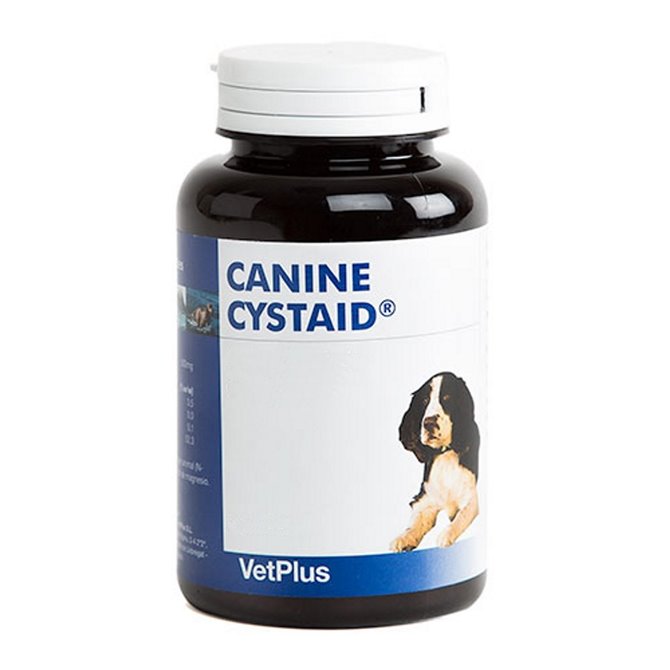
Canine Cystaid 500mg Tablets - Pot of 120
Canine Cystaid for Dogs provides nutritional care for the bladder lining in a convenient pot of 120 sprinkle capsules. Made by VetPlus, it contains N-acetyl-D-glucosamine (NAG), which helps maintain the protective layer between the bladder wall and urine.
Your vet may recommend Canine Cystaid as part of your dog’s urinary care, particularly when bladder health needs ongoing attention. Canine Cystaid capsules can be given whole or opened and mixed into food, making them easy to offer with a familiar meal. With no added flavouring and flexible feeding options, Canine Cystaid is straightforward to give even when your dog prefers to avoid swallowing capsules.
Product Features
- Pack Size: - Pot of 120
- Target Animal: - Dog (Canine)
- Pet Prescription Required?: - No
- Product Name: - Canine Cystaid 500mg Tablets - Pot of 120
Additional Product Information
Description
Canine Cystaid for Dogs provides nutritional care for the bladder lining in a pot of 120 sprinkle capsules. Developed by VetPlus, it contains N-acetyl-D-glucosamine, usually abbreviated to NAG, which helps maintain the bladder’s protective glycosaminoglycan layer. This layer forms part of the natural barrier between urine and the sensitive cells beneath it. Canine Cystaid offers a convenient way to provide this nutrient, with capsules that can be swallowed whole or opened and mixed into food. This choice makes feeding easier for dogs that are reluctant to take capsules, without needing to introduce a separate treat or change their usual meal. The formula has no added flavouring and is supplied in a resealable pot. For dogs receiving nutritional bladder care, the capsule format also makes it straightforward to measure the recommended daily amount according to bodyweight.
The bladder is a muscular organ that holds urine until a dog is ready to pass it. As it fills and empties, its lining remains in contact with urine, which contains substances the body needs to eliminate. The innermost surface has several protective features, including a layer of glycosaminoglycans, or GAGs. These are naturally occurring molecules that help protect the bladder wall. Canine Cystaid contains NAG to help maintain this protective lining. NAG is a form of glucosamine, although here its nutritional role concerns the bladder rather than joint care. Canine Cystaid is described as a complementary feed, meaning it is given alongside the normal diet. Its purpose is to provide nutritional care for a specific part of urinary health. The distinction between the bladder and the kidneys is useful: the kidneys produce urine, while the bladder stores it before it passes out through the urethra. The bladder lining therefore has a different function from the structures that filter the blood.
Cystitis is the clinical name for inflammation of the bladder. A dog with bladder irritation may ask to go outside more frequently, pass small amounts of urine or seem uncomfortable when urinating. Some dogs lick around the urinary opening, while others have unexpected accidents despite being reliably house-trained. Blood may also be visible in the urine. These changes can be upsetting for both the dog and the household, particularly when they interrupt sleep or make walks uncomfortable. Canine Cystaid provides nutritional care for the bladder lining, which is one component of the lower urinary tract. It is useful to distinguish frequent attempts to pass small amounts from passing a much larger volume than usual, because these observations help a vet investigate the problem. Canine Cystaid can be given as part of an agreed urinary care plan. New urinary symptoms need veterinary assessment, and repeated straining with little or no urine produced requires urgent attention.
Canine Cystaid sprinkle capsules offer two simple feeding options. If your dog readily accepts capsules, they can be given whole. Alternatively, open the capsule and mix the contents into a small portion of the usual food. Offering this portion first allows you to see that it has been eaten before serving the remainder of the meal. This can be particularly helpful when a dog eats slowly or leaves some food in the bowl. Canine Cystaid has no added flavouring, so there is no additional meat flavour to choose or match to your dog’s preferences. The powder can be incorporated into a familiar meal instead of introducing another food. In a household with several animals, feeding separately helps ensure that the intended dog receives the supplement. Keep the capsules in their original pot between meals and replace the lid after use. The capsule presentation also avoids having to measure a liquid volume or use a separate dosing syringe.
The feeding amount for Canine Cystaid is based on bodyweight, with an initial schedule followed by a maintenance schedule. VetPlus recommends one capsule per 10kg bodyweight each day initially, followed by one capsule per 10kg every other day for maintenance. Follow the current pack directions and the schedule agreed for your dog. For example, a 20kg dog receiving the standard initial amount would have two capsules daily, while a 30kg dog would have three. The change to maintenance feeding reduces how often the capsules are given. If your dog’s weight falls between the stated increments, ask the practice to confirm the amount rather than estimating a fraction of the capsule contents. Canine Cystaid is supplied in a pot of 120 capsules, so the length of supply varies with the feeding schedule. At two capsules daily, a pot provides sixty days; at three daily, it provides forty days. An every-other-day maintenance schedule extends the supply accordingly. These examples make it easier to plan a repeat order using the amount your dog actually receives. The same pot can be used through both feeding stages, without purchasing a different maintenance formula. When calculating how much remains, count the capsules rather than judging by how full the container looks. This is especially helpful after a change in feeding frequency, when a pot may last considerably longer than it did during the initial period of regular daily use.
Fresh drinking water and regular opportunities to urinate are useful parts of everyday bladder care alongside Canine Cystaid. Place water where your dog can reach it comfortably, and allow enough time outdoors for an unhurried toilet break. If your dog has accidents, note whether they happen during sleep, after a long gap between outings or alongside repeated attempts to urinate. These details can help explain what has changed. Canine Cystaid capsules can be given with whichever meal best suits the agreed feeding schedule. Where more than one person feeds the dog, a simple note of the amount already given helps prevent duplication. An every-other-day schedule can be marked on a calendar so that feeding days are easy to check. Store the pot according to its label, keep it beyond the reach of children and animals, and check the expiry date before use. Retaining the original packaging keeps the ingredient information and feeding directions close to hand whenever they are needed.
What is Canine Cystaid used for?
Canine Cystaid is a complementary feed intended to help maintain a dog’s bladder lining. It contains N-acetyl-D-glucosamine, or NAG. A vet may recommend nutritional bladder care alongside other measures, but urinary discomfort, blood or new accidents should be investigated rather than treated with a supplement alone.
Can I mix Canine Cystaid into my dog’s food?
Yes. The capsules may be opened and their contents mixed with food, or given whole. Offer the supplement in a portion your dog will finish so you can see that it has been eaten. If some remains, do not automatically add another capsule without advice.
Can Canine Cystaid dissolve bladder stones?
Canine Cystaid should not be relied on to dissolve or remove urinary stones. Treatment depends on the type of stone and the dog’s condition, so veterinary investigation is needed. Follow any prescribed dietary or medical plan and seek urgent help if your dog cannot pass urine.
Does Canine Cystaid treat urinary incontinence?
Urine leakage can have different causes and should be assessed before choosing treatment. Canine Cystaid provides nutritional bladder care but is not a substitute for medication prescribed for incontinence. Tell your vet whether your dog strains, passes frequent small amounts or leaks urine while resting, because these patterns differ.
When do urinary symptoms in dogs need urgent attention?
Repeated attempts to urinate with little or no urine produced need urgent veterinary assessment, especially with pain, vomiting or distress. Blood, discomfort or newly frequent urination also warrant advice. Do not wait for Canine Cystaid to work when a dog may have an obstruction or another acute problem.
Brand

What our customers say about us.
Excellent communication and customer service. Will rush medication out to you and will let you know if theres an issue with the prescription , my end i.e scanned blank
Loz
Source: Trustpilot Review
It's so easy to order my cat's medication. He has diabetes, so he needs to have it regularly and with Vets Dispense I don't have to worry as it is always on time.
Alison
Source: Trustpilot Review
Bought from here as it seemed the cheapest dispensary for my dog’s prescription. No issues with delivery etc
Claire
Source: Trustpilot Review
You may also like
- Tracked 24 Delivery Follow your parcel online
- VMD & RCVS Registered VetDispense is a registered UK Dispensary
- Secure Payment Pay securely online by card or PayPal
- Independent Since 2008 A Trusted UK Dispensary