


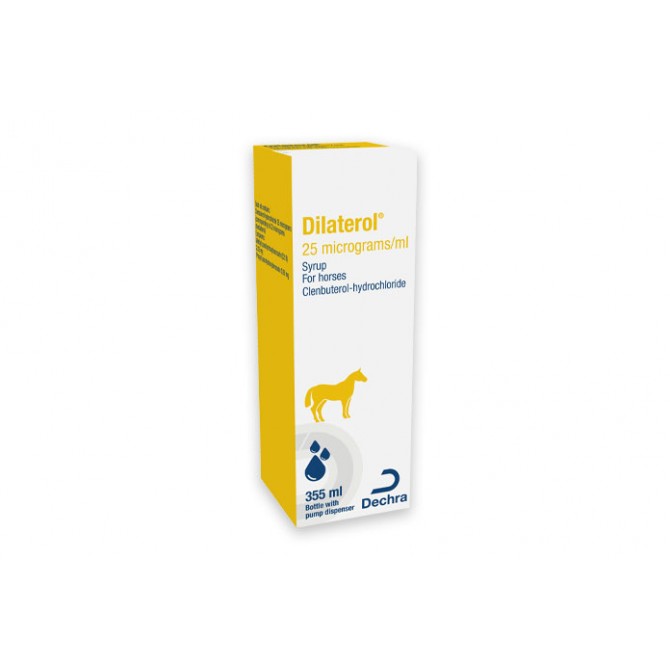
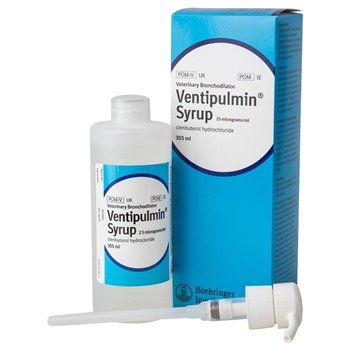
Dilaterol Syrup for Horses - 355ml
Dilaterol Syrup for Horses is an oral medication used to help horses breathe more freely when a respiratory disease is causing narrowing of the airways. If your horse is coughing, sounding “tight”, or struggling to keep up with normal work, opening the air passages can make a meaningful difference to comfort and everyday energy. Dilaterol for Horses is prescribed when airway obstruction is linked to bronchospasm (spasm and tightening of the small airway muscles) and/or when mucus build‑up is making it harder for air to move in and out. By easing this obstruction, Dilaterol for Horses can reduce the effort of breathing and help your horse settle, eat and rest more comfortably, which owners often notice as a brighter attitude and a greater willingness to move. It is most commonly used as part of a vet‑led plan, alongside changes to stable management, because the day‑to‑day environment often determines how frequently symptoms flare.
VETERINARY PRESCRIPTION REQUIRED
Product Features
- Pack Size: - 355ml
- Target Animal: - Horse (Equine)
- Related Condition: - Treatment of respiratory disease in horses
- Pet Prescription Required?: - Yes
- Active Ingredient: - Clenbuterol Hydrochloride
- Product Name: - Dilaterol Syrup for Horses
Additional Product Information
Description
Dilaterol Syrup - For the treatment of respiratory disease in horses
Dilaterol may only be supplied with a valid veterinary prescription issued by your vet. You should only purchase Dilaterol if you have or are in the process of arranging such a prescription. See information bar for further details.
The condition your vet may describe as “respiratory disease in horses when airway obstruction due to bronchospasm and/or accumulation of mucus is a contributory factor” is often linked with equine asthma. This is when the lining of the airways becomes inflamed and over‑sensitive, the tubes that carry air to the lungs narrow, the muscles around them can clamp down, and thick mucus can collect inside like a plug. Breathing out often becomes harder, so the horse works harder to move air. Dusty or mouldy forage, dry bedding and poor ventilation are common triggers, and symptoms often worsen when stabled. Signs that suggest bronchospasm and mucus are contributing include:
• Your horse may have a dry or “wet” cough, especially at the start of exercise or when coming into the stable.
• Your horse may breathe faster at rest, flare the nostrils, or show visible effort through the belly when breathing out.
• Your horse may have reduced stamina, feel reluctant to go forward, or take longer to recover after work.
• Your horse may wheeze, develop nasal discharge, or show a “heave line” in more advanced cases.
Because several problems can look similar, your vet may recommend tests such as endoscopy or sampling of airway fluid to confirm whether mucus and bronchospasm are key drivers before choosing Dilaterol for Horses.
Dilaterol for Horses works as a bronchodilator, meaning it helps widen (dilate) the airways. Bronchodilators used in horses commonly act on beta‑2 receptors in the smooth muscle that surrounds the small airways. When these receptors are stimulated, the muscle relaxes, the airway diameter increases, and air meets less resistance as it travels to and from the lungs. In everyday terms, it is like easing the “squeeze” on a partially closed tube so air can move more smoothly, particularly on the way out. Opening the airways can also support the lung’s natural clearance system (mucociliary clearance), making it easier to shift mucus rather than letting it sit and irritate the airway. Many horses feel more comfortable once the airways relax, although the timing varies with severity and any other treatments being used. This support is intended to restore comfort and normal activity, not to mask a worsening problem. Although Dilaterol can improve airflow, your vet may still need to address the underlying inflammation and triggers, because inflammation is what makes many horses prone to repeat episodes.
By reducing bronchospasm and improving airflow, Dilaterol for Horses can help many horses feel less “tight” in the chest, show fewer coughing bouts during warm‑up, and cope better with gentle to moderate exercise. When breathing is easier, horses are often brighter, less tired, and more willing to move, graze and interact, and some owners also notice a steadier appetite and easier weight maintenance. For some, the biggest quality‑of‑life change is simply resting more peacefully instead of standing with an anxious, guarded posture, head and neck extended to help air flow. Dilaterol for Horses tends to work best alongside practical management steps such as improving ventilation, reducing dust, soaking or steaming hay, and choosing low‑dust bedding.
Because Dilaterol is a prescription medicine, it should be used exactly as your vet directs. The syrup format allows for accurate measuring, and it is usually given by mouth using a dosing syringe, but the right dose and duration depend on your horse’s weight, the severity of signs, and response to treatment, so it is important not to guess or copy another horse’s regime. If you miss a dose or are unsure whether your horse swallowed it, contact your practice for advice rather than “doubling up”. Like other beta‑2 bronchodilators, Dilaterol for Horses can sometimes cause effects such as mild trembling, restlessness, sweating, or a faster heart rate; not every horse experiences these, but any worrying change should be discussed with your vet promptly. Tell your vet about other medicines and supplements, and ask for up‑to‑date guidance if your horse competes, as medication rules and withdrawal times vary.
Long‑term control of airway disease is rarely about medication alone, so it helps to think of Dilaterol for Horses as one tool within a bigger respiratory care strategy. Keeping dust exposure low is often the single most effective way to reduce flare‑ups, and many horses benefit from consistent routines such as turning out as much as practical, dampening down before sweeping, and storing hay and bedding away from the stable airspace. Good hydration supports thinner mucus, and a steady, sensible return to exercise can help maintain fitness without over‑taxing the lungs. Keeping a brief diary of triggers and cough frequency can help you and your vet spot flare‑ups early and plan when Dilaterol for Horses is most helpful. Contact your veterinary surgeon promptly if breathing effort increases, the horse becomes dull, stops eating, develops a fever, has coloured nasal discharge, or shows no improvement, because persistent obstruction can affect oxygenation and wellbeing and may indicate infection or another underlying issue.
How does Dilaterol for Horses help a coughing horse?
Coughing often happens when inflamed airways are narrowed and irritated by mucus. Dilaterol for Horses relaxes the smooth muscle around the small airways, helping them open up. With better airflow, the lungs can clear mucus more effectively, which may reduce the cough cycle and help your horse feel less tight.
Is Dilaterol for Horses the same as a steroid treatment?
No. Dilaterol for Horses is a bronchodilator, so it opens the airways by relaxing airway muscle. Steroids (corticosteroids) mainly reduce airway inflammation and swelling. Many horses need both approaches at different times, plus management changes, because opening the tubes helps breathing but does not remove the underlying inflammation.
How quickly might Dilaterol for Horses work?
Some horses appear more comfortable within a short period, especially if bronchospasm is a major factor, while others improve more gradually as mucus and inflammation settle. The response depends on severity, triggers and any additional treatments. Your vet will advise what progress to expect and when a recheck is sensible.
What side effects should I watch for with Dilaterol for Horses?
Dilaterol for Horses can sometimes cause signs linked to beta‑2 stimulation, such as mild trembling, restlessness, sweating, or a faster heart rate. Not every horse experiences these effects, but you should contact your vet promptly if you notice marked agitation, weakness, persistent sweating, or any change that worries you.
When is breathing trouble an emergency?
Seek urgent veterinary advice if your horse is breathing fast at rest, has pronounced abdominal effort, nostrils flaring, blue‑tinged gums, severe distress, or suddenly becomes dull and stops eating. Fever, coloured nasal discharge, or rapid worsening also matter. Dilaterol for Horses may be part of treatment, but emergencies need prompt assessment.
What our customers say about us.
Very easy and efficient way of ordering prescription meds for my dog. Much cheaper than buying from the vets.
Ian
Source: Trustpilot Review
First time I have used this company and pleased the Order arrived fairly quickly and at a reasonable price, will definitely be using this company again
MW
Source: Trustpilot Review
Smooth process, medication arrived quickly very happy overall with the service
Kelly
Source: Trustpilot Review
You may also like
- Tracked 24 Delivery Follow your parcel online
- VMD & RCVS Registered VetDispense is a registered UK Dispensary
- Secure Payment Pay securely online by card or PayPal
- Independent Since 2008 A Trusted UK Dispensary