


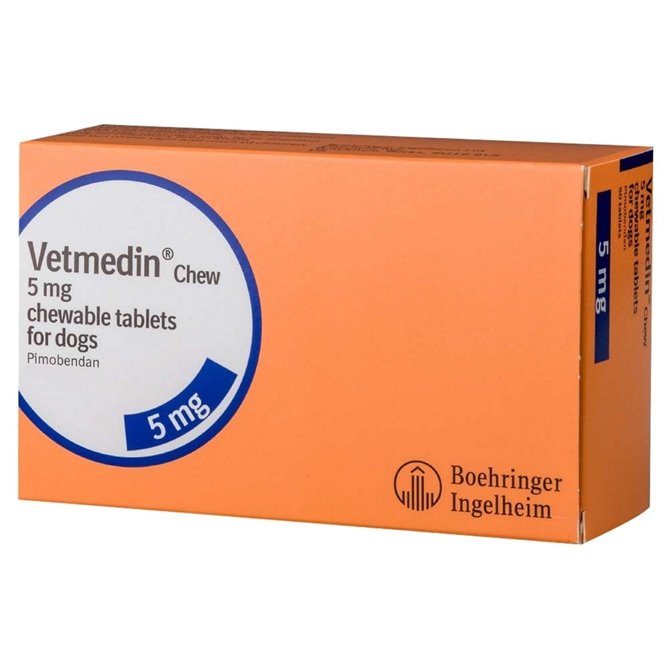
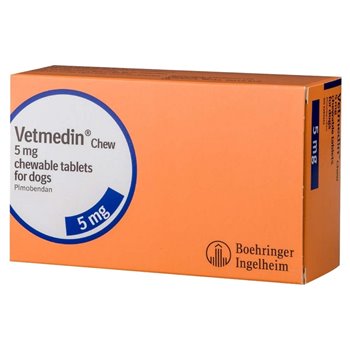
Vetmedin 5mg Flavour Tablet - per Tablet
Vetmedin 5mg is a prescription heart medicine for dogs with Congestive Heart Failure, when the heart can no longer pump blood efficiently enough to meet the body’s demands. Vetmedin contains pimobendan, which is commonly used for heart failure linked to degenerative mitral valve disease (a leaky mitral valve) and dilated cardiomyopathy (a weakened, stretched heart muscle). The aim of Vetmedin 5mg is to reduce the workload on the heart and improve circulation so your dog can breathe more comfortably, move with less fatigue, and enjoy normal routines again.
Vetmedinis iss an “inodilator”, meaning it helps the heart squeeze more effectively (a positive inotrope) and also relaxes blood vessels (a vasodilator). This means that Vetmedin 5mg helps the heart pump with more strength and makes it easier for blood to flow forwards, so the heart does not have to work as hard to circulate oxygen and nutrients. It supports contraction partly by helping the heart muscle use calcium more efficiently, which can improve pump strength without relying on a harsh “stimulant” effect, and it also helps widen blood vessels by affecting an enzyme pathway called phosphodiesterase‑3 (PDE3). The combined effect can improve cardiac output, reduce congestion, and support better oxygen delivery to the tissues, which is why many dogs seem brighter and more willing to be active once they stabilise.
Product Features
- Pack Size: - Sold Individually
- Target Animal: - Dog (Canine)
- Related Condition: - For the treatment of canine congestive heart failure in Dogs
- Pet Prescription Required?: - Yes (For UK Orders)
- Active Ingredient: - Pimobendan
- Product Name: - Vetmedin 5mg Flavour Tablet - per Tablet
Additional Product Information
Description
Vetmedin may only be supplied with a valid veterinary prescription issued by your vet. You should only purchase Vetmedin Tablets if you have or are in the process of arranging such a prescription. See information bar for further details.
Congestive Heart Failure in dogs is a stage of heart disease where fluid builds up because pressures in the heart and blood vessels become abnormal. In many older, small‑breed dogs this happens because degenerative mitral valve disease allows blood to leak backwards, gradually enlarging the heart and raising lung pressures, which can lead to fluid in the lungs (pulmonary oedema). In larger breeds, dilated cardiomyopathy can reduce pumping strength and may be linked with rhythm disturbances (arrhythmias) and episodes of weakness. Signs can be subtle at first, so it helps to know the common warning signs:
- a new or persistent cough, especially at night or after resting
- faster breathing or working harder to breathe (tachypnoea, increased effort)
- tiring quickly on walks, reluctance to play, or seeming “flat”
- fainting episodes or sudden weakness (syncope) in some dogs
- reduced appetite, weight loss, or a swollen belly from fluid (ascites) in more advanced cases
Your vet may confirm Congestive Heart Failure with a physical exam and tests such as chest X‑rays, echocardiography (heart ultrasound), an ECG, and blood tests, which also help guide safe dosing and follow‑up.
Vetmedin 5mg is often used as part of a wider plan, because congestive heart failure is usually managed best with a combination approach tailored to the cause and stage of disease. A diuretic (often described as a “water tablet”) may be needed to remove excess fluid and ease breathlessness, and an ACE inhibitor may be added to reduce harmful hormonal signalling (the RAAS system) that encourages fluid retention and further heart strain. Some dogs also benefit from spironolactone, or from medicines to help control arrhythmias, depending on the individual case. What Vetmedin 5mg uniquely brings to the plan is direct support for pumping strength and improved blood flow, which can translate into more comfortable breathing and better stamina. Many dogs show improvements in energy and appetite once congestion is controlled, but the response is individual and your vet may adjust other medicines first if your dog is unstable. As with any heart medication, contact your vet promptly if you notice vomiting, marked diarrhoea, collapse, a sudden drop in appetite, or a change in breathing pattern, because these can signal that doses need review.
Giving Vetmedin 5mg consistently helps keep support steady. The dose is based on your dog’s weight and clinical needs, and many dogs take pimobendan twice daily, roughly 12 hours apart, but you should follow the schedule your vet has prescribed. Vetmedin 5mg is commonly given on an empty stomach, often around an hour before feeding, because absorption can be better, although your vet’s instructions should come first if they differ. If you miss a dose, it is usually safer to give the next dose at the normal time rather than doubling up. If your dog spits out tablets, seems nauseous, or vomits soon after dosing, your vet can advise whether to repeat the dose and whether a different format or timing might help. Because heart patients can be sensitive to dehydration and electrolyte shifts, let your vet know about diarrhoea, vomiting, or a sudden loss of appetite, especially if your dog is also on a diuretic. Keep Vetmedin 5mg stored as directed on the packaging, out of reach of children and pets, and only use it for the dog it was prescribed for.
Living with congestive heart failure can feel daunting, but many dogs enjoy a good quality of life when symptoms are controlled and flare‑ups are caught early. Alongside Vetmedin 5mg, gentle, regular exercise often suits dogs better than bursts of intense activity, and maintaining a healthy weight can reduce the workload on the heart and lungs. At home, it can help to learn your dog’s normal sleeping respiratory rate and watch for trends, because an upward drift can be an early sign of fluid build‑up even before coughing starts. It is also sensible to keep notes on appetite, tolerance for walks, and how quickly your dog settles after activity, because these everyday details help your vet decide whether Vetmedin 5mg and other medicines are keeping things stable. Seek urgent veterinary help if breathing becomes laboured, gums look pale or bluish, your dog collapses, or they cannot get comfortable, as these can indicate an acute worsening that needs prompt treatment.
How quickly does Vetmedin 5mg start working?
Many dogs show some improvement within days, such as easier breathing at rest and more willingness to move around, although response varies. Vetmedin 5mg supports circulation, but fluid build-up may also need a diuretic before you see the biggest change. Follow-up checks help your vet fine-tune the plan.
What are the common side effects of Vetmedin 5mg?
Most dogs tolerate Vetmedin 5mg well, but possible side effects include mild stomach upset, reduced appetite, diarrhoea, or vomiting. Less commonly, dogs can develop changes in heart rhythm or weakness. Contact your vet promptly if you notice collapse, persistent vomiting, or a sudden change in breathing effort.
What is a normal resting respiratory rate for a dog with CHF?
A healthy dog often sleeps with a resting respiratory rate under about 30 breaths per minute, but individual normals vary. In dogs with heart disease, your vet may ask you to track a sleeping rate and look for an upward trend over several days. A sudden increase needs veterinary advice.
What happens if I miss a dose of Vetmedin 5mg?
If you miss Vetmedin 5mg, it is usually best to give the next dose at the normal time rather than doubling up, unless your vet has advised differently. Keeping doses consistent matters, so consider setting phone reminders. If misses happen often, ask your vet for a simpler schedule.
Can Vetmedin 5mg be given with food?
Vetmedin is often recommended on an empty stomach, commonly about an hour before a meal, because absorption can be better. However, some dogs need a different routine to avoid nausea or to fit other medicines. Always follow your vet’s instructions, and do not change timing without advice.
Brand

What our customers say about us.
easy to order quick services by tracked RMail delivery
Phillip
Source: Trustpilot Review
Price very competitive; website easy to navigate and ordering was straightforward; good communication regarding processing of the order and the product arrived within assured time.
Shantha
Source: Trustpilot Review
Definitely recommend great service very reasonable and fast delivery.
Jordan
Source: Trustpilot Review
You may also like

- Tracked 24 Delivery Follow your parcel online
- VMD & RCVS Registered VetDispense is a registered UK Dispensary
- Secure Payment Pay securely online by card or PayPal
- Independent Since 2008 A Trusted UK Dispensary