


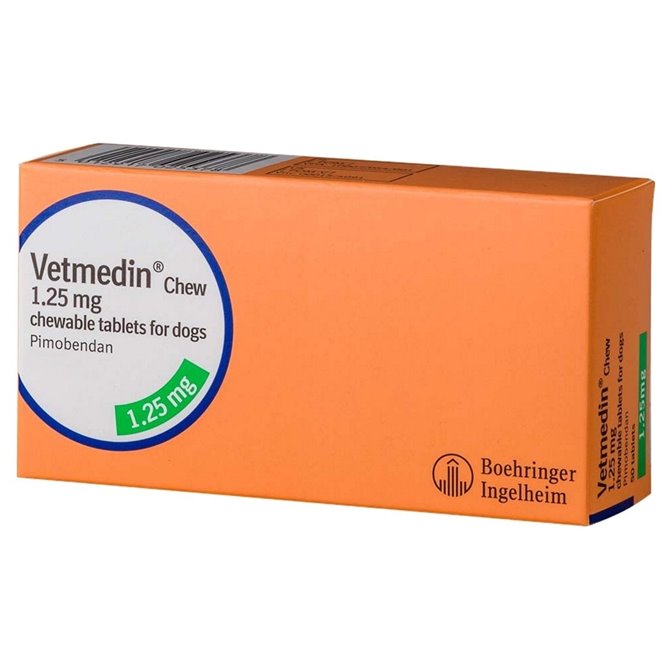
100 x Vetmedin 1.25mg Flavour Tablet - Pack of 100
1.25mg Vetmedin Tablets contain pimobendan, a prescription medicine used in dogs with certain forms of heart disease, particularly cases that have developed (or are likely to develop) Congestive Heart Failure. When the heart is struggling, the changes you notice at home are often subtle at first: shorter walks, more tiredness after play, a cough that was not there before, or restless nights because breathing feels harder.
Vetmedin 1.25mg supports the heart so it can pump blood more effectively, helping oxygen reach the muscles and organs with less strain. Vets may prescribe Vetmedin once symptoms appear, and sometimes earlier in dogs with significant heart enlargement. This small strength is often chosen for smaller dogs or for carefully adjusted treatment regimens. The tablets are small and generally easy to handle, and your vet may select this strength when they want fine control of the dose. Because 1.25mg Vetmedin is a prescription veterinary medicine, it should only be used under your vet’s direction and alongside the monitoring that keeps treatment both safe and effective.
VET PRESCRIPTION REQUIRED
Product Features
- Pack Size: - Pack of 100
- Target Animal: - Dog (Canine)
- Related Condition: - For the treatment of canine congestive heart failure in Dogs
- Pet Prescription Required?: - Yes (For UK Orders)
- Active Ingredient: - Pimobendan
- Product Name: - Vetmedin 1.25mg Flavour Tablet - per Tablet
Additional Product Information
Description
Congestive Heart Failure in dogs is a clinical syndrome rather than a single diagnosis. It occurs when the heart can no longer move blood forwards efficiently enough, and fluid starts to build up in places it should not. Most commonly, fluid accumulates in or around the lungs (pulmonary oedema or pleural effusion), which can make breathing faster and more effortful, especially when your dog is resting or asleep. Some dogs develop fluid in the abdomen (ascites), leading to a swollen belly and reduced stamina. Two common underlying causes are degenerative mitral valve disease (a leaky valve, more often seen in smaller breeds as they age) and dilated cardiomyopathy (a weakened, enlarged heart muscle, more often seen in larger breeds). Your vet may confirm and stage the problem with an examination and tests such as an ECG, chest X-rays, blood pressure checks, or an echocardiogram (heart ultrasound). Signs to watch for include:
- Your dog coughs more than usual, particularly at night or when lying down.
- Your dog breathes faster, seems breathless, or uses more effort to breathe.
- Your dog tires quickly on walks, slows down sooner, or avoids stairs and jumping.
- Your dog’s appetite drops, weight changes, or they seem quieter and less engaged.
- Your dog faints, collapses, or develops a noticeably swollen abdomen.
If breathing becomes suddenly difficult, gums look blue-tinged, or collapse occurs, urgent veterinary care is needed.
Vetmedin is described as an “inodilator”, meaning it supports the strength of the heart’s squeeze (positive inotrope) and also relaxes blood vessels (vasodilator). 1.25mg Vetmedin helps the heart push blood out more effectively, while also making the blood vessels a little wider so there is less resistance. When resistance is lower (reduced afterload), the heart does not have to generate as much pressure to circulate blood, and that can help reduce the back-pressure that contributes to fluid leaking into the lungs. On a microscopic level, pimobendan makes the heart muscle respond better to calcium and it influences an enzyme pathway (PDE3) involved in muscle relaxation. By improving forward flow and reducing the effort needed to circulate blood, it can support steadier breathing and better tolerance of gentle activity. The overall result is improved cardiac output with less strain.
After starting 1.25mg Vetmedin, many dogs breathe more comfortably and settle more easily at night, because circulation is steadier and there is less congestion in the lungs when the wider treatment plan is working. You may notice your dog is more willing to walk, recovers faster after gentle exercise, and shows more interest in toys, food, and family interaction. Some dogs seem less anxious at bedtime because they can lie down without feeling short of breath. Clinically, vets monitor things like respiratory rate, heart rhythm, and exercise tolerance, but at home it often looks like a dog who seems less tired, coughs less, and has a brighter demeanour. In many dogs with mitral valve disease or dilated cardiomyopathy, 1.25mg Vetmedin is used with the goal of extending good-quality time and, when started at the appropriate stage, supporting longer survival alongside other heart medicines.
It is common for 1.25mg Vetmedin to be prescribed as part of combination therapy, because Congestive Heart Failure is rarely controlled well with one medicine alone. A diuretic such as furosemide may be used to remove excess fluid; an ACE inhibitor such as benazepril may help reduce harmful hormonal effects on the heart and blood vessels; and medicines like spironolactone may be added for further support in selected cases. Your vet chooses the mix based on clinical signs, blood pressure, kidney function, and imaging findings such as chest X-rays or echocardiography. Practical routine also matters: your vet may recommend giving 1.25mg Vetmedin on an empty stomach because food can reduce absorption, and they will advise whether the tablet can be divided if a split dose is needed. If you miss a dose, do not double up without veterinary advice. Try to give the medicine at consistent times each day, because steadier levels can help keep symptoms controlled.
Ongoing monitoring helps you and your vet get the best from 1.25mg Vetmedin while spotting problems early. Check-ups may include listening to the chest, measuring blood pressure, and periodic blood tests to monitor kidney values and electrolytes, particularly if diuretics are being used. At home, it can help to track resting breathing rate when your dog is asleep, note cough frequency, and watch for changes in appetite, energy, or fainting episodes. Most dogs tolerate 1.25mg Vetmedin well, but side effects can include vomiting, diarrhoea, reduced appetite, or restlessness, and in some dogs an underlying arrhythmia may become more noticeable. It is not suitable for every heart condition, and your vet will have checked this before prescribing. If you ever feel your dog’s breathing is worsening, they seem suddenly weak, or you are unsure whether a change is significant, your vet is the right place to turn.
How does 1.25mg Vetmedin help congestive heart failure?
1.25mg Vetmedin contains pimobendan, an inodilator. It helps the heart contract more strongly and gently relaxes blood vessels so blood flows with less resistance. This can improve cardiac output, reduce the tendency for fluid to back up into the lungs, and support easier breathing and better exercise tolerance.
How quickly might my dog feel better after starting 1.25mg Vetmedin?
Some owners notice improvements in breathing comfort, night-time rest, or willingness to move within days, while other dogs change more gradually over a few weeks. The response depends on the cause and stage of the heart condition and whether fluid is being controlled with diuretics. Your vet will guide expectations.
Should 1.25mg Vetmedin be given with food?
Food can reduce absorption of pimobendan, so vets often advise giving Vetmedin on an empty stomach, usually about an hour before a meal. Always follow the specific directions on your dog’s prescription label, because timing can be adjusted to fit routines and other medications safely.
What side effects should I watch for with Vetmedin?
Most dogs tolerate 1.25mg Vetmedin well, but mild stomach upset can occur, including vomiting, diarrhoea, or reduced appetite. Less commonly, restlessness or changes in heart rhythm can be seen. If your dog collapses, struggles to breathe, or seems suddenly unwell, contact a vet urgently.
Is Vetmedin suitable for every heart condition?
No. Pimobendan is not appropriate for all cardiac problems, and it is used in dogs based on diagnosis and clinical findings. Conditions that obstruct blood flow, such as severe aortic stenosis, may be managed differently. Your vet may perform an echocardiogram to confirm whether 1.25mg Vetmedin is suitable.
Brand

You may also like

What our customers say about us.
Quick delivery. Never any issues. Thank you.
Rebecca
Source: Trustpilot Review
Always quick to respond and send out my dogs medication and at competitive prices. Easy to navigate the website and upload prescriptions. All in all a great service and would recommend this company whole heartedly.
Janet
Source: Trustpilot Review
Ordered one day and delivered 2 days later......perfect
John A
Source: Trustpilot Review
- Tracked 24 Delivery Follow your parcel online
- VMD & RCVS Registered VetDispense is a registered UK Dispensary
- Secure Payment Pay securely online by card or PayPal
- Independent Since 2008 A Trusted UK Dispensary