


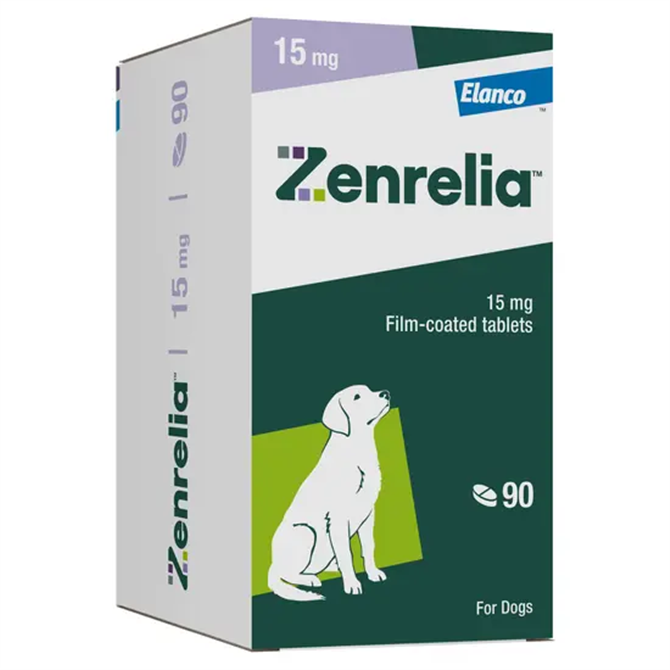
15mg Zenrelia for Dogs - Per Tablet
15mg Zenrelia for Dogs
15mg Zenrelia for Dogs is a prescription medicine used to help manage the itch and skin inflammation associated with allergic skin disease, including atopic dermatitis (atopy). Zenrelia is intended for dogs that have been examined by a veterinary surgeon and diagnosed with an allergic condition. Zenrelia 15mg is used as part of a wider care plan that may include parasite control, skin and ear care, environmental changes, and nutrition.
How Zenrelia for Dogs works
Zenrelia works by reducing the internal “itch signalling” between an allergen trigger and the urge to scratch. Ilunocitinib is a Janus kinase (JAK) inhibitor. JAK enzymes act like switches inside immune and skin cells, helping itch- and inflammation-related messenger proteins transmit their signals. By inhibiting JAK activity, Zenrelia dampens the effect of multiple cytokine signals associated with allergy and inflammation, so the skin receives fewer instructions to itch and inflame. This approach is different from an antihistamine, which blocks only histamine, and different from a corticosteroid, which broadly suppresses inflammation through multiple pathways. With 15mg Zenrelia, the aim is targeted interruption of the itch–scratch cycle so that rubbing and chewing decrease and the skin can start to recover. Because the medicine addresses signalling rather than simply masking the sensation, it can be useful in both allergic dermatitis and atopic dermatitis, where the itch is driven by immune messages as well as skin barrier weakness.
VETERINARY PRESCRIPTION REQUIRED
Product Features
- Pack Size: - Sold Individually
- Target Animal: - Dog (Canine)
- Related Condition: - allergic and atopic dermatitis in dogs
- Pet Prescription Required?: - Yes
- Active Ingredient: - ilunocitinib
- Product Name: - 15mg Zenrelia Tablet for Dogs
Additional Product Information
Description
Vets consider Zenrelia for dogs with confirmed or strongly suspected atopic dermatitis or allergic dermatitis after ruling out other causes of itch, especially fleas and infections. It is often used when itch is frequent, intense, or affecting quality of life. The medicine can be used for short-term flares or for longer-term management, depending on the vet’s plan. It may be combined with medicated shampoos, ear treatments, topical anti-inflammatories, essential fatty acid support, and allergen-avoidance strategies. Dogs receiving Zenrelia should have regular veterinary check-ups so that control of the condition and overall wellbeing can be monitored.
Give Zenrelia exactly as directed by your veterinary surgeon. The tablets may be given with or without food unless your vet advises otherwise. Provide fresh water at all times. If you forget a dose, do not double the next one; resume the prescribed schedule and contact your vet if you are unsure. Do not use in dogs for which the vet has advised against immune-modulating treatments. Tell your vet about any other medicines or supplements your dog is taking so potential interactions can be considered. Use in breeding, pregnant, or lactating bitches should only occur if your vet decides the benefits outweigh the risks.
Most dogs tolerate 15mg Zenrelia well. As with any medicine, some dogs may experience side effects. These can include mild digestive upset such as vomiting, soft stools, or reduced appetite. Less commonly, changes in behaviour, increased thirst, or skin or ear issues can occur. Because allergic skin disease and its treatments can influence the skin’s natural defences, your vet may recommend periodic skin and ear checks, especially if your dog has a history of secondary infections. Seek veterinary advice promptly if you notice persistent vomiting or diarrhoea, lethargy, swelling, unusual bruising, cough, or any sign that concerns you.
Keep tablets in the original packaging, out of the sight and reach of children and animals. Store at room temperature and away from moisture. Do not use after the expiry date printed on the pack. Return unused or expired tablets to your pharmacy for safe disposal.
Atopy (atopic dermatitis) is a long-term allergic skin disease. Affected dogs have a heightened immune sensitivity to common environmental allergens. Typical triggers include grass and tree pollens, house dust mites, storage mites, mould spores, and sometimes fragments of insect proteins. Dogs cannot avoid many of these substances completely, so the immune system remains prone to flare ups, especially during certain seasons or in particular environments. Atopy often first appears in young adult dogs and can continue throughout life, with periods of stability and periods of increased itching.
Common signs include frequent scratching, chewing or licking of the paws, abdomen, groin, armpits, and face. Redness, rashes, recurrent ear problems, headshaking, and dark staining of the fur from saliva are typical. Over time, the skin can thicken, pigmentation may change, and the coat can become patchy. Because several different conditions can cause itch, diagnosis relies on a veterinary assessment. Your vet will take a full history, examine the skin and ears, rule out parasites and infections, and may recommend a diet trial to check for food-related skin reactions. Allergy testing can be used to identify relevant environmental allergens, especially when immunotherapy is being considered.
Management is individualised. The aim is to reduce itch quickly, protect the skin barrier, control secondary infections, and limit exposure to known triggers. Your vet may recommend:
- Consistent flea control for all pets in the household. Even low-level flea exposure can worsen allergic skin disease.
- Regular bathing with a veterinary-recommended shampoo to remove allergens from the coat and support the skin barrier.
- Ear care to address wax, inflammation, or infection where needed.
- Environmental measures such as frequent washing of bedding at high temperatures and vacuuming to reduce dust reservoirs.
- Nutritional support, including diets formulated for skin health if appropriate.
- Allergen-specific immunotherapy in selected cases, based on test results, to reduce sensitivity over time.
- Prescription medicines, such as Zenrelia, to reduce the itch and inflammation that drive scratching and skin damage.
Because atopy is chronic, regular check-ups help to maintain control and adjust the plan as your dog’s needs evolve. Good day-to-day control reduces flare frequency, supports sleep and comfort, and helps prevent the self-trauma that leads to hot spots and infections. If you think a particular season, activity, or location triggers flares, record this and share it with your vet so targeted strategies can be considered.
Zenrelia is a prescription-only medicine. A valid veterinary prescription is required before we can dispense it. If you have questions about whether 15mg Zenrelia is suitable for your dog, please speak to your veterinary surgeon.
How quickly can 15mg Zenrelia start to reduce itching?
Many dogs show a reduction in itching soon after starting treatment, although the exact timing varies with the dog and the cause of the flare. Skin healing takes longer than itch control, so improvement in redness and sores may lag behind. Follow your vet’s review plan to assess progress.
Is 15mg Zenrelia a steroid or an antihistamine?
No. 15mg Zenrelia contains ilunocitinib, which is a Janus kinase (JAK) inhibitor. It works by reducing immune signalling involved in itch and inflammation rather than blocking histamine alone or using broad steroid effects. This difference can matter for dogs that need ongoing control under veterinary guidance.
What side effects should I watch for with 15mg Zenrelia?
Digestive upset such as vomiting or diarrhoea is commonly reported, and some dogs may appear lethargic. Because 15mg Zenrelia modulates the immune system, infections can be more likely in some cases. Contact your vet if you notice fever, worsening skin or ear infections, or unusual new lumps.
What is the difference between allergic dermatitis and atopic dermatitis in dogs?
Allergic dermatitis describes itchy skin inflammation driven by an allergy, such as flea allergy or food allergy. Atopic dermatitis is a common type of allergic skin disease linked mainly to environmental allergens and a weakened skin barrier, often with recurring flares and ear involvement. Dogs can have more than one trigger at the same time.
Do I still need flea control if my dog is taking 15mg Zenrelia?
Yes. Flea allergy can trigger intense itching from a single bite, and it can look similar to atopic dermatitis. Even if 15mg Zenrelia is controlling symptoms, preventing flea exposure helps reduce flare triggers and supports clearer assessment of what is driving the skin disease. Ask your vet for a suitable product.
You may also like
What our customers say about us.
Excellent communication and customer service. Will rush medication out to you and will let you know if theres an issue with the prescription , my end i.e scanned blank
Loz
Source: Trustpilot Review
Delivery was really prompt plus the tablets were nearly half the price of the same item at the vet.
customer
Source: Trustpilot Review
Excellent service prompt and hassle free
ITSFBIIEC
Source: Trustpilot Review
- Tracked 24 Delivery Follow your parcel online
- VMD & RCVS Registered VetDispense is a registered UK Dispensary
- Secure Payment Pay securely online by card or PayPal
- Independent Since 2008 A Trusted UK Dispensary