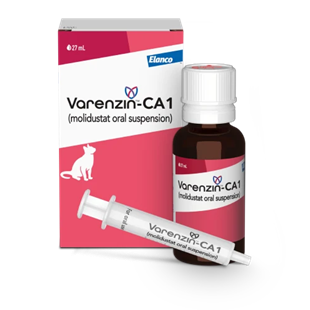
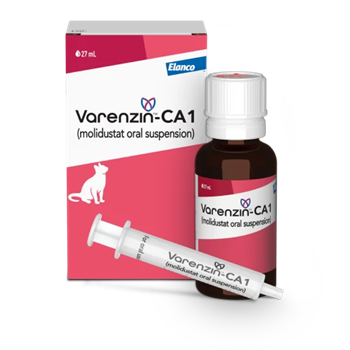
Varenzin for Cats is an oral prescription medication for anaemia associated with chronic kidney disease in cats. When the body produces too few red blood cells, a cat may become weak, tired or less engaged with everyday life. Containing molidustat sodium, Varenzin encourages the cat’s own red blood cell production. The liquid formulation of Varenzin is measured with the supplied syringe and given directly by mouth. Your vet uses blood tests to assess the response and decide whether further treatment is needed.
Varenzin for Cats helps the body produce more red blood cells, which carry oxygen to tissues. Varenzin contains molidustat sodium and is supplied as a liquid suspension for oral administration. Your vet decides whether it is appropriate after investigating the anaemia and reviewing your cat’s overall health.
Red blood cells are continually replaced through a process called erythropoiesis. Healthy kidneys help regulate that process by producing erythropoietin, ...
Varenzin for Cats is an oral prescription medication for anaemia associated with chronic kidney disease in cats. When the body produces too few red blood cells, a cat may become weak, tired or less engaged with everyday life. Containing molidustat sodium, Varenzin encourages the cat’s own red blood cell production. The liquid formulation of Varenzin is measured with the supplied syringe and given directly by mouth. Your vet uses blood tests to assess the response and decide whether further treatment is needed.
Varenzin for Cats helps the body produce more red blood cells, which carry oxygen to tissues. Varenzin contains molidustat sodium and is supplied as a liquid suspension for oral administration. Your vet decides whether it is appropriate after investigating the anaemia and reviewing your cat’s overall health.
Red blood cells are continually replaced through a process called erythropoiesis. Healthy kidneys help regulate that process by producing erythropoietin, a hormone that encourages the bone marrow to make new cells. With chronic kidney disease, this signal can become inadequate. Non-regenerative anaemia describes a situation where the marrow is not producing enough replacement red cells to correct the deficit. Before prescribing Varenzin for Cats, the vet considers whether kidney disease is responsible and whether other factors, such as blood loss, inflammation or iron deficiency, are involved. Pale gums, reduced activity and weakness can accompany anaemia, but similar changes occur with other illnesses.
Molidustat works through the body’s oxygen-sensing system. It inhibits an enzyme called hypoxia-inducible factor prolyl hydroxylase, usually abbreviated to HIF-PH. This helps maintain a signalling protein that increases the cat’s own erythropoietin production, encouraging the bone marrow to produce red blood cells. Varenzin for Cats is therefore different from an iron supplement and does not simply add iron to the diet. The response develops gradually as blood cell production increases. Varenzin for Cats does not repair damaged kidneys or provide immediate correction of severe anaemia. Your vet will consider whether additional care is required, especially if your cat is significantly unwell. A lack of response after three weeks calls for reassessment of possible contributing conditions, rather than an unsupervised increase in the medicine or an extended course.
Varenzin for Cats is given once daily for up to twenty-eight consecutive days, with the prescribed volume based on bodyweight. Shake the bottle well and administer the measured liquid directly into the mouth using the supplied syringe. If your cat vomits after swallowing any part of a dose, do not repeat it that day; the medicine’s instructions treat that day as dosed. Varenzin for Cats requires blood monitoring during treatment, initially weekly from around day fourteen. The vet measures haematocrit or packed cell volume, which describes the proportion of blood occupied by red cells. Treatment must stop if this exceeds the upper reference limit. Further checks after treatment determine whether another cycle is needed. Do not continue, restart or change the prescribed schedule because your cat seems brighter or because medicine remains.
Phosphate binders and supplements containing minerals such as iron or calcium may interfere with absorption. The product information advises considering at least one hour between Varenzin and phosphate binders or iron supplements. Concurrent use with other red blood cell stimulating medicines has not been studied. Varenzin for Cats also requires caution in cats predisposed to blood clots. Safety has not been evaluated in animals younger than one year or weighing less than 2kg, and has not been established during pregnancy, nursing or breeding. Report vomiting, a recognised side effect, and any deterioration to your vet. Breathing difficulty, collapse or sudden severe distress needs emergency veterinary attention.
Which type of anaemia does Varenzin treat in cats?
Varenzin is licensed for non-regenerative anaemia associated with chronic kidney disease. In this condition, red blood cell production does not adequately compensate for the deficit. Other causes of anaemia require investigation, so your vet must establish whether this diagnosis applies before deciding that Varenzin is a suitable treatment.
Why can cats with kidney disease develop anaemia?
The kidneys help produce erythropoietin, a hormone that signals the bone marrow to make red blood cells. Chronic kidney disease can reduce this signal, contributing to anaemia. Other factors may also be involved, which is why the vet assesses more than kidney values when investigating a low red cell count.
Does Varenzin replace my cat’s other kidney treatments?
No. Varenzin addresses the anaemia associated with chronic kidney disease, while other prescribed measures may address separate problems. Keep the wider care plan agreed with your vet. Ask how to schedule medicines and supplements together, particularly phosphate binders or iron products that may need separation from the Varenzin dose.
Why is Varenzin prescribed in treatment cycles?
Varenzin increases red blood cell production, so treatment must be assessed against blood results rather than continued indefinitely. A cycle lasts up to twenty-eight days, with monitoring to avoid an excessive rise. Subsequent testing helps the vet decide whether and when another cycle is required for your cat.
What does a PCV or haematocrit test show during treatment?
Packed cell volume, or PCV, and haematocrit indicate the proportion of blood occupied by red cells. Monitoring shows whether treatment is producing the intended response and whether levels are becoming too high. Initial weekly checks begin around day fourteen, followed by further assessment after the treatment cycle ends.