


- New
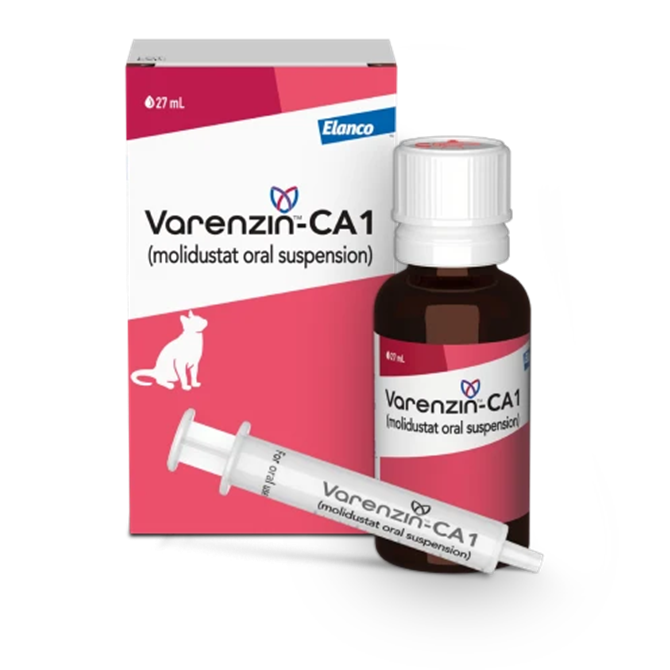
Varenzin for Cats - 27ml
Varenzin for Cats 27ml treats non-regenerative anaemia associated with chronic kidney disease. When too few red blood cells are produced, a cat may become weak, tired or less interested in everyday activities.
Varenzin contains molidustat sodium 25mg/ml and encourages your cat's own red blood cell production. The supplied syringe allows the prescribed amount to be given by mouth, with treatment organised into monitored cycles. Your vet uses blood tests to assess the response and decide when treatment should stop or restart. Varenzin addresses kidney-related anaemia as part of your cat’s wider veterinary care plan.
Additional Product Information
Description
Varenzin for Cats is a prescription oral medication for the treatment of non-regenerative anaemia associated with chronic kidney disease. Anaemia means that the blood has too few red blood cells, or insufficient haemoglobin, to carry oxygen effectively around the body. For a cat already living with kidney disease, this can add another burden to everyday life.
Varenzin for Cats helps stimulate the body’s own production of red blood cells through a different approach from providing an iron supplement. Each millilitre contains 25mg of molidustat sodium, and this presentation contains 27ml of suspension with a measuring syringe. Your vet will establish the cause of the anaemia before prescribing it and explain how blood tests will be used to assess the response. The treatment is aimed at this particular complication of kidney disease; it does not reverse the underlying kidney damage or replace the rest of your cat’s renal care plan.
Healthy kidneys contribute to red blood cell production by releasing erythropoietin, often shortened to EPO. This hormone signals to the bone marrow that more red blood cells are needed. Chronic kidney disease can disrupt that signal, leaving the marrow unable to replace cells at an adequate rate. The term non-regenerative describes an insufficient red blood cell response, rather than a diagnosis based only on how pale or tired a cat looks. Cats with anaemia may become less active, appear weak, lose interest in normal routines or have pale gums. These signs can overlap with other problems, including the effects of kidney disease itself. Varenzin for Cats is therefore prescribed following investigation rather than on symptoms alone. Blood loss, inflammation and iron deficiency can also contribute to anaemia and may need separate attention. Observations about eating, movement and general behaviour are useful to your vet, but they cannot show whether the red blood cell count is within the desired range. The distinction between anaemia and kidney disease is important when reviewing progress. A rise in red blood cells is encouraging, but kidney-related problems can still affect appetite, hydration and wellbeing. Your practice can explain which changes reflect the anaemia response and which require a separate adjustment to care, helping you avoid judging the whole condition from one blood result or one better day.
The active ingredient in Varenzin for Cats, molidustat sodium, inhibits an enzyme called hypoxia-inducible factor prolyl hydroxylase, or HIF-PH. This helps stabilise a signalling protein involved in the body’s response to oxygen availability. The resulting increase in the cat’s own erythropoietin encourages erythropoiesis, the clinical term for red blood cell production in the bone marrow. Blood measurements rise gradually as the response develops; this is not an immediate substitute for emergency treatment in a severely unwell cat. Varenzin for Cats is not an iron preparation, although adequate iron availability remains important for making red blood cells. Your vet may assess iron status alongside other results and investigate a limited response. A cat that has not responded after three weeks should be reassessed for other contributing conditions. Giving more medicine without veterinary instructions does not resolve those underlying causes and can interfere with the planned assessment of treatment.
Give Varenzin for Cats directly into the mouth using the supplied syringe, following the dose on the veterinary dispensing label. Shake the bottle well before withdrawing the liquid so that the suspension is evenly mixed. The licensed regimen is once daily for up to 28 consecutive days, with the amount selected according to an accurately measured bodyweight. A 27ml bottle should not be assumed to provide a complete cycle for every cat, because the daily volume varies with weight. Varenzin for Cats must not be continued indefinitely or restarted simply because liquid remains in the bottle. If your cat vomits after swallowing any portion of a dose, do not give another dose that day; the product instructions count that day as dosed. After administration, close the cap firmly and store the syringe with the medicine in its carton. The supplied syringe should not be washed or taken apart. Ask your practice for a demonstration if measuring or administering the liquid feels uncertain.
Monitoring is central to using Varenzin for Cats appropriately. Your vet checks haematocrit, also called HCT, or packed cell volume, known as PCV, to assess the proportion of blood made up of red cells. Initial weekly checks begin around day fourteen of the treatment cycle. Treatment must be stopped if the value exceeds the upper limit of the reference range, so improvement does not mean that a longer course is necessarily better. After a cycle ends, blood measurements are checked periodically; your vet decides when another cycle is required if the value falls below the reference range. Varenzin for Cats commonly causes vomiting, which should be reported, especially if repeated or accompanied by poor appetite or deterioration. Contact your vet promptly about new weakness or any concerning change. Collapse, breathing difficulty or sudden severe distress requires emergency attention. Continue the wider kidney management and review schedule agreed with your practice, including any individual feeding, hydration or blood pressure arrangements.
What is Varenzin for Cats used for?
Varenzin treats non-regenerative anaemia associated with chronic kidney disease in cats. This means red blood cells are not being replaced adequately. Its active ingredient, molidustat sodium, stimulates the body’s own red blood cell production. Your vet must confirm the type and cause of anaemia before prescribing treatment.
Does Varenzin treat chronic kidney disease itself?
Varenzin targets anaemia associated with chronic kidney disease rather than repairing the kidneys. A cat may still need other management for hydration, nutrition, blood pressure or related complications. Your vet assesses these needs separately and checks the red blood cell response during the prescribed Varenzin treatment cycle.
How is Varenzin different from an iron supplement?
Varenzin influences a signalling pathway that increases the cat’s own erythropoietin, a hormone that stimulates red blood cell production. It does not simply supply iron. Iron availability may still affect the response, so your vet can assess iron levels and decide whether any additional treatment is needed.
How do I give Varenzin oral suspension?
Shake the bottle well and use the supplied syringe to withdraw the prescribed volume. Give the liquid directly into your cat’s mouth once daily as directed. Close the bottle afterwards and keep the syringe with it in the carton. Do not wash or dismantle the supplied syringe.
What happens if my cat vomits after Varenzin?
If your cat vomits after taking any portion of the dose, do not repeat it that day. The product instructions count the cat as having received that day’s treatment. Tell your vet about the vomiting, particularly if it recurs, your cat stops eating or their general condition worsens.
Can Varenzin be given with a phosphate binder?
Phosphate binders and mineral-containing products may reduce absorption. The product information advises considering at least one hour between Varenzin and phosphate binders or iron supplements. Ask your vet to organise the timing for your cat’s particular products, and do not stop prescribed kidney treatments without discussing the plan.
You may also like
What our customers say about us.
I wouldn’t go anywhere else for my cat’s medication. Price is competitive, but the difference here is the customer service - it is second to none. They’re so helpful, and the medicine is always delivered immediately. Nice clear invoices too makes claiming back on my insurance a doddle. Fantastic company
Nikki
Source: Trustpilot Review
Excellent service once again from Vetdispense. Highly recommend this company. Solensia for my cat arrived on the date promised, well chilled and ready to go straight into the fridge. Thank you!
Audrey
Source: Trustpilot Review
Always responsive and ready to help, parcels well packaged and always on time!! Perfect service thank you.
LA
Source: Trustpilot Review
- Tracked 24 Delivery Follow your parcel online
- VMD & RCVS Registered VetDispense is a registered UK Dispensary
- Secure Payment Pay securely online by card or PayPal
- Independent Since 2008 A Trusted UK Dispensary