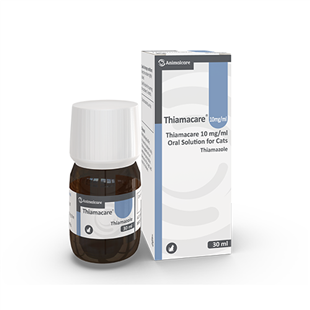
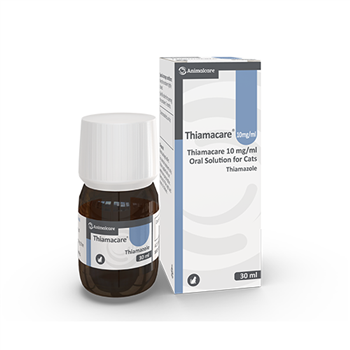
Thiamacare for Cats is a liquid medication for hyperthyroidism, helping reduce the excessive thyroid hormone production that can cause weight loss, increased hunger and restless behaviour. It contains thiamazole at a concentration of 10mg/ml and is supplied with a syringe for measuring the prescribed amount. Thiamacare for Cats can be used to control the condition over the long term or to stabilise thyroid activity before surgery. The concentrated solution allows treatment to be delivered in small volumes directly into the mouth. For cats whose prescription calls for liquid medication, it provides a measured alternative to tablets. The available 30ml bottle has a child-resistant closure and an adapter for the supplied dosing syringe.
The thyroid glands produce hormones that influence metabolism, including the way the body uses energy. Hyperthyroidism develops when their output becomes excessive. A cat may eat more yet become thinner, drink and urinate more often, or seem u...
Thiamacare for Cats is a liquid medication for hyperthyroidism, helping reduce the excessive thyroid hormone production that can cause weight loss, increased hunger and restless behaviour. It contains thiamazole at a concentration of 10mg/ml and is supplied with a syringe for measuring the prescribed amount. Thiamacare for Cats can be used to control the condition over the long term or to stabilise thyroid activity before surgery. The concentrated solution allows treatment to be delivered in small volumes directly into the mouth. For cats whose prescription calls for liquid medication, it provides a measured alternative to tablets. The available 30ml bottle has a child-resistant closure and an adapter for the supplied dosing syringe.
The thyroid glands produce hormones that influence metabolism, including the way the body uses energy. Hyperthyroidism develops when their output becomes excessive. A cat may eat more yet become thinner, drink and urinate more often, or seem unusually active and vocal. Changes to the coat, vomiting and loose stools can also occur. Thiamacare for Cats reduces the production of thyroid hormones, helping control the hormonal imbalance behind these signs. Diagnosis usually combines the clinical examination with measurement of total T4, the blood concentration of thyroxine. Thiamacare for Cats is prescribed after that assessment, with other blood results helping establish a starting picture of the cat’s health. This is particularly useful in older cats, where more than one condition may be present. Note whether increased hunger has settled and whether your cat is more comfortable resting.
Thiamazole works by inhibiting thyroid peroxidase, an enzyme involved in making new thyroid hormones. As production falls, the body can move away from the excessive metabolic activity caused by the overactive glands. Thiamacare for Cats controls hormone synthesis while the thyroid tissue remains in place; long-term medical management is generally lifelong. It can also be used for a defined stabilisation period before thyroidectomy. The concentration of Thiamacare for Cats is 10mg/ml, so it must not be substituted volume for volume for a 5mg/ml liquid. The milligram dose and the volume used to deliver it are different measurements. Check the new instructions whenever the formulation changes, and use the syringe provided with the actual bottle rather than another medicine’s device.
Give Thiamacare for Cats directly into the mouth, with the prescribed daily amount normally divided between morning and evening. Maintain the same dosing times relative to meals each day. The solution should not be mixed into food because efficacy with that administration method has not been established. The supplied syringe is graduated in milligrams of thiamazole; the exact graduation pattern can differ between presentations. Thiamacare for Cats should be measured using the markings explained by the dispensing team, with any revised amount clearly recorded. After dosing, wipe remaining liquid from the syringe tip with a tissue and discard it immediately. Return the syringe to the carton with the closed bottle. Ask for advice before replacing a dose that may have been partly swallowed or vomited.
Blood tests during treatment with Thiamacare for Cats measure thyroid hormone levels, blood cells and biochemical indicators of organ function. Checks are recommended before treatment and after three, six, ten and twenty weeks, followed by testing every three months. Lowering excessive thyroid activity can reduce kidney filtration, making existing renal disease more apparent. Thiamacare for Cats can also cause adverse effects, including vomiting, poor appetite, lethargy and severe head or neck itching. Sudden illness, fever, bruising or jaundice needs prompt veterinary advice. The medicine is unsuitable during pregnancy or lactation and with certain conditions, including diabetes, primary liver disease and specified immune, blood-cell or clotting disorders. Tell the practice about other medicines, especially phenobarbital and wormers, when discussing treatment.
Store Thiamacare for Cats with the bottle tightly closed and record the opening date. Once opened, the contents should be used within three months and before the printed expiry. Keep fresh drinking water available for your cat. When handling Thiamacare for Cats, avoid skin contact, wash off splashes and wash hands after administration or cleaning used litter or vomit. Women of childbearing age must wear impermeable single-use gloves for these tasks. Anyone pregnant, possibly pregnant or trying to conceive should not give the medicine or handle litter or vomit from treated cats. Keep the bottle and syringe away from children and seek medical advice immediately after accidental ingestion. Retain the packaging so that the concentration and current dosing instructions remain available.
What signs can an overactive thyroid cause in cats?
Weight loss despite increased hunger is a common pattern, with thirst, more frequent urination, restlessness and an untidy coat also possible. Some cats vomit or have loose stools. These signs need assessment and blood testing; appearance or appetite alone cannot establish the diagnosis or the correct medicine dose.
Is Thiamacare a liquid alternative to thyroid tablets?
Thiamacare provides thiamazole in an oral solution for cats whose prescription calls for liquid treatment. It is given directly into the mouth using the supplied syringe. A formulation change should be prescribed, with the correct milligram amount and measuring device explained rather than assuming tablet instructions transfer directly.
Why can kidney disease become apparent during thyroid treatment?
Treating hyperthyroidism can lower the glomerular filtration rate, changing how effectively the kidneys filter blood. Existing kidney dysfunction can therefore become clearer or deteriorate as thyroid activity is controlled. Monitoring renal results alongside thyroid levels helps the vet assess both conditions and adjust the treatment plan appropriately.
What changes should I report while my cat takes Thiamacare?
Report vomiting, poor appetite, lethargy or severe itching around the head and neck. Sudden illness, fever, unexplained bruising or jaundice needs prompt advice. Regular blood tests detect effects that may not be visible at home, while your observations help explain changes between planned monitoring appointments.