


- New
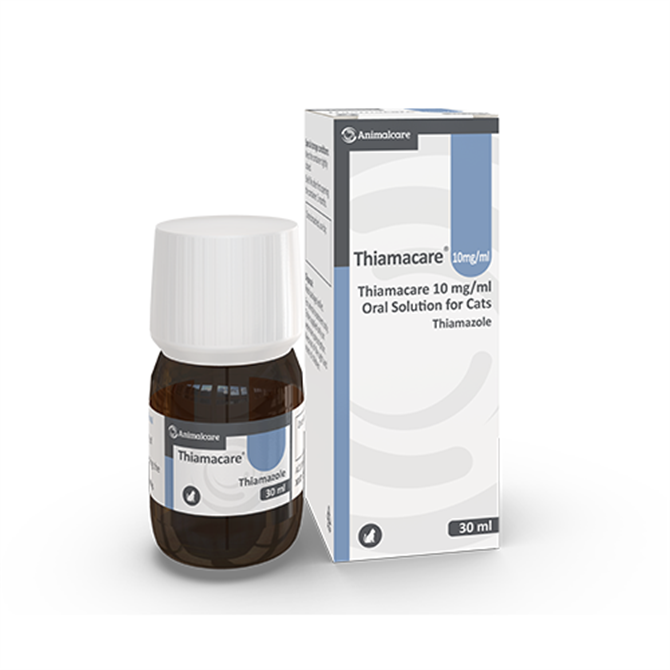
Thiamacare Oral Solution for Cats – 30ml
Thiamacare Oral Solution for Cats is a concentrated liquid medication for an overactive thyroid in cats. Hyperthyroidism can cause weight loss despite increased hunger, restlessness, thirst and an untidy coat. Thiamacare contains thiamazole 10mg/ml, which reduces excessive thyroid hormone production and helps control these changes.
The supplied syringe measures the prescribed amount for administration directly into the mouth, offering a liquid option for cats whose treatment plan calls for an alternative to tablets. Its concentration allows small dosing volumes, while the amount can be adjusted to the cat’s response. Thiamacare is suitable for long-term treatment or stabilisation before thyroid surgery.
Additional Product Information
Description
Thiamacare Oral Solution for Cats is a liquid treatment for hyperthyroidism in cats, helping control excessive production of thyroid hormones. Each millilitre contains 10mg of thiamazole, and the 30ml bottle is supplied with an oral dosing syringe. The concentrated formulation allows the prescribed amount to be given in a small volume directly into the mouth. Thiamacare Oral Solution can be used for long-term medical management or to stabilise a cat before thyroid surgery. It offers an alternative formulation for cats whose treatment plan calls for liquid dosing rather than tablets. The syringe is graduated in milligrams of thiamazole, helping measure the prescribed amount without counting or dividing tablets. As thyroid activity becomes controlled, weight loss, excessive hunger and unsettled behaviour may improve. The dose is adjusted using blood tests and the cat’s clinical response, allowing treatment to be adapted as hormone levels change.
Hyperthyroidism is an endocrine disorder in which the thyroid glands produce more hormone than the body needs. Thyroxine, commonly called T4, and triiodothyronine, or T3, influence metabolism and many normal body functions. Excess production can make a cat use energy rapidly, losing weight despite eating more. Increased thirst, frequent urination, restlessness, vocalisation, vomiting or a deteriorating coat may also be noticed. Thiamacare Oral Solution reduces hormone synthesis within the thyroid gland, addressing the biochemical cause of these changes. The condition is particularly associated with older cats, although the combination and severity of signs vary. Some cats remain lively and keen to eat, which can disguise the significance of weight loss.
Thiamazole inhibits thyroid peroxidase, an enzyme involved in incorporating iodine into thyroid hormone molecules. This reduces the production of new T3 and T4. Thiamacare Oral Solution controls excessive hormone output while the underlying thyroid tissue remains in place. Medical treatment is generally lifelong when chosen as the ongoing management option, whereas use before surgery follows a different plan. The liquid concentration of 10mg/ml means that each prescribed milligram is delivered in a relatively small volume. Thiamacare Oral Solution is more concentrated than a 5mg/ml thiamazole liquid, so the same volume would contain twice as much medicine. This distinction is important when changing brands or formulations: use the new dispensing instructions and the syringe supplied with the product. A change in concentration does not mean that the cat automatically needs a higher milligram dose. The intended hormone control still depends on the amount of active ingredient prescribed and the response measured during monitoring. A useful feature of liquid treatment is the ability to prescribe an amount measured on a syringe rather than in whole tablets. This gives the vet another way to adjust the dose when blood results indicate that a change is needed.
Administer Thiamacare Oral Solution directly into the cat’s mouth using its own syringe. It must not be mixed into food, because efficacy by that route has not been established. The daily amount is normally divided between morning and evening, with the same relationship to feeding maintained each day. Follow the dispensing label for the exact amount and timing. Thiamacare Oral Solution syringes are marked in milligrams rather than simply providing a millilitre scale, so check the units before drawing up a dose. The current product information describes more than one syringe graduation option; the markings on the syringe actually supplied should be demonstrated if there is any uncertainty. After administration, wipe residual liquid from the syringe tip with a tissue, dispose of the tissue immediately and store the syringe with the bottle in the carton. If medicine is spat out or vomiting follows a dose, seek advice before repeating an uncertain amount.
Monitoring during Thiamacare Oral Solution treatment includes total T4, blood-cell measurements and blood biochemistry. The recommended checks take place before treatment, at three, six, ten and twenty weeks, then every three months. These measurements show whether thyroid activity is controlled and help assess liver, kidney and blood-cell effects. Reducing hyperthyroidism can reduce the glomerular filtration rate, revealing or worsening pre-existing kidney dysfunction, so renal results need particular attention. Thiamacare Oral Solution is unsuitable for pregnant or nursing cats and those with conditions including primary liver disease, diabetes, autoimmune disease, or certain white-cell and clotting disorders. Recognised adverse effects include vomiting, poor appetite, lethargy and severe itching around the head or neck. Sudden illness, fever, unusual bleeding or yellowing of the gums or eyes needs prompt veterinary advice. Phenobarbital and some wormers can interact with thiamazole. The vet adjusts treatment to the lowest effective dose and considers a reduction if thyroid activity becomes too low.
Keep Thiamacare Oral Solution tightly closed and use the contents within three months of first opening, subject to the printed expiry date. Marking the opening date on the carton helps track the usable period of the 30ml bottle. Cats receiving thiamazole should have drinking water available at all times. Avoid skin and oral exposure when handling Thiamacare Oral Solution, wash off splashes promptly and wash hands after dosing or cleaning litter or vomit from a treated cat. Women of childbearing age must wear impermeable single-use gloves for these tasks. Anyone who is pregnant, may be pregnant or is trying to conceive should not administer the medicine or handle the treated cat’s litter or vomit. Keep the bottle and syringe away from children, and seek medical advice immediately after accidental ingestion. A record of appetite, weight and activity can be brought to blood-test appointments, while the dispensing label records the current dose to use between veterinary adjustments.
What is Thiamacare Oral Solution used for in cats?
Thiamacare contains thiamazole and is used for long-term treatment of feline hyperthyroidism or stabilisation before thyroid surgery. It reduces new thyroid hormone production. The 30ml bottle contains 10mg/ml and comes with a syringe for measuring the prescribed amount for direct administration into the cat’s mouth.
Can I mix Thiamacare into my cat’s food?
No. Thiamacare should be given directly into the mouth because efficacy when administered in food has not been established. Keep the same dosing schedule relative to meals each day. If direct administration is difficult, ask the practice to demonstrate the syringe technique rather than changing the route yourself.
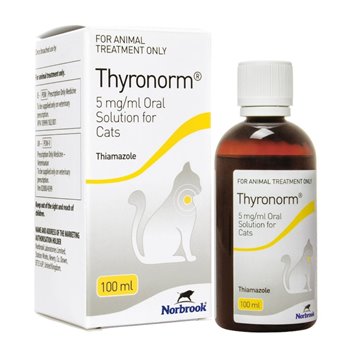
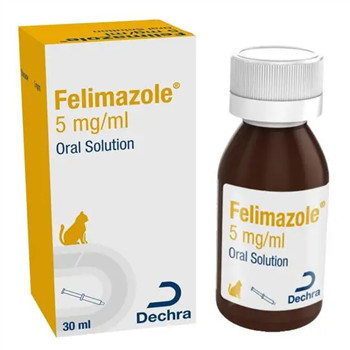
Is Thiamacare the same concentration as Thyronorm?
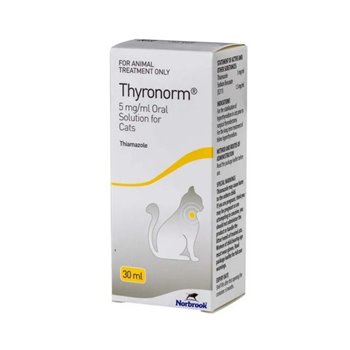
No. Thiamacare contains thiamazole 10mg/ml, while Thyronorm contains 5mg/ml. The same volume of Thiamacare therefore contains twice as much active ingredient. Follow a new prescription when changing products and use the supplied syringe; do not carry over a previous liquid volume or substitute measuring devices.
Are Thiamacare syringe markings in milligrams or millilitres?
The supplied syringe is graduated in milligrams of thiamazole. Current product information describes different graduation options, so check the actual syringe supplied and ask the dispensing team to demonstrate the prescribed mark. Milligrams describe the amount of medicine, whereas millilitres describe liquid volume; they are not interchangeable numbers.
How often should Thiamacare be given?
The total daily amount is normally divided into morning and evening doses. Follow the current dispensing label and maintain a consistent relationship to feeding. Your vet may adjust the amount after blood tests, so replace older written instructions when a new dose is issued for your cat.
What our customers say about us.
Easy to use and very quick dispatch and delivery. Would definitely recommend and use again.
Keith
Source: Trustpilot Review
Ordering and payment were smoothly carried out, dispatch was timed to coincide with the delivery service to ensure the drugs reached me in a chilled state within the stated delivery time.
JB
Source: Trustpilot Review
easy to order quick services by tracked RMail delivery
Phillip
Source: Trustpilot Review
You may also like
- Tracked 24 Delivery Follow your parcel online
- VMD & RCVS Registered VetDispense is a registered UK Dispensary
- Secure Payment Pay securely online by card or PayPal
- Independent Since 2008 A Trusted UK Dispensary