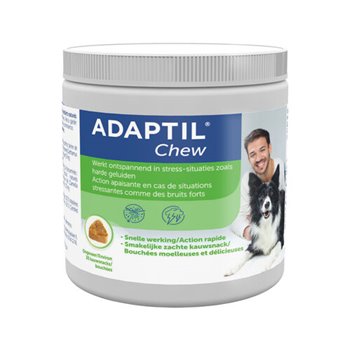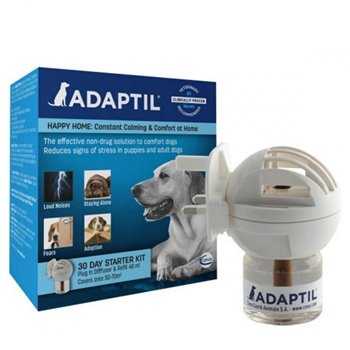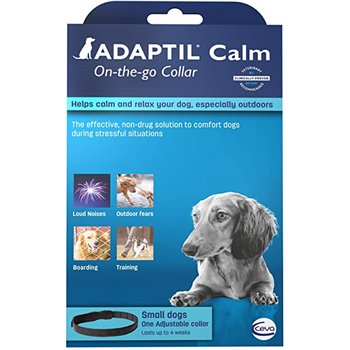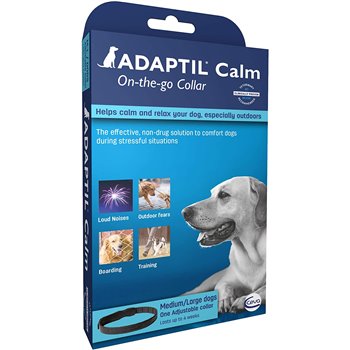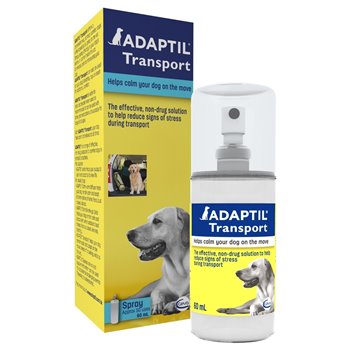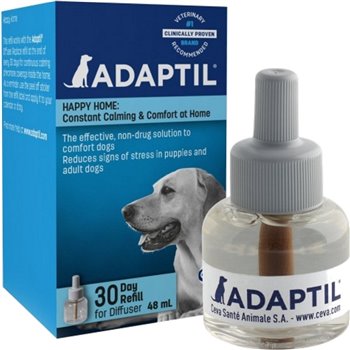
Adaptil for Dogs is a clinically developed, pheromone-based product designed to help dogs feel safer in situations that commonly trigger stress. It uses a synthetic analogue of a natural dog pheromone, so it works with your dog’s biology rather than “overpowering” behaviour. Many families use it during predictable challenges such as fireworks season, travel, moving home, new visitors, veterinary visits, or changes in routine. Adaptil for Dogs is available in several practical formats, including a plug-in diffuser for the home, a collar for continuous support when out and about, and a spray for short-term use on bedding, carriers, or in the car. Because it is not a sedative and does not aim to make dogs drowsy, it can be used alongside training plans and day-to-day life, with the goal of helping your dog settle and cope more comfortably.
Anxiety in dogs is more than occasional nervousness. In clinical terms, anxiety is an anticipatory state of worry or apprehension, often linked to the stress response and the hypothalamic–pituitary–adrenal (HPA) axis. A dog may appear fine until a trigger appears, or they may live in a near-constant state of hypervigilance. Some dogs show obvious fear behaviours, while others display subtle signs that are easy to miss or misinterpret as stubbornness. Common signs of canine anxiety can include:
These behaviours can be distressing for you to watch, but they are also your dog’s attempt to self-protect. When anxiety is frequent or intense, it can affect sleep, learning, and overall welfare, so supportive management and early intervention matter.
Anxiety often has a specific pattern. Separation-related distress may show up as agitation during pre-departure cues, frantic behaviour shortly after you leave, or toileting despite being house-trained. Noise-related fear (for example, fireworks, thunder, or construction sounds) can become more pronounced over time due to sensitisation, where repeated exposure increases the response. Some dogs develop generalised anxiety, in which everyday life feels unpredictable, and their baseline arousal stays high. It is also important to remember that medical issues can mimic or worsen anxiety, including pain, sensory decline, endocrine disease, and cognitive dysfunction in older dogs. A veterinary assessment is sensible if the change is sudden, severe, or accompanied by signs such as limping, weight loss, persistent diarrhoea, or night-time disorientation. In many cases, a combined approach works best: consistent routines, environmental adjustments, and behavioural therapy such as desensitisation and counterconditioning, supported by tools like Adaptil for Dogs.
To understand how Adaptil for Dogs works, it helps to know about the canine appeasing pheromone (CAP). Nursing mother dogs naturally release CAP from the mammary area, which helps puppies feel secure and remain close during early life. Adaptil for Dogs contains a synthetic version of this pheromone that dogs can detect through the vomeronasal organ, a specialised sensory system involved in pheromone perception. In simple terms, the pheromone signal is processed in brain areas linked to emotion and arousal, including parts of the limbic system. For many dogs, this input can reduce signs of stress and support calmer behaviour, particularly when paired with predictable handling and a safe environment. It is not a “medicine” in the way a prescription anxiolytic is, and it does not knock dogs out or change personality. Instead, pheromonotherapy aims to lower the intensity of the stress response, helping your dog remain within a learning-ready state where training is more effective. As with any supportive product, response varies between individuals, and the aim is usually improvement rather than instant, complete resolution.
Using Adaptil for Dogs well is mostly about matching the format to the situation and giving it enough time to build a steady signal. A plug-in diffuser is typically chosen for home-based issues such as settling, noise fear, or separation-related distress, because it provides continuous coverage in a main living area. A collar can be helpful for dogs who are anxious on walks, during training classes, or when visiting new places, as it stays with the dog and supports them wherever they go. The spray is often used for short, specific events: applying it to a blanket in a crate, the car boot area, a travel carrier, or a vet towel. A practical plan might include starting Adaptil for Dogs a few days before an expected trigger (such as a move or planned visitors), keeping the environment calm, and protecting your dog from sudden exposure to scary sounds or crowds. Behaviourally, aim for low-pressure support: offer a quiet “safe zone”, use food enrichment if your dog will eat, and reward calm choices. If you are working on phobias or separation anxiety, combine Adaptil for Dogs with a structured programme guided by your vet or a qualified clinical animal behaviourist, so you progress in manageable steps rather than pushing your dog over threshold.
Adaptil for Dogs is generally used as a welfare-friendly aid, but it should not be seen as a substitute for investigating underlying causes or for professional care when anxiety is severe. If your dog is injuring themselves, showing panic, or cannot settle for long periods, a vet can assess for pain, gastrointestinal disease, dermatological discomfort, or neurological concerns, and can discuss whether prescription treatment is appropriate alongside behaviour work. Even when medication is needed, supportive measures such as Adaptil for Dogs can still be part of a multi-modal plan that includes predictable routines, gentle handling, and management of triggers. Small changes can make a big difference: reduce visual exposure to passers-by, use sound masking during fireworks, keep departures and arrivals low-key, and avoid punishment-based methods that increase fear. In multi-dog households, remember that anxious behaviour can be contagious, so creating calm “micro-routines” for each dog can help. Used thoughtfully, Adaptil for Dogs can fit into everyday life as one part of a kind, clinically informed approach to canine anxiety.
How does Adaptil for Dogs work in the brain?
Adaptil for Dogs contains a synthetic analogue of canine appeasing pheromone that dogs detect through specialised pheromone pathways. The signal is processed in areas linked to emotion and arousal, which can help reduce the intensity of the stress response. It is not a sedative, so it supports coping rather than causing drowsiness.
How quickly will Adaptil for Dogs start to help?
Some dogs show changes within a few days, but many benefit most after steady use over several weeks. For predictable triggers, starting Adaptil for Dogs before the event can be useful. Because anxiety can be learned and reinforced, improvements are often gradual, especially when paired with desensitisation and counterconditioning.
Should I choose the diffuser, collar, or spray?
The diffuser suits home-based concerns and provides continuous coverage in a main room. The collar offers ongoing support on walks or in new places, while the spray is for short-term use on bedding, crates, or carriers. Many owners combine formats of Adaptil for Dogs when dogs face multiple triggers.
Why is my dog anxious all of a sudden?
A sudden change can be linked to pain, illness, sensory decline, or a recent frightening experience that led to sensitisation. Dogs can also develop anxiety as routines change or as they age. If the onset is abrupt, the behaviour is intense, or your dog seems unwell, a veterinary check is recommended before focusing solely on behaviour.