


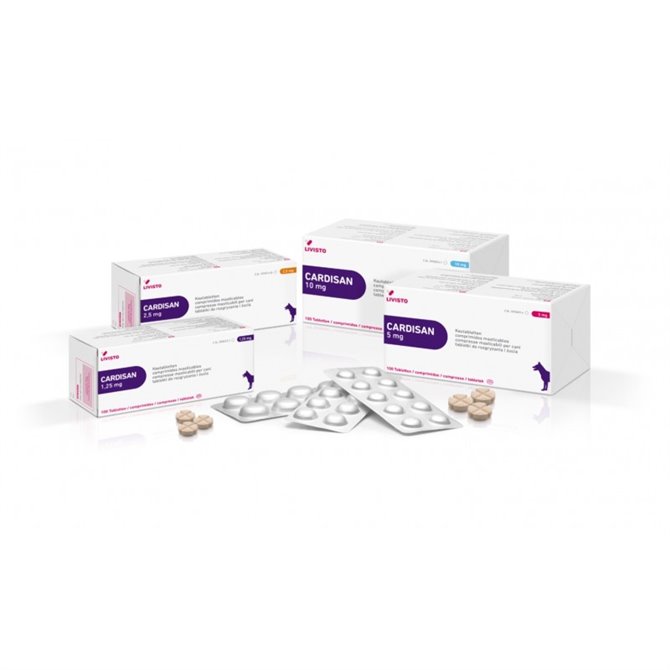
5mg Cardisan for Dogs - Per Tablet
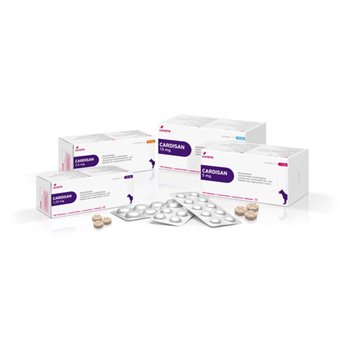
5mg Cardisan is a prescription medication used in dogs to help manage Congestive Heart Failure, supplied as a chewable tablet that can make daily dosing easier. Vets commonly prescribe 5mg Cardisan when a dog’s heart disease has progressed to the point that clinical signs are developing, particularly in cases linked to myxomatous mitral valve disease (a leaking mitral valve) or dilated cardiomyopathy (a weakened, enlarged heart muscle).
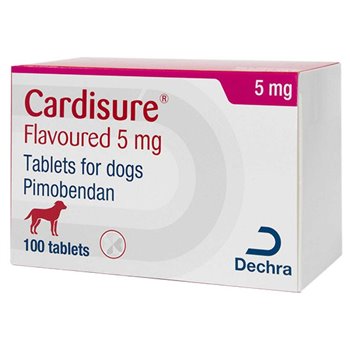
Cardisan contains pimobendan, a heart medicine that helps the heart pump more effectively and eases the load on the circulation. 5mg Cardisan does not cure the underlying heart condition, but it can play an important role in keeping dogs comfortable and more able to enjoy gentle activity alongside other treatments. It is often used long‑term under veterinary supervision. Your vet will decide whether Cardisan 5mg is suitable based on the diagnosis, stage of disease, weight, and overall health, including any kidney or liver concerns and any other long‑term medicines.
VETERINARY PRESCRIPTION REQURIED
Additional Product Information
Description
Congestive Heart Failure in dogs is a clinical syndrome that develops when the heart can no longer meet the body’s needs without a rise in pressure inside the circulation. That pressure can lead to fluid leaking into the lungs (pulmonary oedema) or, in some cases, into the abdomen (ascites) and tissues. The condition is often progressive, but it is frequently manageable when treatment is started promptly and adjusted as your dog’s needs change. Early signs can be subtle, so it helps to know what to look for. You may notice:
- a persistent cough, often at night or after rest.
- faster or more effortful breathing (tachypnoea) or breathlessness (dyspnoea).
- your dog tires quickly on walks or seems reluctant to exercise.
- fainting episodes (syncope) or sudden weakness.
- reduced appetite, weight loss, or a change in mood
- a swollen belly from fluid build‑up in some cases.
If these signs appear, your vet may recommend an examination plus tests such as chest radiographs, an echocardiogram (ultrasound of the heart), and blood pressure monitoring to confirm the diagnosis and decide whether 5mg Cardisan should be part of the treatment plan.
5mg Cardisan works by improving forward blood flow and reducing congestion, so the lungs and other organs are not continually fighting fluid accumulation. Cardisan is described clinically as an “inodilator”, meaning it supports stronger heart contractions (a positive inotropic effect) and also relaxes blood vessels (a vasodilatory effect). This can increase cardiac output whilst reducing afterload, so the heart can pump more efficiently. In clinical terms, pimobendan improves contractility by sensitising the heart muscle to calcium and also supports vasodilation through phosphodiesterase inhibition, which together can help reduce pressure build‑up and improve tissue perfusion. Owners often notice steadier breathing, a brighter attitude, and improved tolerance for gentle activity once the overall treatment plan is stabilised.
Giving Cardisan correctly matters, because consistency helps keep symptoms stable. Many dogs are prescribed 5mg Cardisan twice daily, around 12 hours apart, and it is commonly recommended to give it on an empty stomach for optimal absorption; however, your vet’s instructions should always take priority. The 5mg strength can be useful for medium to larger dogs, or for dogs whose dose requires this tablet size as part of a tailored regimen. If a dose is missed, it is usually safest to give the next scheduled dose at the normal time rather than doubling up, unless your vet advises otherwise. Congestive Heart Failure is often managed with combination therapy, so 5mg Cardisan may be used alongside a diuretic to remove excess fluid, and sometimes other cardiac medicines depending on the stage of disease. Do not stop 5mg Cardisan suddenly without veterinary guidance, even if your dog seems brighter, because signs can return. If your dog is also on a diuretic, increased thirst and urination are expected, so constant access to fresh water is essential. Keeping to a routine and ordering repeat supplies in good time can help avoid gaps in treatment.
Because congestive heart failure can change over time, monitoring helps your vet keep 5mg Cardisan working at its best. Many dogs tolerate 5mg Cardisan well, but mild gastrointestinal signs such as vomiting, diarrhoea, or reduced appetite can occur, particularly when a new medicine is started or doses are adjusted. Your vet may schedule check‑ups to listen for changes in heart sounds, assess breathing, and monitor parameters such as kidney values and electrolytes, especially if a diuretic is also being used. 5mg Cardisan is not suitable for every type of heart problem, and it is generally avoided where an obstruction prevents blood from leaving the heart, so a clear diagnosis matters. Contact your vet promptly if coughing increases, your dog’s resting breathing rate rises, or your dog cannot settle comfortably, as these can be early signs that fluid control needs review. Seek urgent veterinary advice if you notice rapid or laboured breathing, open‑mouth breathing, collapse, blue‑tinged gums, or marked lethargy.
Your vet may recommend maintaining a lean body condition, choosing a heart‑appropriate diet with controlled sodium, and keeping exercise gentle but regular. Many owners measure a sleeping respiratory rate a few times a week, because a gradual upward trend can be an early warning that fluid is building up again. If your dog seems more breathless, less interested in food, or unusually tired, record what you are seeing and speak to your vet promptly, as small adjustments can sometimes prevent a bigger flare‑up. If your dog is reluctant to take Cardisan tablets, ask your veterinary team for practical tips on dosing times and tablet‑giving aids. With the right monitoring and support, many dogs receiving 5mg Cardisan settle into a stable routine where they can still enjoy daily life and familiar activities.
What is 5mg Cardisan used for in dogs?
Cardisan is used to help manage clinical signs of congestive heart failure in dogs, most often when the underlying cause is mitral valve disease or dilated cardiomyopathy. It helps the heart pump more effectively and is commonly combined with other cardiac medicines to support breathing comfort and exercise tolerance.
Should Cardisan be given with food?
It is often recommended that 5mg Cardisan is given on an empty stomach to help absorption. If your dog feels sick or refuses the dose, speak to your vet before changing anything, as they may advise a small adjustment in timing or a practical tablet‑giving approach.
Can 5mg Cardisan be taken alongside diuretics or ACE inhibitors?
Yes. Dogs with congestive heart failure are frequently treated with combination therapy, and 5mg Cardisan may be prescribed alongside a diuretic to reduce fluid and other cardiac medicines such as ACE inhibitors. Because these drugs can affect kidney values and electrolytes, routine monitoring is important.
What are the warning signs that congestive heart failure is worsening?
Worsening congestive heart failure can show as a new or more frequent cough, faster breathing at rest, difficulty settling, reduced appetite, sudden tiredness on walks, fainting, or a swollen abdomen. Rapid or laboured breathing and blue‑tinged gums are emergencies and need immediate veterinary attention.
What should I do if I miss a dose of 5mg Cardisan?
If you miss a dose of Cardisan, it is usually safest to give the next dose at the normal scheduled time and not double the following dose. If you are unsure how much was taken, or if your dog is unwell, contact your vet for guidance specific to your situation.
You may also like

What our customers say about us.
I've been using Vetdispense for over a year. Very straightforward service. Always a prompt response and the dispensing vet will call if there's a question to be answered.
Janis
Source: Trustpilot Review
Excellent communication and customer service. Will rush medication out to you and will let you know if theres an issue with the prescription , my end i.e scanned blank
Loz
Source: Trustpilot Review
I wouldn’t go anywhere else for my cat’s medication. Price is competitive, but the difference here is the customer service - it is second to none. They’re so helpful, and the medicine is always delivered immediately. Nice clear invoices too makes claiming back on my insurance a doddle. Fantastic company
Nikki
Source: Trustpilot Review
- Tracked 24 Delivery Follow your parcel online
- VMD & RCVS Registered VetDispense is a registered UK Dispensary
- Secure Payment Pay securely online by card or PayPal
- Independent Since 2008 A Trusted UK Dispensary