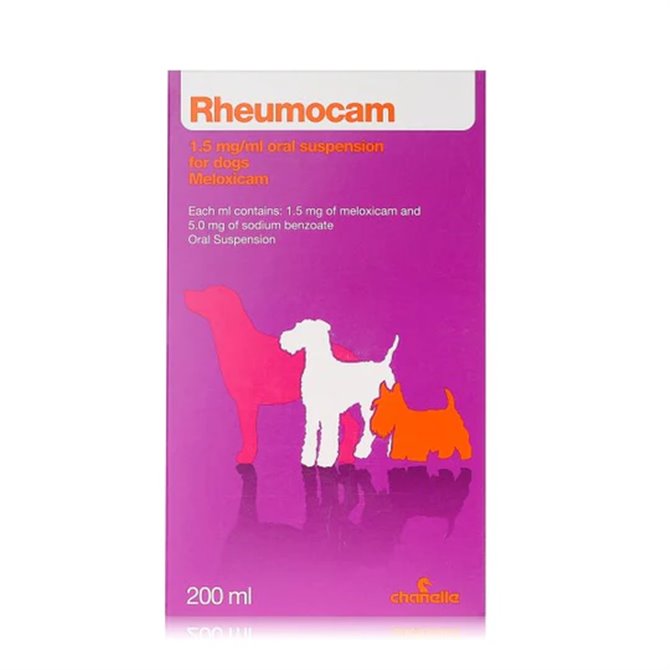
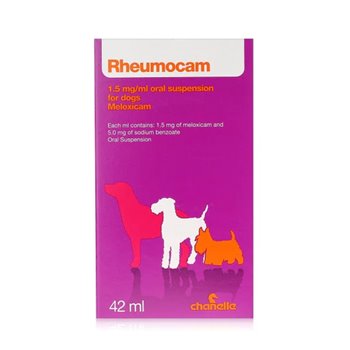
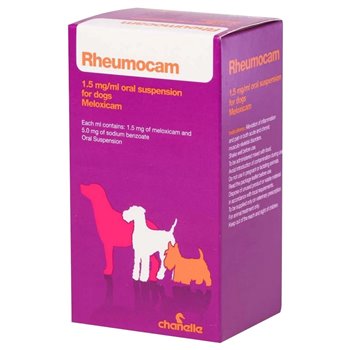
Rheumocam for Dogs is a prescription oral suspension containing meloxicam, used to relieve pain and inflammation associated with acute and chronic musculoskeletal disorders. These are conditions affecting structures such as joints, muscles and the surrounding tissues that allow a dog to move comfortably. The 200ml bottle contains meloxicam at 1.5mg/ml and is intended specifically for dogs. Rheumocam for Dogs is an oral liquid that is measured according to the veterinary prescription and mixed with food.
Pain associated with the musculoskeletal system is not always expressed as crying or obvious lameness. A dog may hesitate before getting up, avoid jumping into the car, take longer to settle or show less enthusiasm for familiar walks. Stiffness after rest and a change in how weight is carried can also be clues. Chronic joint disease, including osteoarthritis, can involve both structural changes and ongoing inflammation.
Rheumocam belongs to a group of medicines called non-steroidal anti-inflammatory drugs, usually shortened to NSAIDs. Rheumocam for Dogs works by reducing the synthesis of prostaglandins, chemical messengers involved in inflammation and the sensitivity of painful tissues. Lowering their production can help relieve discomfort and make movement less painful. Those same pathways also contribute to normal functions elsewhere in the body.
Shake the bottle well before every use and mix the prescribed amount with food. The supplied measuring syringe has a bodyweight scale corresponding to the standard maintenance dose, so it is important to use the correct syringe and follow the label rather than treating its markings as ordinary millilitres. The licensed regimen includes a higher initial dose on the first day followed by a lower maintenance dose once daily at twenty-four-hour intervals. Your vet will specify what applies to your dog, including whether initial treatment has already been given. Never repeat a starting dose independently after a missed dose or a break in treatment. Rheumocam for Dogs is usually expected to produce a clinical response within three to four days. If there is no improvement, contact your practice; the product information requires discontinuation by ten days at the latest when no clinical benefit is apparent. If your dog refuses food or seems unwell, ask for advice before giving further medicine.
Watch for adverse effects throughout treatment with Rheumocam for Dogs, particularly during the first week. Loss of appetite, vomiting, diarrhoea, unusual tiredness or blood in the faeces can indicate a problem. Black, tarry stools or vomiting blood also need urgent veterinary attention. Stop the medicine and contact your vet if adverse effects occur, rather than giving another dose to see whether the symptoms settle. Rheumocam for Dogs must not be combined with another NSAID or a glucocorticosteroid, and switching between anti-inflammatory medicines requires a treatment-free interval selected by the vet. Do not add human painkillers or another pet’s medicine. Tell the practice about all other prescribed products and supplements, including diuretics and medicines affecting clotting. Dehydration, low blood pressure or reduced circulating blood volume increase the risk of kidney toxicity. Regular reviews help the vet reassess whether treatment remains appropriate, and blood or urine tests may be advised according to your dog’s health and expected duration of use.
What is Rheumocam 200ml for Dogs used for?
Rheumocam relieves pain and inflammation associated with acute and chronic musculoskeletal disorders in dogs. The 200ml bottle contains meloxicam 1.5mg/ml as an oral suspension. Your vet must identify the problem and assess suitability before prescribing it, with treatment reviewed according to the response and your dog’s general health.
Is Rheumocam the same active ingredient as Metacam?
Both brands include products containing meloxicam, but formulations, concentrations and measuring equipment must be checked carefully. Rheumocam cannot be ordered with a prescription for Metacam.
How should I give Rheumocam oral suspension to my dog?
Shake the bottle well, measure the prescribed amount with the appropriate supplied syringe and mix it with food. The syringe’s bodyweight scale corresponds to the maintenance dose. Follow the dispensing label carefully, because initial dosing can differ and previous treatment may affect what your vet instructs you to give.
Can I give Rheumocam with another painkiller or steroid?
Rheumocam must not be given alongside another NSAID or a glucocorticosteroid. Switching anti-inflammatory medicines requires a treatment-free interval decided by the vet. Do not add human painkillers or another pet’s prescription. Tell the practice about every medicine and supplement before starting or altering your dog’s pain management.
What side effects should I watch for with Rheumocam?
Watch for loss of appetite, vomiting, diarrhoea, lethargy or blood in the stool. Stop treatment and contact your vet if adverse effects develop. Black, tarry faeces, vomiting blood, collapse or severe deterioration need urgent attention. Reactions often occur during the first week, but vigilance remains important throughout treatment.
Can I use Rheumocam for Dogs on my cat?
No. This 1.5mg/ml dog suspension is not suitable for cats and must not be given to them. A separate feline formulation has a different concentration and instructions. Do not attempt to dilute or convert a dog dose yourself; contact your vet about the medicine prescribed for the correct animal.