


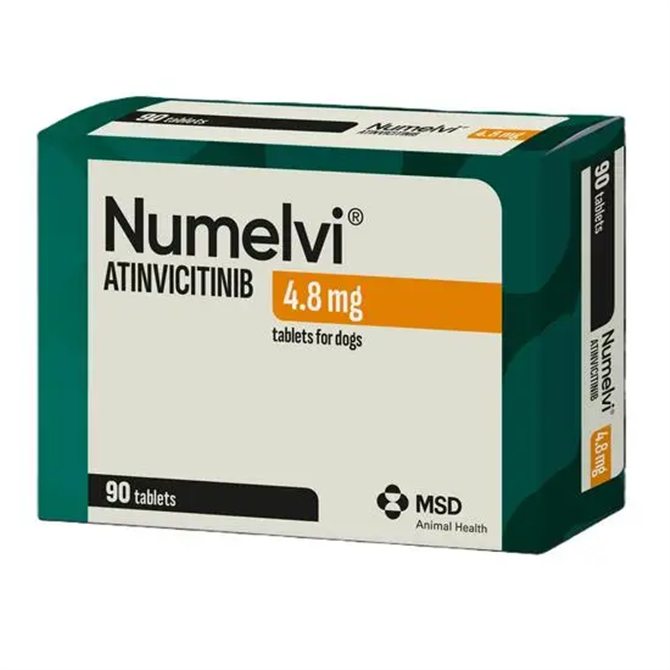
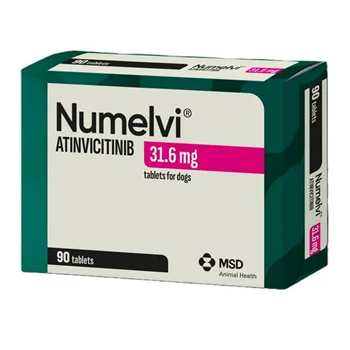
4.8mg Numelvi Tablets for Dogs - Per Tablet
4.8mg Numelvi Tablets are a prescription-only veterinary medicine for dogs with allergic skin disease, including itch associated with allergic dermatitis and the clinical signs of atopic dermatitis. Each tablet contains 4.8mg atinvicitinib, a targeted JAK1 inhibitor that helps reduce the inflammatory signalling involved in itching, scratching, licking and skin irritation.
Numelvi may be prescribed as part of a wider veterinary skin plan, alongside steps such as flea control, infection management, bathing routines, diet trials or allergen control. 4.8mg Numelvi Tablets are for dogs only and should be given exactly as directed by your vet, based on your dog’s weight, age, health history and treatment needs.
VETERINARY PRESCRIPTION REQUIRED
Additional Product Information
Description
4.8mg Numelvi Tablets are a prescription-only veterinary medicine for dogs with allergic skin disease, including pruritus associated with allergic dermatitis and the clinical manifestations of atopic dermatitis. Each tablet contains 4.8 mg atinvicitinib, an immunomodulatory active ingredient developed to target the signalling pathways that help drive itching and inflammation. For many dogs, persistent itch can interrupt sleep, make walks and grooming uncomfortable, and lead to sore, broken skin.
Allergic dermatitis is an inflammatory skin condition that occurs when a dog’s immune system reacts strongly to allergens such as fleas, pollens, house dust mites, moulds, certain foods, contact irritants or other environmental triggers. The main clinical sign is pruritus, which means itch, but owners often notice the behaviour before they notice the medical term. Dogs may scratch, chew, lick, rub their face, shake their head, overgroom the paws or develop red skin, hair loss, excoriations, crusting, saliva staining, thickened skin or recurrent otitis externa. 4.8mg Numelvi Tablets may be prescribed as part of a wider dermatology plan when allergic dermatitis is causing ongoing irritation. Your vet may also check for ectoparasites, bacterial pyoderma, Malassezia yeast overgrowth, food-responsive disease or contact allergy, because these complicating factors can make an itchy dog feel worse and may need treatment alongside 4.8mg Numelvi Tablets. Identifying and treating these triggers matters, because medication for itch works best when the skin is not being continually inflamed by fleas, infection or avoidable allergens.
Atopic dermatitis in dogs is a chronic, relapsing allergic skin disease linked with an abnormal skin barrier and an overactive immune response to everyday environmental allergens. It commonly affects the paws, ears, muzzle, armpits, groin and underside, although every dog can show a slightly different pattern. Some dogs have seasonal flare-ups, while others remain itchy all year, especially when multiple allergens are involved or when the home environment contains persistent triggers such as dust mites. Atopic dermatitis is usually managed rather than cured, and treatment often combines allergen control, parasite prevention, skin barrier support, management of secondary infection and medicines that reduce itch and inflammation. Numelvi Tablets do not remove the allergy itself, but they can help control the inflammatory itch pathway that keeps the itch-scratch cycle active. By reducing pruritus, Numelvi Tablets may give the skin a better chance to settle while other parts of the veterinary plan take effect, including bathing routines, ear care, diet trials or immunotherapy where appropriate.
Numelvi contains atinvicitinib, a selective Janus kinase inhibitor with high selectivity for JAK1. JAK enzymes act like communication switches inside cells, helping inflammatory and allergy-related cytokines pass on messages. In allergic skin disease, cytokines involved in pruritus and inflammation can keep sending “itch” signals even after the skin is already sore. By inhibiting JAK1-dependent signalling, 4.8mg Numelvi Tablets help reduce the activity of key pruritogenic and pro-inflammatory cytokines, including pathways linked with allergic inflammation and the itch-scratch cycle. Numelvi is not a corticosteroid and it is not an antihistamine. Numelvi Tablets act in a targeted way on the cellular signalling involved in allergic itch, helping to reduce the urge to scratch, chew and lick without masking the need to diagnose and manage infections, fleas or other triggers.
What are 4.8mg Numelvi Tablets used for in dogs?
Numelvi Tablets are prescribed to help treat pruritus, or itching, associated with allergic dermatitis in dogs. They may also be used for clinical signs linked with atopic dermatitis, including itch, redness and irritation. Your vet will decide whether they suit your dog’s diagnosis and health history.
How does Numelvi work for allergic dermatitis?
Numelvi contains atinvicitinib, a selective JAK1 inhibitor. It helps reduce the activity of cytokines involved in allergic itch and inflammation. By quietening these signalling pathways, it can help reduce scratching, chewing and licking while your vet investigates triggers such as fleas, infection, food or environmental allergens.
Can 4.8mg Numelvi Tablets help atopic dermatitis in dogs?
Yes, vets may prescribe 4.8mg Numelvi Tablets for clinical manifestations associated with canine atopic dermatitis, including pruritus. Atopic dermatitis is usually a long-term condition, so Numelvi may form part of a wider plan that also includes parasite control, skin care, ear care and managing secondary infections.
How quickly should Numelvi start helping an itchy dog?
Some dogs may show improvement in itch soon after starting treatment, but response can vary depending on the severity of dermatitis and whether infection, fleas or other triggers are present. Follow your vet’s dosing instructions and contact the practice if symptoms worsen or do not improve as expected.
What is the difference between allergic dermatitis and atopic dermatitis?
Allergic dermatitis is a broad term for skin inflammation caused by allergic triggers, including fleas, food, contact irritants or environmental allergens. Atopic dermatitis is a chronic allergic skin disease usually linked with environmental allergens and skin barrier dysfunction. Both can cause pruritus, redness and recurrent flare-ups.
You may also like
What our customers say about us.
Definitely recommend great service very reasonable and fast delivery.
Jordan
Source: Trustpilot Review
Always responsive and ready to help, parcels well packaged and always on time!! Perfect service thank you.
LA
Source: Trustpilot Review
Ordering and payment were smoothly carried out, dispatch was timed to coincide with the delivery service to ensure the drugs reached me in a chilled state within the stated delivery time.
JB
Source: Trustpilot Review
- Tracked 24 Delivery Follow your parcel online
- VMD & RCVS Registered VetDispense is a registered UK Dispensary
- Secure Payment Pay securely online by card or PayPal
- Independent Since 2008 A Trusted UK Dispensary