


- New
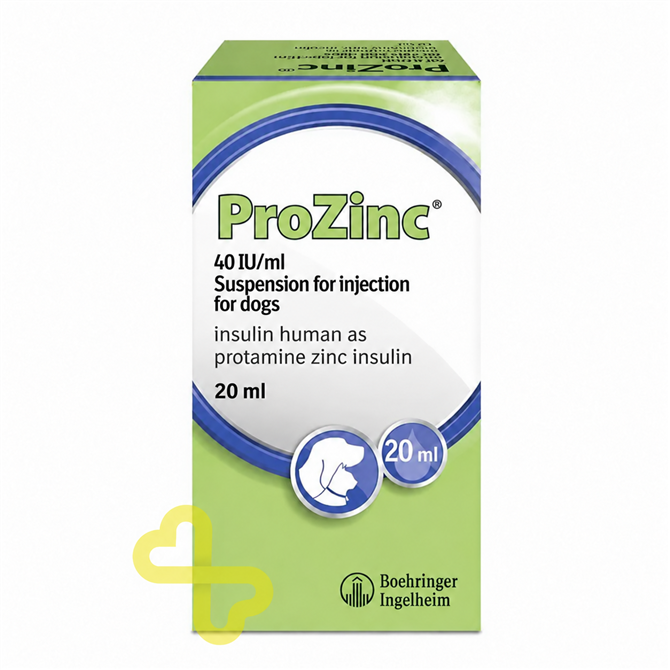
ProZinc Insulin for Dogs - 20ml
20ml ProZinc helps control blood glucose in dogs with diabetes mellitus and improve the associated signs of the condition.
Its protamine zinc insulin formulation provides prolonged action, supporting ongoing management of canine diabetes.
Additional Product Information
Description
ProZinc is an insulin medicine for dogs with diabetes mellitus, helping to reduce high blood glucose, known as hyperglycaemia, and improve the clinical signs associated with it. Diabetes develops when the body cannot make or use enough insulin to regulate glucose effectively. Owners may notice increased thirst, more frequent urination or weight loss, sometimes despite a good appetite. Once diabetes has been diagnosed, insulin treatment helps address the underlying shortage. ProZinc contains recombinant human insulin in a protamine zinc formulation, which slows absorption from the injection site and gives it a prolonged effect.
The 20ml ProZinc vial contains insulin at a concentration of 40 international units per millilitre, also written as 40 IU/ml or U-40. It must be used with a U-40 insulin syringe. A U-100 syringe has a different scale and must not be used to measure this medicine. Your vet should demonstrate how to measure and administer an injection before you begin at home, including how to read the syringe markings accurately.
ProZinc is given by injection beneath the skin, concurrently with or immediately after a meal. Treatment in dogs may begin once daily, but some dogs need twice-daily administration after veterinary reassessment. Gently roll the vial before withdrawing each dose; the mixed suspension should look white and cloudy. Keep the equipment clean, use a new sterile syringe and needle for each injection, and arrange a suitable sharps container for disposal. If you are uncertain whether an injection was delivered, contact the practice before repeating it.
A consistent routine helps you and your veterinary team assess how your dog is responding to ProZinc. Keep feeding and exercise reasonably regular, and discuss changes to diet or activity before making them. A simple record of appetite, drinking, urination and bodyweight gives useful context alongside glucose monitoring. Your vet may use blood glucose curves or fructosamine measurements to assess control, and can show you how to monitor at home if appropriate. Finding the right regimen can take adjustments over time; one isolated reading should not prompt an unsupervised dose change. Arrange a shared written record if more than one person gives the injections.
ProZinc is not for emergency treatment of diabetic ketoacidosis, which requires urgent veterinary care. Low blood glucose, or hypoglycaemia, is an important risk with ProZinc and other insulins. Warning signs can include sudden hunger, anxiety, twitching, unsteadiness or disorientation. If low blood glucose is suspected, seek urgent veterinary advice, follow the emergency plan and do not give further insulin until instructed. Keep a glucose product recommended by the practice available. A collapsed, unconscious or fitting dog needs emergency veterinary care; never pour liquid or force food into its mouth. If your dog refuses food, vomits or becomes unwell around injection time, contact the practice for advice before the next dose.
Store ProZinc upright in a refrigerator at 2–8°C, inside its outer carton to protect it from light. Do not freeze it. The opened vial must be used within sixty days, so mark the opening date clearly and keep track of the remaining supply. Put the medicine into the refrigerator on arrival.
What is ProZinc used for in dogs?
ProZinc treats diabetes mellitus by reducing high blood glucose and improving associated clinical signs. It forms part of ongoing care that includes an appropriate feeding routine and monitoring of diabetic control.
What does the 20ml vial contain?
It contains 20ml of suspension at 40 IU/ml, giving 800 international units in the full vial. The amount used at each injection is determined individually by your vet.
Which syringes do I need?
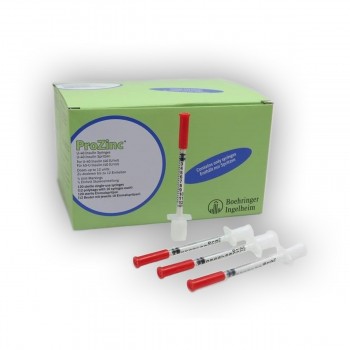
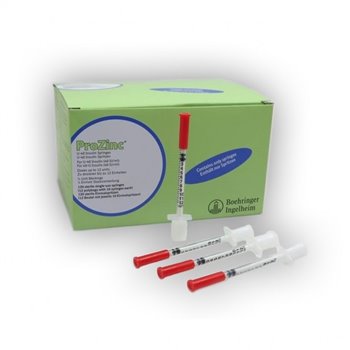
Use U-40 insulin syringes, with a capacity and markings suitable for your dog’s dose. U-100 syringes are not interchangeable. Ask the practice to confirm the correct syringe before ordering.
Is ProZinc given once or twice a day?
Dogs may start on once-daily treatment, while some need twice-daily injections after assessment. Follow the dispensing label and do not change the frequency without veterinary instructions.
Should I shake the vial?
Mix ProZinc by gently rolling the vial before each dose. It should become white and cloudy. If clumps remain after rolling, do not use the vial and contact the supplier or vet.
What should I do if my dog will not eat?
Contact your vet before giving the next injection. A missed meal or illness can change insulin requirements; do not guess a reduced dose or give an extra dose later.
What are the signs of low blood glucose?
Sudden hunger, anxiety, muscle twitching, stumbling or disorientation can indicate hypoglycaemia. Seek urgent veterinary advice and follow the emergency plan your practice has provided.
What our customers say about us.
easy to order quick services by tracked RMail delivery
Phillip
Source: Trustpilot Review
Easy to use and very quick dispatch and delivery. Would definitely recommend and use again.
Keith
Source: Trustpilot Review
Always quick delivery, thank you!
Rebecca
Source: Trustpilot Review
You may also like


- Tracked 24 Delivery Follow your parcel online
- VMD & RCVS Registered VetDispense is a registered UK Dispensary
- Secure Payment Pay securely online by card or PayPal
- Independent Since 2008 A Trusted UK Dispensary