


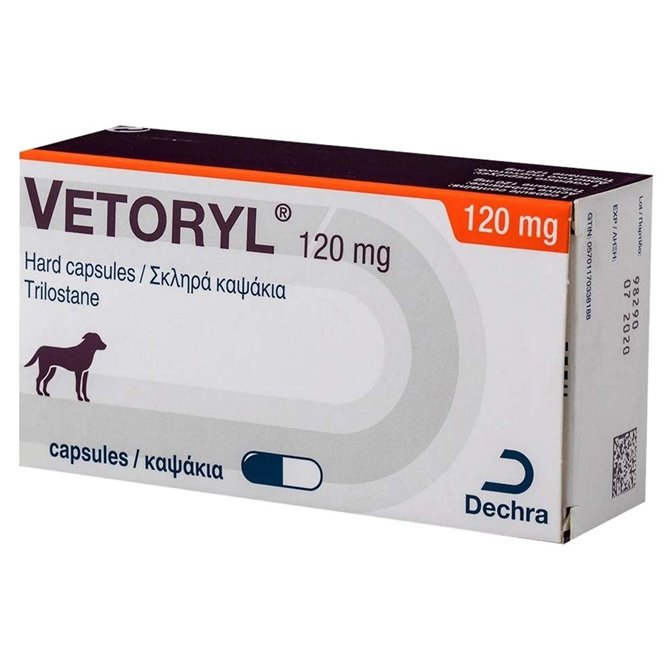
Vetoryl 120mg Capsule - box of 30
Vetoryl 120mg Capsules are a prescription-only treatment for dogs with Cushing’s syndrome, also known as hyperadrenocorticism. This condition occurs when a dog produces too much cortisol, a hormone that affects thirst, appetite, skin, coat condition, energy levels and general wellbeing. Dogs with Cushing’s may drink and urinate more, seem unusually hungry, pant more, develop a pot-bellied appearance, or show thinning skin and hair loss.
Vetoryl 120mg Capsules contain trilostane, which helps control the overproduction of cortisol from the adrenal glands. When prescribed and monitored by a veterinary surgeon, Vetoryl can help reduce the signs of Cushing’s syndrome and make many dogs feel more settled, comfortable and like themselves again. Regular vet checks are important to ensure the dose remains right for your dog.
VET PRESCRIPTION REQUIRED
Product Features
- Pack Size: - Box of 30
- Target Animal: - Dog (Canine)
- Related Condition: - For the treatment of pituitary-dependent and adrenal-dependent hyperadrenocorticism (Cushing's disease and syndrome) in dogs
- Pet Prescription Required?: - Yes
- Active Ingredient: - Trilostane
- Product Name: - Vetoryl 120mg Capsule for Dogs - per Capsule
Additional Product Information
Description
Vetoryl 120mg Capsules are a prescription-only veterinary medicine used in dogs diagnosed with Cushing’s syndrome, also known as hyperadrenocorticism. Cushing’s syndrome happens when a dog’s body is exposed to too much cortisol over time. Cortisol is a natural steroid hormone made by the adrenal glands, and it has important roles in metabolism, immune function, stress response and inflammation. Problems begin when cortisol production becomes persistently excessive, most often because of pituitary-dependent disease or, less commonly, an adrenal tumour. Vetoryl 120mg for Dogs contains trilostane, an active ingredient used to help bring cortisol production under veterinary control.
Vetoryl 120mg for Dogs is usually prescribed after diagnostic testing, such as blood tests, urine testing, an ACTH stimulation test or low-dose dexamethasone suppression test, has shown that medical management is appropriate.
Vetoryl 120mg for Dogs works by acting on the adrenal cortex, the hormone-producing outer layer of the adrenal glands. Trilostane selectively and reversibly inhibits an enzyme involved in steroid hormone production, called 3 beta-hydroxysteroid dehydrogenase. By slowing this pathway, Vetoryl 120mg Capsules help reduce the production of cortisol and related adrenal hormones. This does not remove the underlying pituitary or adrenal cause, but it can reduce the effects of excess cortisol on the body. Vetoryl 120mg for Dogs should only be given exactly as directed by your veterinary surgeon, as the correct dose depends on your dog’s body weight, clinical signs, blood results and response to treatment.
Cushing’s syndrome in dogs often develops gradually, so the early signs can be mistaken for normal ageing. A dog may seem hungrier, thirstier or more tired before the condition is recognised. Vetoryl 120mg for Dogs is prescribed to address the hormone imbalance behind these signs, rather than simply covering up symptoms. Common signs that may lead a vet to investigate Cushing’s syndrome include:
- Increased thirst, known clinically as polydipsia, and increased urination, known as polyuria.
- Increased appetite, or polyphagia, which can make a dog seem unusually food-focused.
- A rounded or pendulous abdomen, sometimes described as a pot-bellied appearance.
- Panting, reduced stamina, muscle weakness or a slower willingness to exercise.
- Thinning skin, delayed coat regrowth, symmetrical hair loss, recurrent skin infections or darkened skin patches.
These signs do not prove Cushing’s syndrome on their own, because similar changes can be linked with diabetes mellitus, kidney disease, liver disease, urinary tract infections, steroid medication or other endocrine disorders. Vetoryl 120mg for Dogs should therefore be used only after a vet has confirmed the diagnosis and checked that treatment is suitable.
Once treatment starts, Vetoryl 120mg for Dogs needs ongoing veterinary supervision. Monitoring is not a formality; it is the safest way to balance symptom control with normal adrenal function. Your vet may recommend repeat blood tests, electrolyte checks, biochemistry profiles, liver enzyme assessment and ACTH stimulation testing after treatment begins and after any dose change. These checks help show whether cortisol has reduced enough, or too much, and whether the dose needs adjustment. Owners may be asked to keep notes on drinking, urination, appetite, energy levels, panting and any sickness or diarrhoea. A steady improvement in these everyday signs can be encouraging, but blood results remain important because dogs respond differently to trilostane. Vetoryl 120mg Capsules can be very effective when used carefully, but giving extra capsules, changing the schedule or stopping treatment suddenly without veterinary advice can cause avoidable problems. Contact your vet promptly if your dog becomes weak, collapses, vomits repeatedly, refuses food, develops severe diarrhoea or seems unusually dull.
Vetoryl 120mg for Dogs is most commonly used for dogs with pituitary-dependent hyperadrenocorticism, where the pituitary gland produces excess adrenocorticotropic hormone, or ACTH, which overstimulates the adrenal glands. It may also be used in adrenal-dependent cases when medical treatment is considered appropriate. Because Cushing’s syndrome often affects middle-aged and older dogs, other health conditions may be present at the same time. Your vet may therefore assess kidney function, liver function, blood pressure, urinary tract health, glucose control and general wellbeing before and during treatment. Vetoryl 120mg for Dogs may not be suitable for dogs with certain liver or kidney problems, pregnant or lactating bitches, breeding animals, or dogs with known sensitivity to trilostane or capsule ingredients. It should also be used carefully in dogs with anaemia or dogs receiving medicines that may affect potassium levels, such as some heart or blood pressure medications. This careful approach is reassuring, because it means treatment is tailored to the whole dog, not just to one hormone result.
What is Vetoryl 120mg for Dogs used for?
Vetoryl is used to treat Cushing’s syndrome, or hyperadrenocorticism, in dogs. It helps manage excess cortisol production when a vet has diagnosed pituitary-dependent or adrenal-dependent disease and decided that trilostane treatment is appropriate for your dog safely.
What is Cushing’s syndrome in dogs?
Cushing’s syndrome is a hormonal condition where a dog’s body produces too much cortisol over time. It may be caused by a pituitary gland problem or an adrenal gland tumour. The condition often develops slowly and usually affects middle-aged or older dogs.
What are the common signs of Cushing’s syndrome in dogs?
Common signs include increased thirst, more frequent urination, increased appetite, panting, a pot-bellied shape, thinning hair, fragile skin and reduced muscle tone. These signs can also occur with other conditions, so diagnosis should always be made by a vet after suitable tests.
How should Vetoryl 120mg Capsules be given?
Give Vetoryl exactly as prescribed by your veterinary surgeon. It is commonly given with food, and capsules should not be opened or divided. Try to give doses consistently and contact your vet if a dose is missed, your dog vomits, or you are unsure what to do.
How quickly does Vetoryl start helping dogs with Cushing’s?
Some signs, such as drinking, urination and panting, may improve within weeks once cortisol is better controlled. Skin, coat and muscle changes often take longer. Your vet will assess both your dog’s behaviour at home and monitoring blood tests before deciding whether treatment is on track.
What side effects should I watch for with Vetoryl?
Contact your vet if your dog becomes very tired, weak, wobbly, refuses food, vomits, has diarrhoea, collapses or seems unusually unwell. These signs may indicate that cortisol has fallen too low or that another health issue is present and needs prompt assessment.
Brand

What our customers say about us.
Always quick to respond and send out my dogs medication and at competitive prices. Easy to navigate the website and upload prescriptions. All in all a great service and would recommend this company whole heartedly.
Janet
Source: Trustpilot Review
Quick delivery. Never any issues. Thank you.
Rebecca
Source: Trustpilot Review
Good all round. Great service, good prices
Tim
Source: Trustpilot Review
You may also like
- Tracked 24 Delivery Follow your parcel online
- VMD & RCVS Registered VetDispense is a registered UK Dispensary
- Secure Payment Pay securely online by card or PayPal
- Independent Since 2008 A Trusted UK Dispensary