


- New
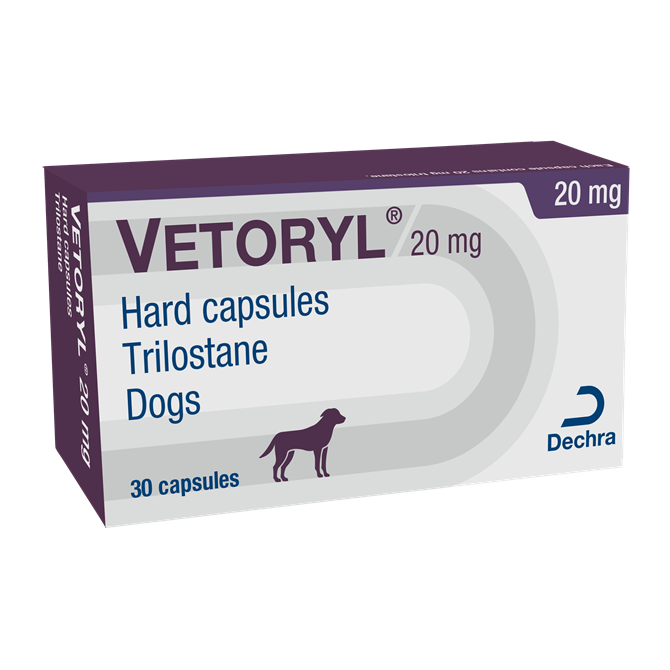
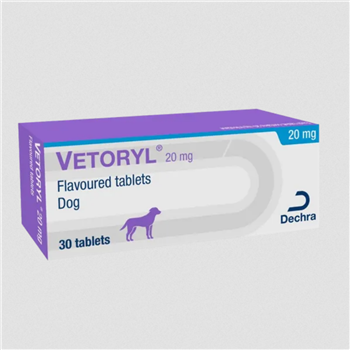
Vetoryl 20mg Capsules - Box of 30
Vetoryl 20mg Hard Capsules for Dogs treats Cushing’s syndrome by reducing excessive cortisol production. This hormonal condition can cause increased thirst, frequent urination, a strong appetite, panting and changes to the coat or body shape.
Each Vetoryl capsule contains 20mg of trilostane and is given whole with food, exactly as prescribed. Your vet uses blood tests and changes in your dog’s symptoms to assess the response and adjust treatment when needed. Choose this hard capsule presentation when it matches your prescription; Vetoryl chewable tablets can be ordered here. A valid veterinary prescription is required to order this medicine.
Additional Product Information
Description
Vetoryl 20mg Hard Capsules for Dogs is a prescription medicine for Cushing’s syndrome, a hormonal condition also called hyperadrenocorticism. Each hard capsule contains 20mg of trilostane, which reduces the production of cortisol by the adrenal glands. Cortisol is needed for normal health, but persistently excessive amounts can affect thirst, appetite, skin, muscle strength and a dog’s overall wellbeing. Vetoryl 20mg allows a vet to prescribe this particular capsule strength when it suits the dog’s treatment requirements. Your vet will confirm the diagnosis, assess suitability and arrange blood tests before and during treatment.
Cushing’s syndrome develops when the body is exposed to too much cortisol over time. In naturally occurring disease, the problem may originate in the pituitary gland, which sends hormonal signals to the adrenal glands, or in an adrenal gland itself. Vetoryl 20mg is licensed for both pituitary-dependent and adrenal-dependent hyperadrenocorticism in dogs. Owners may notice unusually heavy drinking, more frequent urination, a strong appetite, panting or a rounded abdomen. Thinning hair, delicate skin and reduced muscle strength can also develop. These changes often appear gradually and can be mistaken for ordinary ageing, particularly when a dog still enjoys meals and attention. They are not specific enough to establish a diagnosis on their own. Before prescribing Vetoryl 20mg, a vet considers the history, examination findings and appropriate laboratory results.
Trilostane acts by temporarily inhibiting an enzyme involved in steroid hormone production within the adrenal glands. This reduces cortisol synthesis and helps bring excessive hormone activity under control. Vetoryl 20mg manages the hormonal effects of Cushing’s syndrome; it does not remove a pituitary or adrenal tumour. Treatment therefore usually requires ongoing assessment rather than a short course followed by an assumed cure. Changes in drinking, appetite and activity may become apparent before the coat or body shape recovers, and the response varies between dogs. Your vet interprets these observations alongside blood results. Vetoryl 20mg must not suppress adrenal hormone production too far, because the body still needs cortisol and other adrenal hormones. The aim is the lowest effective prescribed dose that controls the condition appropriately. Giving extra capsules when thirst increases, or reducing treatment because your dog seems better, can upset that balance and should be avoided.
Give Vetoryl 20mg with food, following the dispensing label exactly. Food helps the medicine be absorbed, and morning administration is generally preferred because monitoring tests can then be scheduled at the appropriate time afterwards. Capsules must be swallowed whole: do not open, divide or crush them, and do not sprinkle their contents onto a meal. If your dog struggles to take capsules, ask the practice to discuss an appropriate approach or alternative formulation. Vetoryl 20mg hard capsules and Vetoryl chewable tablets are not automatically interchangeable and require different prescriptions.
Monitoring is an essential part of prescribing Vetoryl 20mg. The product information recommends blood biochemistry, including electrolytes, and an ACTH stimulation test before treatment, then at approximately ten days, four weeks and twelve weeks, followed by checks every three months. Further testing is needed after dose changes or a change between capsules and chewable tablets. For an ACTH stimulation test, timing is important: samples are assessed using a test performed four to six hours after dosing. Follow the practice’s instructions about the appointment and that morning’s medicine. Vetoryl 20mg should be withheld and veterinary advice sought if your dog becomes unwell, particularly with vomiting, diarrhoea, reduced appetite, lethargy or weakness. These signs may indicate excessive adrenal suppression, although other causes are possible. Collapse or profound weakness requires urgent veterinary attention. Keep a brief record of drinking, appetite and any unusual signs so that the vet can assess changes between appointments. Ask the practice how to prepare for each blood test, especially if feeding or dosing has recently been difficult. Bring the current dispensing label and a record of when the last capsule was given. A dog that appears settled at home can still need a change after laboratory assessment, while a single restless day does not establish that the dose is wrong. If another person is responsible for feeding or medication, make sure they know which capsule strength to give and whether it has already been administered. Keep different strengths clearly separated so that an older prescription is not accidentally used after a change.
Vetoryl 20mg is not suitable for dogs weighing less than 3kg, dogs with primary liver disease or renal insufficiency, or pregnant, nursing or breeding animals. Diabetes and existing anaemia require particular veterinary consideration. Tell the vet about every medicine and supplement your dog receives, especially drugs that can affect potassium levels, such as certain diuretics or ACE inhibitors. Continue any other prescribed treatment only as directed. When handling Vetoryl 20mg, wash your hands afterwards and keep the capsules away from children and other animals. Women who are pregnant or planning pregnancy should avoid handling them. If a capsule breaks, avoid contact with its contents and follow the leaflet’s advice for accidental exposure. Store the medicine below 25°C in its blister packaging within the outer carton. Check the strength, formulation and prescribed quantity when arranging another supply, and allow time for any monitoring appointment your vet requires before issuing the next prescription.
What is Vetoryl 20mg used for in dogs?
Vetoryl 20mg hard capsules treat pituitary-dependent and adrenal-dependent Cushing’s syndrome in dogs. They contain trilostane, which reduces excessive adrenal hormone production. Your vet confirms the diagnosis and selects the dose using your dog’s weight, health and response, with blood tests required throughout treatment.
Are Vetoryl 20mg capsules the same as 20mg chewable tablets?
No. They contain the same active ingredient but are different formulations, and strict interchangeability cannot be assumed. A dog may respond differently after a switch. Only change between hard capsules and chewable tablets under veterinary direction, because dose adjustment and additional monitoring may be required. Capsules cannot be ordered with a prescription for tablets.
Can I open Vetoryl capsules and sprinkle them on food?
No. Vetoryl hard capsules must not be opened or divided. Give the capsule whole with food as prescribed. If your dog will not swallow it, ask the practice about administration options rather than crushing it or exposing the contents, which also creates a handling risk.
Should Vetoryl be given with food?
Yes. Vetoryl hard capsules should be administered with food because this helps absorption. Morning dosing is generally preferred so that monitoring tests can be performed at the correct interval afterwards. Follow the dispensing label and the practice’s appointment instructions, including any advice about that morning’s dose.
How often does a dog on Vetoryl need blood tests?
The product information recommends checks before treatment, then at ten days, four weeks, twelve weeks and every three months thereafter. Additional monitoring follows dose or formulation changes. Your vet arranges the tests and timing; ACTH stimulation testing should take place four to six hours after dosing.
What our customers say about us.
Excellent service prompt and hassle free
ITSFBIIEC
Source: Trustpilot Review
Easy to use and very quick dispatch and delivery. Would definitely recommend and use again.
Keith
Source: Trustpilot Review
I always use vetdispense to order my dogs Cytopoint. It always arrives pronptly and well packaged.
Victoria
Source: Trustpilot Review
You may also like
- Tracked 24 Delivery Follow your parcel online
- VMD & RCVS Registered VetDispense is a registered UK Dispensary
- Secure Payment Pay securely online by card or PayPal
- Independent Since 2008 A Trusted UK Dispensary