


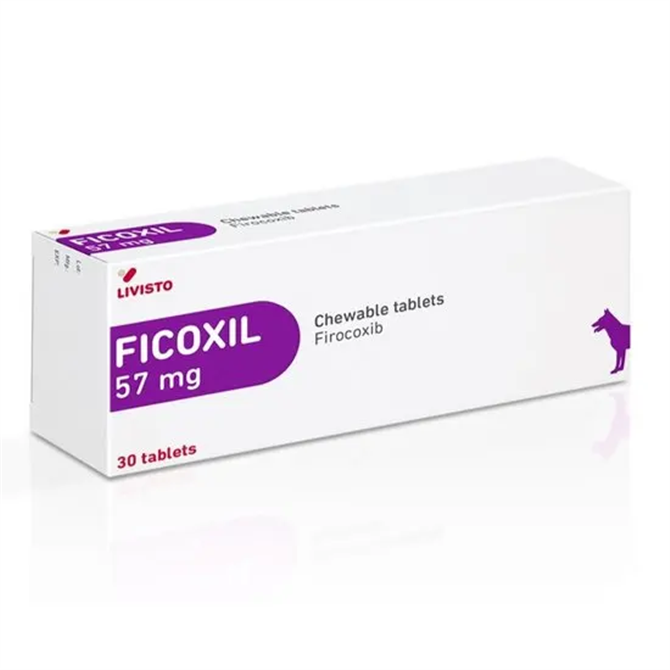
Ficoxil Tablets for Dogs - 57mg & 227mg
Ficoxil Chewable Tablets for Dogs are a prescription veterinary medicine used to relieve pain and inflammation associated with osteoarthritis and to manage post-operative discomfort after soft-tissue, orthopaedic or dental surgery. Each tablet contains firocoxib, a non-steroidal anti-inflammatory drug, usually shortened to NSAID. Ficoxil Tablets are available in 57mg and 227mg strengths, giving veterinary surgeons flexibility when prescribing for dogs across a wide range of bodyweights.
The two strengths contain the same medicine, but different quantities of firocoxib, so the supplied tablet must exactly match the prescription. The tablets are flavoured, round and scored, so they can be divided into halves or quarters when the prescribed dose requires it. This can make accurate administration easier, particularly when a dog’s calculated dose does not match a whole tablet. Ficoxil Tablets can reduce the painful inflammatory response that makes movement, rest and normal daily activity difficult. They should only be supplied for the dog named on a valid veterinary prescription and should be used exactly as directed by the prescribing veterinary surgeon.
Additional Product Information
Description
Ficoxil Tablets contain the active ingredient firocoxib, which belongs to the coxib group of NSAIDs. Ficoxil selectively inhibits cyclooxygenase-2, commonly called COX-2, an enzyme involved in producing prostaglandins during inflammation. Prostaglandins are chemical mediators that contribute to pain, swelling, heat and fever when tissue is damaged or a joint becomes inflamed. By reducing COX-2-mediated prostaglandin production, Ficoxil Tablets provide analgesic, anti-inflammatory and antipyretic effects. Ficoxil is more selective for COX-2 than COX-1, another enzyme involved in normal protective functions, including aspects of gastrointestinal and renal physiology. This selectivity helps explain how the medicine targets inflammatory pain, but it does not make treatment free from risk. Ficoxil is not a sedative and should not dull a dog’s personality. The intended effect is improved comfort, so a dog may rise more easily, walk with less hesitation, settle more comfortably and take part in controlled activity without the same degree of nociceptive pain.
Osteoarthritis, sometimes called degenerative joint disease, is a progressive condition affecting the whole joint rather than cartilage alone. Healthy cartilage creates a smooth, low-friction surface over the ends of bones, while synovial fluid helps lubricate movement. With osteoarthritis, cartilage becomes damaged or worn, the synovial lining may become inflamed, the joint capsule can thicken and bony growths called osteophytes may develop. These changes can reduce range of motion and create persistent or intermittent pain. Osteoarthritis is common in older dogs, but it can also follow injury, cruciate ligament disease, hip or elbow dysplasia, abnormal joint development or years of uneven mechanical loading. Signs are not always dramatic. Owners may notice stiffness after sleep, difficulty standing, slower walks, limping, reluctance to use stairs, hesitation before jumping into a car, reduced play, licking around a joint or irritability when touched. Symptoms can fluctuate with activity, bodyweight, weather and fatigue, so a dog may have apparently good days while still living with significant joint disease. Earlier recognition can help prevent pain-related inactivity and loss of supporting muscle.
The veterinary surgeon calculates the dose from the dog's current bodyweight and clinical needs. The licensed dose for osteoarthritis is 5mg of firocoxib per kilogram of bodyweight, given once daily, but owners should follow the prescription label rather than calculate or alter the dose themselves. Ficoxil 57mg and Ficoxil 227mg Tablets can both be divided into two or four equal parts, allowing the prescriber to choose an appropriate combination for the individual dog. The tablets may be given with or without food and are often accepted voluntarily because they are flavoured. Giving each dose at approximately the same time can make the routine easier to remember. Any unused tablet portion should be returned to the blister and used within seven days. If a dose is missed, owners should not automatically give a double dose; the veterinary practice should be contacted when the correct next step is uncertain. Significant weight change, poor pain control or a change in health may mean that the prescribed strength or tablet portion needs veterinary review.
Like every NSAID, Ficoxil Tablets are not suitable for all dogs. They must not be used in animals under ten weeks old or weighing less than 3kg, in pregnant or lactating bitches, in dogs with gastrointestinal bleeding, blood dyscrasia or haemorrhagic disorders, or in animals with known hypersensitivity to firocoxib or an excipient. Ficoxil must not be given alongside another NSAID or a corticosteroid, because combining anti-inflammatory medicines can increase the risk of gastrointestinal ulceration and other adverse effects. A suitable treatment-free interval may be needed when changing from another anti-inflammatory medicine, and the veterinary surgeon should decide its length. Extra caution is required in dogs with renal, hepatic or cardiac impairment and in animals that are dehydrated, hypovolaemic or hypotensive. The vet should be told about every medicine and supplement the dog receives, including diuretics, ACE inhibitors and products bought without a prescription. Baseline and periodic blood tests may be recommended, particularly for older dogs or longer courses.
Vomiting and diarrhoea are recognised adverse effects, while reduced appetite, sudden weight loss, lethargy, blood in the faeces, increased renal parameters or raised liver enzymes can also occur. Treatment should be stopped and veterinary advice sought promptly if repeated vomiting, persistent diarrhoea, black or bloody stools, marked tiredness, appetite loss, unusual thirst, altered urination or any sudden deterioration develops. For osteoarthritis, treatment duration depends on clinical response, and dogs receiving Ficoxil over a longer period should be reassessed regularly. A simple record of stiffness, rising, walking tolerance, appetite, stools and willingness to exercise can help the vet judge progress. Pain relief works best as one part of a broader mobility plan. Maintaining a lean body condition reduces mechanical load on sore joints, while controlled exercise helps preserve muscle without provoking repeated flare-ups. Non-slip flooring, supportive bedding, ramps, physiotherapy or hydrotherapy may also improve day-to-day function. When Ficoxil is prescribed around surgery, the timing and length of treatment must remain under direct veterinary control.
What are Ficoxil Tablets used for in dogs?
Ficoxil Tablets are prescribed to relieve pain and inflammation associated with canine osteoarthritis. They may also be used for post-operative pain and inflammation after soft-tissue, orthopaedic or dental surgery. Ficoxil is a prescription-only veterinary medicine and should be given only to the dog named on the prescription.
How do Ficoxil Tablets work?
Ficoxil contains firocoxib, a non-steroidal anti-inflammatory drug that selectively inhibits the COX-2 enzyme. This reduces production of prostaglandins involved in pain, inflammation and fever. The medicine can improve comfort and mobility, but it does not rebuild damaged cartilage or cure the osteoarthritis causing the symptoms.
What is the difference between Ficoxil 57mg and 227mg?
Ficoxil 57mg and Ficoxil 227mg contain the same active ingredient, firocoxib, but in different amounts. The two strengths allow the veterinary surgeon to prescribe an appropriate dose for the dog’s bodyweight. Tablets can be divided into halves or quarters when the prescribed dose requires a tablet portion.
How often should I give Ficoxil to my dog?
Ficoxil is normally given once daily at the dose stated on the veterinary prescription. The licensed osteoarthritis dose is based on bodyweight, so do not change the tablet strength, portion or frequency yourself. Give each dose at roughly the same time and ask the veterinary practice for advice after a missed dose.
Can Ficoxil Tablets be given with food?
Yes. Ficoxil Tablets may be administered with or without food. Many dogs accept the flavoured chewable tablet directly, while others take it more readily with a small amount of food. Check that the complete prescribed dose has been swallowed, and follow any individual administration instructions provided by your veterinary surgeon.
How quickly do Ficoxil Tablets start working?
Firocoxib is absorbed after oral administration, but the time before an owner notices improvement varies between dogs. Some may appear more comfortable relatively soon, while chronic osteoarthritis often needs assessment over several days. Contact your vet if pain remains poorly controlled, mobility worsens or your dog develops new clinical signs.
What side effects can Ficoxil cause in dogs?
Possible side effects include vomiting, diarrhoea, reduced appetite, lethargy, sudden weight loss, blood in the faeces and changes in kidney or liver test results. Stop treatment and seek veterinary advice promptly if these occur, particularly after repeated sickness, black stools, marked tiredness or any sudden deterioration.
What our customers say about us.
I bought some pills for my cat that the vet had recommended. I shopped around at various pet product sites and found Vetdispense far the cheapest even after including the postage charge. Delivery was within a few days of my order. By all means if you are buying something for your pet, check all the sites but make sure you check Vetdispense!
Martin
Source: Trustpilot Review
Always amazing and very efficient.
Julie K
Source: Trustpilot Review
Always quick delivery, thank you!
Rebecca
Source: Trustpilot Review
You may also like
- Tracked 24 Delivery Follow your parcel online
- VMD & RCVS Registered VetDispense is a registered UK Dispensary
- Secure Payment Pay securely online by card or PayPal
- Independent Since 2008 A Trusted UK Dispensary