


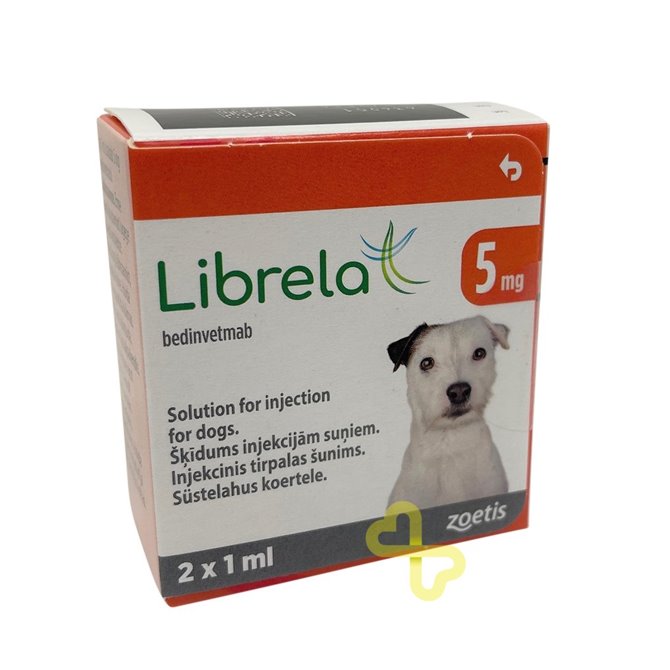
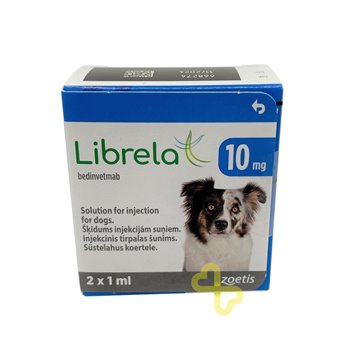
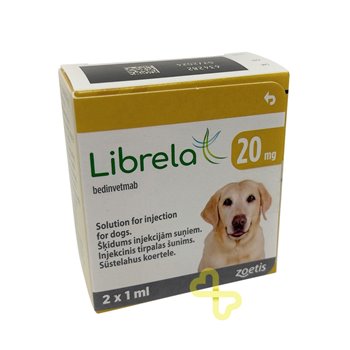
5mg Librela Solution for Dogs - 2 Vials
Librela 5mg Injection for Dogs is a veterinary medicine used to help relieve pain associated with osteoarthritis, a common long-term joint condition that can make everyday movement uncomfortable. Dogs with osteoarthritis may become stiff after rest, slow down on walks, struggle with stairs or jumping, or seem less willing to play, even if they do not obviously cry or limp.
Librela 5mg Injection contains bedinvetmab, a canine monoclonal antibody designed specifically for dogs. It works by targeting nerve growth factor, which is involved in osteoarthritis pain signalling, helping affected dogs move more comfortably as part of a vet-led pain management plan. Given by subcutaneous injection under veterinary direction, it can be a useful monthly option for dogs whose arthritis is affecting mobility, comfort and quality of life.
Librela is a refrigerated medication - We will send it via Royal Mail Special Delivery using insulated packaging and ice packs. A signature is required on delivery and it must be put straight into a fridge. We cannot guarantee same day dispatch for orders placed after 12pm. VETERINARY PRESCRIPTION REQUIRED.
Product Features
- Pack Size: - Pack of 2
- Target Animal: - Dog (Canine)
- Related Condition: - Osteoarthritis in Dogs
- Pet Prescription Required?: - Yes
- Active Ingredient: - Bedinvetmab
- Product Name: - Librela solution for injection for dogs
Additional Product Information
Description
Librela 5mg Injection for Dogs is a veterinary medicine used to help relieve pain associated with osteoarthritis in dogs. It contains bedinvetmab, a canine monoclonal antibody designed specifically for dogs, and is given as a subcutaneous injection under veterinary direction. Osteoarthritis is a long-term, degenerative joint condition in which cartilage changes, the joint capsule can become inflamed, and pain signals become more active. This can make everyday movement uncomfortable, especially in older dogs or dogs with previous joint injuries, hip dysplasia, elbow dysplasia or cruciate ligament disease.
Librela 5mg Injection is not a cure for arthritis, and it does not rebuild damaged cartilage, but it can form an important part of a pain management plan when your vet has diagnosed osteoarthritis and decided that this treatment is appropriate. Librela 5mg may be particularly helpful for dogs that need ongoing analgesia but require a carefully considered option because of age, mobility level or other health factors. It is intended for diagnosed clinical pain rather than general stiffness, so a veterinary examination remains essential before treatment starts.
Librela 5mg Injection is used for the alleviation of pain associated with osteoarthritis, which is one of the most common causes of chronic lameness and reduced mobility in dogs. Dogs with osteoarthritis may not always cry or limp dramatically; many show more subtle changes that gradually become part of their routine. Owners may notice:
- stiffness after rest, especially first thing in the morning;
- reluctance to climb stairs, jump into the car or get onto furniture;
- shorter walks, slower pace or lagging behind;
- licking around painful joints, irritability or changes in behaviour;
- difficulty rising, turning, squatting or settling comfortably.
Librela Injection for Dogs is intended to reduce pain so that affected dogs can move more comfortably, although each dog’s response can vary. Your vet may assess gait, posture, range of motion, muscle condition and pain on joint manipulation before recommending this treatment. They may also consider radiographs, previous injuries, breed risks and whether the discomfort is coming from one joint or from several areas of the body.
Librela 5mg Injection works in a different way from many traditional arthritis pain medicines. The active ingredient, bedinvetmab, binds to nerve growth factor, often shortened to NGF. NGF is involved in nociceptive pain signalling and becomes more active in osteoarthritic joints, where it can make pain pathways more sensitive. By binding to NGF, the medicine helps interrupt this pain signalling before it reaches the nervous system as strongly. This targeted anti-NGF action is why Librela 5mg for Dogs is described as a monoclonal antibody therapy rather than a non-steroidal anti-inflammatory drug. It does not work in the same way as NSAIDs such as meloxicam, carprofen or firocoxib, and it should not be compared dose-for-dose with those medicines.
Librela 5mg Injection is normally administered once a month by subcutaneous injection, with the correct strength selected according to the dog’s bodyweight. Because osteoarthritis is a chronic condition, the response to Librela 5mg Injection is usually assessed over time rather than after a single day. Some dogs may appear more comfortable within the first month, while others may need further review after subsequent injections. Regular monitoring helps your vet decide whether treatment should continue, whether additional pain control is needed, or whether other causes of lameness should be investigated. Missed appointments, changes in weight or new symptoms should be discussed before the next injection, as these details can affect ongoing treatment decisions.
How does Librela 5mg for Dogs work?
Librela 5mg for Dogs contains bedinvetmab, a canine monoclonal antibody that targets nerve growth factor, often called NGF. NGF is involved in pain signalling within arthritic joints. By binding to NGF, Librela helps reduce pain signals linked to osteoarthritis pain.
Is Librela 5mg Injection a painkiller?
Librela 5mg Injection provides pain relief, but it is not a traditional tablet painkiller or an NSAID. It is an injectable monoclonal antibody therapy that targets NGF, a key part of osteoarthritis pain signalling. Your vet will decide whether it is suitable for your dog.
How often is Librela 5mg Injection given to dogs?
Librela is usually given once a month by subcutaneous injection, with the exact dose and strength chosen according to your dog’s bodyweight. The 5mg strength is one option within the Librela range. Your vet should set the treatment schedule and review your dog’s response.
How quickly does Librela work in dogs?
Some owners notice improved comfort or mobility within the first month, while other dogs need more time and reassessment after further injections. Response can depend on the severity of osteoarthritis, other health conditions and activity levels. Your vet can advise how to monitor progress.
What side effects can Librela 5mg Injection cause?
Possible side effects can include injection-site reactions, diarrhoea, vomiting, reduced appetite, lethargy, urinary incontinence, ataxia or, very rarely, seizures. Not every dog will experience side effects. Contact your vet promptly if your dog seems unwell or behaves unusually after treatment.
What our customers say about us.
Excellent communication and customer service. Will rush medication out to you and will let you know if theres an issue with the prescription , my end i.e scanned blank
Loz
Source: Trustpilot Review
Bought from here as it seemed the cheapest dispensary for my dog’s prescription. No issues with delivery etc
Claire
Source: Trustpilot Review
It's so easy to order my cat's medication. He has diabetes, so he needs to have it regularly and with Vets Dispense I don't have to worry as it is always on time.
Alison
Source: Trustpilot Review
You may also like

- Tracked 24 Delivery Follow your parcel online
- VMD & RCVS Registered VetDispense is a registered UK Dispensary
- Secure Payment Pay securely online by card or PayPal
- Independent Since 2008 A Trusted UK Dispensary